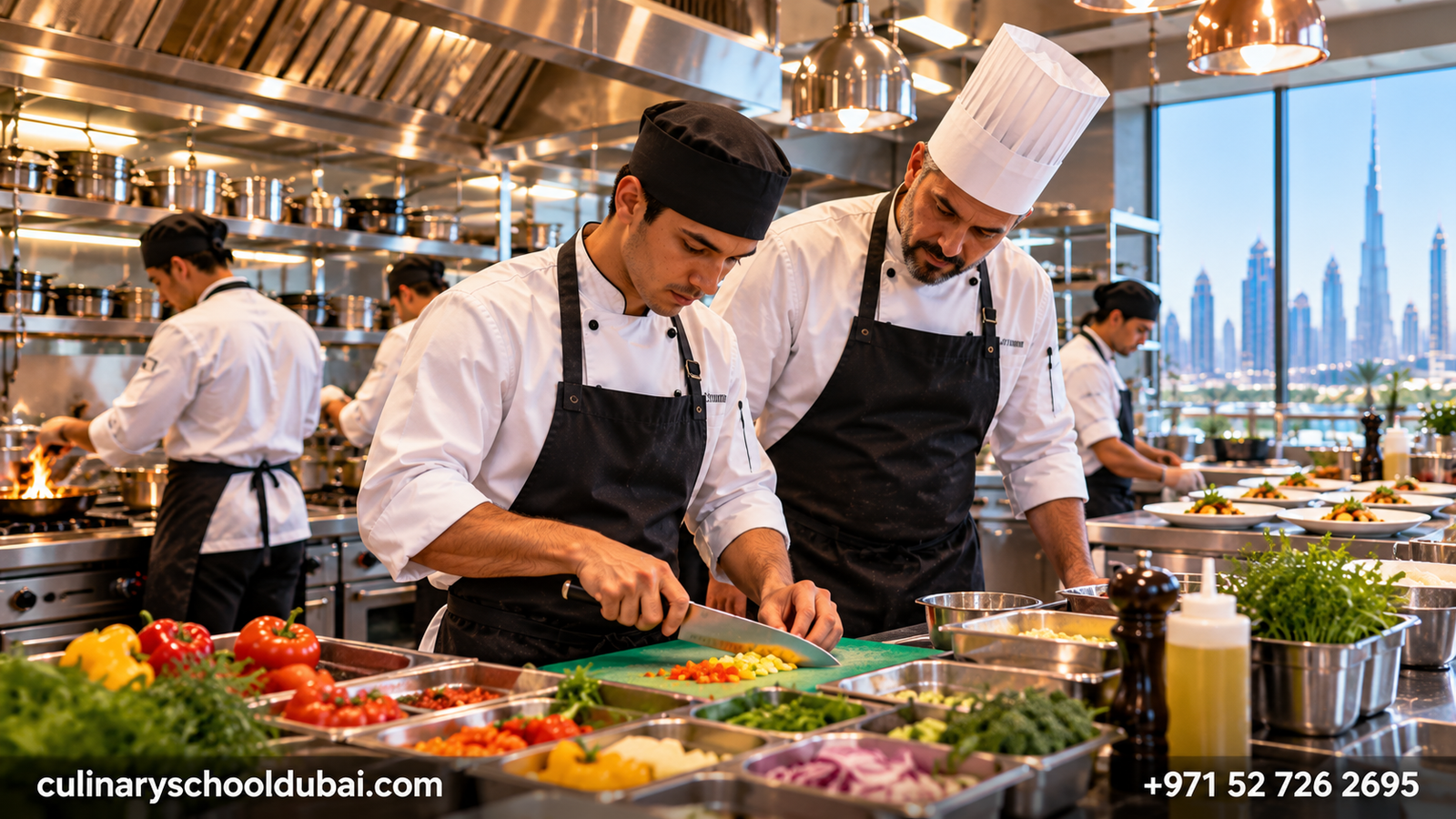
Chef Salary in Dubai: Career Overview, Jobs & Growth Guide
Dubai has become one of the most attractive destinations for culinary professionals looking to build an international career. The city's large hospitality industry includes luxury hotels, restaurants, resorts, cafés, catering companies, private dining businesses, airlines, and food production companies. This creates opportunities for chefs at different stages of their careers.
If you are considering a culinary career, one of the most important questions is how much a chef can earn in Dubai.
The chef salary in Dubai depends on experience, culinary specialization, employer, qualifications, technical skills, and job responsibilities. Current salary data shows that the average chef salary is around AED 2,975 per month on Indeed, while Naukrigulf reports an average of approximately AED 3,790 per month, with reported salaries ranging from AED 2,000 to AED 8,000.
However, the culinary industry has a wide salary structure. A junior chef, Commis Chef, Chef de Partie, Sous Chef, and Head Chef can have significantly different salaries.
For example, current Naukrigulf data reports an average of approximately AED 4,473 per month for a Chef de Partie, while Sous Chef and Head Chef positions can command substantially higher compensation depending on the employer and experience.
What Is the Chef Salary in Dubai?
The average chef salary in Dubai currently falls around AED 2,975–3,790 per month based on major salary-reporting platforms.
Naukrigulf currently reports:
| Chef Salary IndicatorMonthly Salary | |
| Lower reported range | AED 2,000 |
| Average | AED 3,790 |
| Upper reported range | AED 8,000 |
| Chef de Partie average | AED 4,473 |
| Chef de Cuisine average | AED 9,217 |
| Arabic Chef average | AED 5,181 |
These figures represent reported market data and should not be treated as guaranteed salaries. Actual offers can be higher or lower depending on the candidate and employer.
A chef working in a small restaurant may have a very different salary from a chef employed by a luxury hotel, international restaurant group, airline catering company, or fine-dining establishment.
Chef Salary Range in Dubai
The chef salary range in Dubai is broad because the culinary profession contains many different positions.
An entry-level chef may start near the lower end of the market, while experienced professionals and specialized chefs can move toward higher salary brackets.
Entry-Level Chef
Entry-level culinary professionals may earn approximately AED 2,000–3,000 per month, depending on the employer and role.
Typical positions include:
- Kitchen Assistant
- Commis Chef
- Junior Chef
- Trainee Chef
- Demi Chef
At this stage, gaining practical kitchen experience is often more important than maximizing salary immediately.
Experienced Chef
Chefs with several years of experience can move into positions with greater responsibility.
They may earn approximately AED 3,500–6,000 or more depending on specialization and workplace.
Senior Chef
Experienced chefs working in senior positions can potentially earn AED 6,000–10,000+ per month.
Specialized positions can command even more. Naukrigulf currently reports an average Chef de Cuisine salary of approximately AED 9,217 per month, with a reported range of AED 3,000–18,000.
Chef Salary by Position in Dubai
One of the best ways to understand chef wages in Dubai is to look at different kitchen positions.
Commis Chef
A Commis Chef is generally an entry-level culinary professional who works under more experienced chefs.
Responsibilities may include:
- Food preparation
- Basic cooking
- Ingredient preparation
- Cleaning workstations
- Supporting senior chefs
- Following recipes
- Maintaining hygiene
Commis Chef positions are often an important starting point for people beginning a professional chef career.
Chef de Partie
A Chef de Partie is responsible for a specific kitchen section.
Examples include:
- Pastry
- Grill
- Sauce
- Garde manger
- Butchery
- Bakery
Naukrigulf currently reports an average Chef de Partie salary in Dubai of approximately AED 4,473 per month, with a reported range of AED 2,500–7,000.
Sous Chef
A Sous Chef is usually responsible for supporting the Executive Chef or Head Chef.
Responsibilities can include:
- Supervising kitchen teams
- Monitoring food quality
- Managing preparation
- Supporting menu execution
- Training staff
- Managing kitchen operations
Indeed currently reports an average Sous Chef salary in Dubai of approximately AED 5,972 per month.
Head Chef
The Head Chef manages the kitchen and has significant responsibility for food quality, staff, menus, operations, and kitchen standards.
Indeed currently reports an average Head Chef salary in Dubai of approximately AED 6,986 per month.
Chef de Cuisine
Chef de Cuisine is a senior culinary position, often associated with significant responsibility for a specific restaurant or kitchen.
Naukrigulf currently reports an average salary of approximately AED 9,217 per month, with salaries ranging from AED 3,000 to AED 18,000.
What Factors Affect Chef Pay in Dubai?
Several factors determine chef pay in Dubai.
Experience
Experience is one of the biggest factors.
A chef with two years of experience will generally have a different earning potential from someone with ten or fifteen years of professional kitchen experience.
Culinary Specialization
Specialization can also influence salary.
Examples include:
- Pastry Chef
- Arabic Chef
- Italian Chef
- Japanese Chef
- Indian Chef
- Continental Chef
- Bakery Chef
- Executive Chef
- Chef de Cuisine
For example, Naukrigulf reports an average Arabic Chef salary of approximately AED 5,181 per month in Dubai.
Employer
The type of employer can make a significant difference.
Potential employers include:
- Luxury hotels
- Restaurants
- Resorts
- Catering companies
- Airlines
- Cruise companies
- Private households
- Hospitals
- Schools
- Corporate catering companies
- Food production companies
Location
Salary can also vary depending on where the business operates and the type of establishment.
Luxury hospitality areas and high-end restaurants may have different salary structures from smaller independent businesses.
Qualifications
Professional culinary education can help candidates demonstrate knowledge of food preparation, kitchen safety, hygiene, and professional cooking techniques.
Skills
Technical cooking skills, leadership, communication, food costing, menu planning, and kitchen management can all contribute to career progression.
Chef Jobs in Dubai
Dubai offers chef job opportunities across multiple sectors.
Hotels
Hotels are one of the biggest employers of culinary professionals.
Chefs may work in:
- Restaurants
- Banquet kitchens
- Buffets
- Room service
- Pastry departments
- Staff dining
- Specialty restaurants
Restaurants
Dubai has restaurants representing cuisines from around the world.
This creates opportunities for chefs specializing in different culinary traditions.
Catering Companies
Large catering companies serve:
- Corporate events
- Weddings
- Conferences
- Private events
- Airlines
- Institutions
These businesses require chefs at different levels.
Resorts
Luxury resorts require culinary teams across restaurants, cafés, banquets, bars, and specialty dining venues.
Private Chef Jobs
Experienced chefs can also explore private chef positions serving individuals, families, villas, and high-profile clients.
Chef Qualifications in Dubai
There is no single qualification that guarantees a chef job.
However, professional culinary education can provide a strong foundation.
Relevant qualifications may include:
- Diploma in Culinary Arts
- Culinary Arts certificate
- Professional Chef qualification
- Hospitality diploma
- Food production qualification
- Pastry and bakery qualification
- Food safety certification
A qualification becomes more valuable when combined with practical kitchen experience.
Employers want chefs who can perform effectively in a real commercial kitchen.

Chef Skills Dubai Employers Look For
Developing the right chef skills can improve employability and career progression.
Cooking Skills
A professional chef should understand:
- Cooking methods
- Knife skills
- Food preparation
- Sauces
- Stocks
- Seasoning
- Plating
- Portion control
Food Safety and Hygiene
Food safety is essential in a professional kitchen.
Chefs need to understand:
- Personal hygiene
- Food storage
- Temperature control
- Cross-contamination
- Cleaning procedures
- Food handling
Time Management
Professional kitchens operate under pressure.
Chefs must prepare multiple dishes efficiently while maintaining quality.
Teamwork
A kitchen depends on teamwork.
Chefs work with:
- Sous Chefs
- Commis Chefs
- Kitchen assistants
- Stewards
- Waiters
- Restaurant managers
- Suppliers
Communication
Clear communication is essential during busy service periods.
Cost Control
Experienced chefs should understand food costs, portion sizes, waste reduction, inventory, and purchasing.
Leadership
As chefs progress toward Sous Chef and Head Chef positions, leadership becomes increasingly important.
Chef Course Dubai
A chef course in Dubai can help beginners develop professional culinary skills.
A good course should combine theory with practical training.
Important topics may include:
- Knife skills
- Basic cooking techniques
- Stocks and sauces
- Meat preparation
- Seafood preparation
- Vegetable preparation
- International cuisine
- Pastry fundamentals
- Food safety
- Kitchen organization
- Menu planning
- Food costing
Practical training is especially important because cooking is a hands-on profession.
Professional Chef Course Dubai
A professional chef course in Dubai can be suitable for students who want to build a career in commercial kitchens.
A comprehensive program may introduce students to professional kitchen operations and different culinary stations.
Students may learn:
- Kitchen organization
- Food preparation
- Cooking techniques
- International cuisine
- Meat and seafood
- Bakery and pastry
- Food presentation
- Food safety
- Kitchen management
- Menu planning
The objective should be to develop skills that can be applied in an actual hospitality environment.
Culinary Course Dubai
A culinary course in Dubai can open a pathway into hospitality and food-service careers.
Students can develop a foundation in culinary arts before specializing.
Potential career areas include:
- Restaurants
- Hotels
- Resorts
- Catering
- Bakeries
- Cafés
- Food production
- Private dining
Students should choose training based on their career goals.
Someone interested in pastry may need different training from someone targeting hot kitchen operations.
Culinary Training Dubai
Practical culinary training in Dubai can help students become familiar with the pace and expectations of a professional kitchen.
Hands-on training may include:
- Mise en place
- Knife handling
- Cooking
- Plating
- Kitchen organization
- Food storage
- Hygiene
- Service preparation
- Teamwork
The more realistic the training environment, the easier it may be for a beginner to understand professional kitchen expectations.
Chef Certification Dubai
A chef certification in Dubai can complement practical culinary education.
Certification can demonstrate training in areas such as:
- Culinary arts
- Food safety
- Professional cooking
- Pastry
- Kitchen management
- Hospitality
However, certification should not be viewed as a replacement for experience.
A chef becomes stronger through repeated practical work, learning from senior professionals, and handling real kitchen responsibilities.
Chef Career Path in Dubai
The typical chef career path in Dubai can develop through several stages.
A common pathway is:
Kitchen Assistant → Commis Chef → Demi Chef → Chef de Partie → Sous Chef → Head Chef → Executive Chef
Not every chef follows exactly the same route.
Some professionals specialize in pastry, bakery, fine dining, international cuisine, or specific culinary traditions.
Others move into:
- Culinary management
- Restaurant management
- Food consulting
- Private chef work
- Culinary education
- Food product development
Chef Career Growth in Dubai
Career growth depends on experience, performance, specialization, leadership, and continuous learning.
Early Career
During the first few years, focus on building fundamental cooking and kitchen skills.
Mid-Career
As you gain experience, aim to take responsibility for a kitchen section or team.
Senior Career
At senior levels, develop management skills, menu development abilities, cost-control knowledge, and leadership.
Management
Experienced chefs may eventually move into Head Chef, Executive Chef, or Culinary Director roles.
The salary potential can also increase as responsibility grows.
For comparison, current salary data shows average Dubai compensation of approximately AED 3,790 for chefs overall, AED 4,473 for Chef de Partie, and AED 9,217 for Chef de Cuisine.
How to Increase Your Chef Income in Dubai
If your goal is to improve your chef income in Dubai, focus on developing skills that make you more valuable.
Gain Experience
Practical experience is essential.
Specialize
Develop expertise in a cuisine or culinary area with strong demand.
Learn Cost Control
Understanding food costs and waste can help you move into senior positions.
Improve Leadership
Learn how to train, organize, and manage kitchen teams.
Develop Menu Planning Skills
Senior chefs need to understand how menus are developed and executed.
Learn Food Safety
Strong food safety knowledge is essential for professional kitchens.
Build an International Profile
International culinary experience can strengthen your profile for some Dubai hospitality employers.
Continue Training
Keep improving your technical and management skills through culinary training and professional development.
Is Being a Chef a Good Career in Dubai?
Being a chef can be a rewarding career for people who enjoy cooking, hospitality, teamwork, and working in fast-paced environments.
Dubai provides exposure to international cuisines, luxury hospitality, large-scale events, and diverse restaurant concepts.
However, culinary careers can also be demanding.
Chefs often work long hours, weekends, holidays, and busy service periods. The work requires physical stamina, discipline, attention to detail, and the ability to perform under pressure.
For people who genuinely enjoy culinary work, however, the career can provide opportunities for continuous development.
How to Become a Chef in Dubai
If you are starting your culinary career, a practical pathway can look like this.
Step 1: Learn Culinary Fundamentals
Start with basic cooking techniques, knife skills, hygiene, food preparation, and kitchen organization.
Step 2: Complete Culinary Training
Consider a professional chef course, culinary course, or hospitality program.
Step 3: Gain Practical Experience
Look for internships, trainee positions, or Commis Chef opportunities.
Step 4: Choose a Specialization
Develop expertise in areas such as:
- Continental cuisine
- Arabic cuisine
- Indian cuisine
- Italian cuisine
- Pastry
- Bakery
- Fine dining
- International cuisine
Step 5: Build Professional Experience
Work under experienced chefs and learn different kitchen stations.
Step 6: Develop Leadership Skills
As you progress, learn staff supervision, inventory, food costing, menu planning, and kitchen management.
Step 7: Progress Through Kitchen Positions
Work toward Chef de Partie, Sous Chef, Head Chef, and eventually Executive Chef roles.
Frequently Asked Questions
What is the average chef salary in Dubai?
Current salary sources report different averages. Indeed reports approximately AED 2,975 per month, while Naukrigulf reports approximately AED 3,790 per month.
What is the chef salary range in Dubai?
Naukrigulf currently reports chef salaries ranging from approximately AED 2,000 to AED 8,000 per month.
Can chefs earn more than AED 8,000 in Dubai?
Yes. Senior and specialized culinary positions can earn more. For example, Naukrigulf reports a Chef de Cuisine average of approximately AED 9,217, with a reported range reaching AED 18,000.
What qualifications are needed to become a chef?
A culinary arts diploma, professional chef course, hospitality qualification, or relevant practical training can help. Practical experience is equally important.
Is a culinary course necessary to become a chef?
Not every chef follows the same educational route, but structured culinary training can help beginners develop fundamental skills more quickly and professionally.
What skills should a chef have?
Important skills include cooking techniques, knife skills, food safety, time management, teamwork, communication, plating, food costing, and leadership.
Final Thoughts on Chef Salary in Dubai
The chef salary in Dubai varies significantly according to experience, position, specialization, employer, qualifications, and responsibilities.
Current data places the overall average around AED 2,975–3,790 per month, while specialized and senior positions can reach considerably higher levels.
For example, current salary data places Chef de Partie compensation at approximately AED 4,473 per month and Chef de Cuisine compensation at approximately AED 9,217 per month.
For beginners, the most important objective should be developing a strong professional foundation. A quality chef course, culinary course, or professional culinary training program can help build essential knowledge, but real kitchen experience is what turns those skills into a career.
If you want long-term chef career growth in Dubai, focus on cooking ability, food safety, kitchen discipline, communication, leadership, menu planning, cost control, and specialization.
With consistent learning and experience, a culinary career can progress from entry-level kitchen positions to Chef de Partie, Sous Chef, Head Chef, Chef de Cuisine, and eventually Executive Chef or other culinary leadership roles.