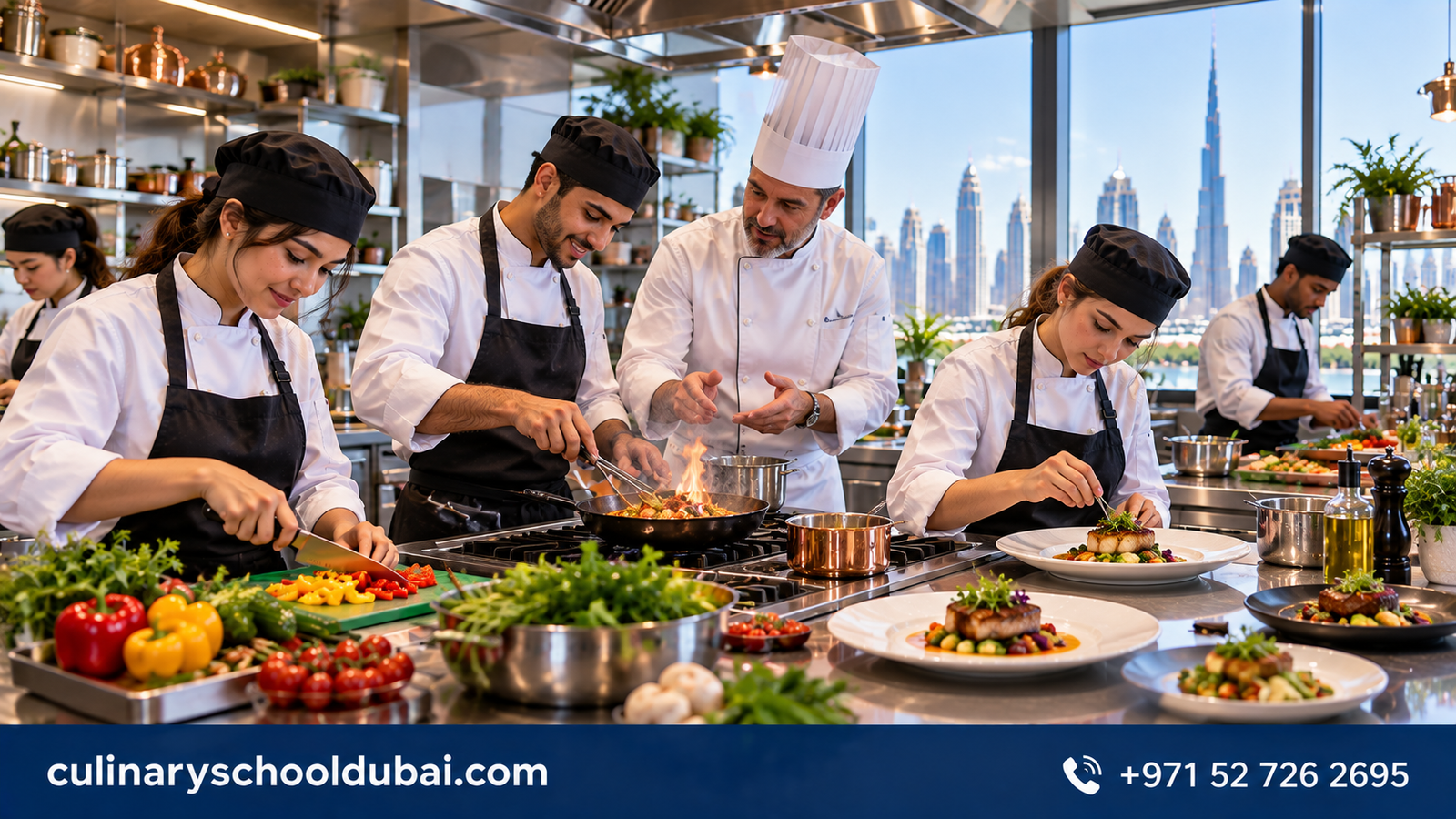
Benefits of Studying Culinary Arts in Dubai
Choosing a culinary career can be an exciting path for people who enjoy cooking, creativity, food presentation, and working in professional kitchens. For students considering this field, studying in a major hospitality destination can provide opportunities to develop practical skills and understand professional food-service environments.
There are many benefits of studying culinary arts in Dubai, particularly for learners who want structured education combined with hands-on kitchen experience. A well-designed culinary program can teach everything from basic food preparation and knife skills to advanced cooking techniques, baking, international cuisine, plating, menu planning, and kitchen operations.
Dubai is also home to a wide variety of restaurants, hotels, cafés, catering businesses, resorts, and other hospitality establishments. This creates different types of professional environments where culinary skills can be applied. However, completing a course does not guarantee employment. Career opportunities depend on qualifications, practical experience, individual performance, employer requirements, and the wider job market.
This guide explores the key benefits of culinary education and explains why professional culinary training can be valuable for aspiring chefs and food-service professionals.

What Is Culinary Arts Education?
Culinary arts education is the structured study of food preparation, cooking, presentation, kitchen operations, and related professional skills.
A culinary arts course Dubai program may cover:
- Culinary fundamentals
- Knife skills
- Food preparation
- Cooking techniques
- Sauces and stocks
- Food safety
- Kitchen hygiene
- Baking and pastry
- International cuisine
- Food presentation
- Plating techniques
- Menu planning
- Portion control
- Kitchen management
The exact curriculum varies depending on the course and training provider.
The main difference between casual cooking and professional culinary education is structure. Students learn techniques systematically and have opportunities to practice them under guidance.
Benefits of Studying Culinary Arts in Dubai
There are several potential culinary arts benefits Dubai students can gain from professional training.
1. Develop Professional Cooking Skills
One of the biggest benefits is the opportunity to develop cooking skills in a structured environment.
Students can learn different methods such as:
- Grilling
- Roasting
- Baking
- Sautéing
- Frying
- Steaming
- Boiling
- Poaching
- Braising
- Stewing
Understanding these techniques helps students work with different ingredients and create a wider variety of dishes.
2. Gain Hands-On Kitchen Experience
Hands-on culinary training Dubai programs allow students to practice what they learn.
Instead of simply watching demonstrations, students can work directly with ingredients, equipment, and recipes.
Practical sessions may involve:
- Ingredient preparation
- Knife work
- Cooking
- Baking
- Sauce preparation
- Plating
- Portioning
- Kitchen organization
Hands-on practice is important because many culinary skills improve through repetition.
3. Learn Culinary Fundamentals
A good program starts with the basics.
Culinary education Dubai can introduce students to fundamental concepts such as:
- Ingredient selection
- Food preparation
- Seasoning
- Heat control
- Cooking times
- Kitchen terminology
- Mise en place
- Portioning
These fundamentals provide a foundation for more advanced culinary techniques.
Students who understand the principles behind cooking can adapt techniques instead of relying only on individual recipes.
4. Improve Knife Skills
Knife skills are essential in professional food preparation.
Students can learn how to safely and accurately:
- Slice
- Dice
- Chop
- Mince
- Julienne
- Brunoise
- Cut herbs
- Portion ingredients
Good knife skills can improve preparation speed, consistency, and safety.
Professional training also emphasizes proper knife handling and workstation organization.

5. Learn Food Safety and Kitchen Hygiene
Food safety is an essential part of professional culinary work.
Professional culinary training Dubai programs may teach students about:
- Safe food handling
- Temperature control
- Cross-contamination prevention
- Personal hygiene
- Food storage
- Cleaning procedures
- Sanitization
- Safe equipment use
Students learn that maintaining a clean and safe kitchen is part of professional cooking.
These practices are particularly important in restaurants, hotels, catering operations, and other food-service environments.
6. Explore International Cuisines
Dubai's diverse food culture makes exposure to different cuisines particularly relevant for culinary students.
Depending on the curriculum, students may study cuisines such as:
- French
- Italian
- Mediterranean
- Indian
- Middle Eastern
- Asian
- American
- Continental
Culinary training benefits Dubai learners by introducing them to different ingredients, cooking techniques, flavor profiles, and presentation styles.
Learning international cuisine can also help students become more adaptable when working in different kitchen environments.
7. Develop Baking and Pastry Skills
Some culinary programs include baking and pastry training.
Students may learn to prepare:
- Bread
- Cakes
- Cookies
- Pastries
- Tarts
- Pies
- Desserts
- Creams
- Fillings
Baking teaches precision because measurements, temperatures, mixing methods, and timing can strongly influence the final result.
Students who discover an interest in pastry can later consider specialized training in this area.
8. Learn Professional Food Presentation
Cooking and presentation go together in many professional food-service environments.
Students can learn the principles of food presentation, including:
- Portion placement
- Color balance
- Garnishing
- Texture
- Plate selection
- Negative space
- Sauce presentation
Plating Techniques
Plating practice can help students understand how to create visually balanced dishes.
They may experiment with:
- Modern plating
- Classical presentation
- Layered presentation
- Sauce placement
- Garnishing
- Portion control
The goal is to create attractive plates while keeping the food practical and appropriate for the style of service.
9. Develop Menu Planning Skills
Benefits of culinary course Dubai programs can also include learning how menus are developed.
Menu planning involves more than choosing dishes.
Students may consider:
- Target customers
- Restaurant concept
- Ingredient availability
- Seasonality
- Preparation time
- Kitchen capacity
- Portion sizes
- Food costs
- Variety
Learning these principles can help aspiring chefs understand the business side of food preparation.
10. Understand Kitchen Management
A professional kitchen requires organization and teamwork.
Advanced culinary programs may introduce kitchen management topics such as:
- Workstation organization
- Mise en place
- Inventory
- Food storage
- Portion control
- Team communication
- Workflow
- Time management
- Waste reduction
- Basic cost control
These skills can become increasingly important as culinary professionals take on additional responsibilities.
11. Build Professional Kitchen Discipline
Professional kitchens often operate under time pressure.
Students can learn to work systematically by:
- Preparing ingredients in advance
- Keeping workstations organized
- Following recipes accurately
- Managing cooking times
- Maintaining hygiene
- Communicating with team members
- Cleaning while working
Developing these habits during training can help students understand the expectations of professional food-service environments.
12. Learn From Experienced Instructors
One advantage of formal culinary education is direct access to instructors.
An instructor can demonstrate techniques and provide feedback when students make mistakes.
For example, a student may struggle with:
- Knife control
- Sauce consistency
- Dough preparation
- Heat management
- Plating
- Portioning
Personal feedback can help identify problems and suggest ways to improve.
13. Build Confidence Through Practice
Cooking skills often improve as students become more familiar with ingredients and techniques.
Practical culinary training Dubai gives learners opportunities to repeat tasks and gradually become more comfortable in the kitchen.
Confidence can develop through:
- Repeated practice
- Completing recipes independently
- Working with different ingredients
- Handling kitchen equipment
- Preparing complete dishes
- Receiving instructor feedback
Confidence does not replace experience, but it can support a student's transition into more demanding practical environments.
14. Develop a Broader Culinary Skill Set
One of the advantages of a structured culinary course in Dubai is the opportunity to learn several related skills together.
Instead of focusing only on cooking, students can study:
- Preparation
- Cooking
- Baking
- Food safety
- Presentation
- Menu planning
- Kitchen organization
- Basic management
This broader skill set can provide a foundation for different culinary interests.
15. Prepare for Different Culinary Work Environments
Culinary skills training Dubai can introduce students to practices relevant to various food-service environments.
These can include:
Restaurants
Students may learn cooking and service workflows relevant to restaurant kitchens.
Hotels
Hotel kitchens can involve restaurants, banquets, room service, and other food-service operations.
Catering
Catering requires planning, preparation, portion control, transportation considerations, and service coordination.
Bakeries and Pastry Businesses
Students with baking interests may develop skills suited to bakery and pastry environments.
Cafés
Café kitchens can involve breakfast foods, desserts, snacks, beverages, and quick-service preparation.
The actual responsibilities vary between establishments.
16. Explore Culinary Career Opportunities Dubai
There are different culinary career opportunities Dubai professionals may explore.
Potential roles can include:
- Commis chef
- Prep cook
- Line cook
- Pastry assistant
- Bakery assistant
- Demi chef
- Chef de partie
- Sous chef
- Specialty cook
The requirements for each position can vary.
Entry-level roles generally provide an opportunity to gain practical workplace experience, while senior positions usually require additional experience and broader technical and management abilities.
17. Understand the Chef Career Path
A chef career opportunities Dubai pathway can develop gradually.
A culinary professional may begin in an entry-level role and gain experience with different stations and responsibilities.
A possible progression could involve:
- Entry-level kitchen position
- Increased station responsibilities
- Specialized culinary experience
- Supervisory duties
- Senior kitchen role
- Kitchen management
This is not a guaranteed progression. Career development depends on individual performance, experience, employer opportunities, qualifications, and specialization.
18. Gain a Culinary Certification
Culinary certification Dubai programs can provide learners with documentation showing that they completed a particular training course.
Depending on the program, certificates may relate to:
- Culinary arts
- Professional cooking
- Food preparation
- Baking
- Pastry
- Food safety
- Hospitality
Students should understand exactly what certificate a provider awards.
A training certificate can demonstrate course completion, but it does not automatically guarantee employment or replace practical workplace experience.
19. Develop Transferable Professional Skills
Culinary training can also help students develop skills that extend beyond cooking.
These include:
Time Management
Students learn to organize multiple preparation tasks.
Teamwork
Professional kitchens depend on communication and cooperation.
Attention to Detail
Recipes, measurements, temperatures, and presentation often require accuracy.
Problem Solving
Cooking does not always go according to plan. Students learn to identify and address issues.
Organization
Keeping ingredients, equipment, and workstations organized supports efficient preparation.
These transferable skills can be useful in different hospitality environments.
20. Experience a Multicultural Learning Environment
Dubai is home to people from many cultural and professional backgrounds.
A culinary classroom can therefore provide opportunities to interact with learners who have different food traditions and experiences.
This can encourage students to:
- Explore different cuisines
- Share cooking ideas
- Understand different food preferences
- Learn about global culinary traditions
- Develop broader culinary awareness
For aspiring chefs, exposure to different perspectives can be valuable when working with diverse customers and teams.
Professional Culinary Training Dubai vs Self-Learning
Self-learning can be a useful way to explore cooking.
Online tutorials, cookbooks, and home practice can help people learn individual recipes and techniques.
However, professional culinary training Dubai can provide a more structured environment.
Self-Learning
Advantages can include:
- Flexible schedule
- Low initial cost
- Freedom to choose topics
- Learning at your own pace
Professional Training
Advantages can include:
- Structured curriculum
- Instructor guidance
- Practical kitchen sessions
- Professional equipment
- Systematic skill development
- Feedback
- Assessment
The right option depends on your goals.
Someone who wants to improve home cooking may be comfortable with self-learning, while someone considering professional culinary work may prefer structured training.
Is Culinary School Suitable for Beginners?
Yes. Many culinary programs are designed for students with little or no professional kitchen experience.
Beginner programs can start with:
- Kitchen safety
- Knife skills
- Ingredient preparation
- Basic cooking methods
- Food hygiene
- Simple sauces
- Basic plating
Students can then progress toward more advanced techniques.
The important factor is choosing a program whose level matches your existing knowledge.
Is Culinary Training Useful for Career Changers?
Culinary education can also be relevant to people considering a career change.
Someone with experience in another field may use a culinary course to develop foundational kitchen skills before seeking professional experience.
However, career changers should understand that a training course is the beginning of a new professional path rather than a substitute for workplace experience.
Building a culinary career can require continued practice and learning.
How to Choose a Culinary School in Dubai
If you are considering a culinary school in Dubai, review the curriculum carefully.
Look for a program that offers:
- Practical kitchen training
- Culinary fundamentals
- Knife skills
- Food preparation
- Cooking techniques
- Food safety
- Kitchen hygiene
- Baking and pastry
- International cuisine
- Food presentation
- Plating
- Menu planning
- Kitchen management
Also consider the training schedule, course duration, class size, kitchen facilities, instructor support, and certification.
Questions to Ask Before Joining a Culinary Course
Before enrolling in a culinary training course Dubai program, ask:
- What subjects are included?
- How much practical training is provided?
- What cooking techniques will I learn?
- Is baking and pastry included?
- Are international cuisines covered?
- Is food safety part of the curriculum?
- Will I practice plating?
- Is menu planning included?
- Does the program cover kitchen management?
- What type of certificate is provided?
- What equipment will students use?
- Is the program suitable for beginners?
These questions can help you compare different programs more effectively.
How to Get the Most From Culinary Classes Dubai
Simply attending culinary classes Dubai is not enough to maximize your learning.
Practice Regularly
Repeat techniques outside scheduled lessons when possible.
Ask Questions
Use instructors to clarify techniques and understand mistakes.
Keep a Recipe Notebook
Record useful recipes, measurements, techniques, and observations.
Learn From Mistakes
Cooking errors can provide useful learning opportunities.
Focus on Fundamentals
Strong basic skills make advanced techniques easier to learn.
Practice Presentation
Do not focus only on taste. Develop an understanding of portioning and plating as well.
Culinary Career Growth Dubai
Culinary career growth Dubai depends on more than completing a training course.
Professional development can involve:
- Workplace experience
- Continued culinary education
- Specialization
- Learning new cuisines
- Developing leadership skills
- Improving kitchen efficiency
- Building professional relationships
- Taking on additional responsibilities
A chef who continues learning may explore specialties such as pastry, international cuisine, fine dining, bakery operations, catering, or kitchen management.
Career progression remains individual and depends on available opportunities and employer requirements.
What Are the Main Benefits of Culinary Education?
The key benefits can be summarized as:
- Structured learning
- Hands-on practice
- Professional cooking skills
- Knife skills
- Food safety knowledge
- Kitchen hygiene awareness
- International cuisine exposure
- Baking and pastry skills
- Food presentation skills
- Menu planning knowledge
- Kitchen management fundamentals
- Professional discipline
- Teamwork
- Time management
- Potential preparation for culinary careers
The exact benefits depend on the curriculum and amount of practical training included.
Frequently Asked Questions
What are the benefits of studying culinary arts in Dubai?
Benefits can include structured culinary education, hands-on kitchen practice, professional cooking skills, food safety knowledge, exposure to different cuisines, food presentation, and preparation for potential hospitality careers.
Is culinary training suitable for beginners?
Yes. Beginner-friendly culinary programs can introduce students to kitchen safety, knife skills, food preparation, cooking techniques, and basic presentation.
Can culinary training help with a chef career?
Culinary training can provide foundational knowledge and practical skills. However, professional chef careers also require workplace experience, continued learning, and development of technical and professional abilities.
Does culinary education include practical training?
Many culinary programs include hands-on kitchen sessions. Students should check the specific course curriculum to understand how much practical training is provided.
Is culinary certification useful?
A culinary certificate can document completion of a training program. Its value depends on the course, employer expectations, and the student's overall skills and experience.
Can I learn international cuisine in culinary school?
Many culinary programs introduce students to different international cuisines, although the specific cuisines covered vary by curriculum.
What career opportunities are available after culinary training?
Depending on qualifications and experience, learners may explore roles such as commis chef, line cook, prep cook, pastry assistant, chef de partie, and other food-service positions.
Does culinary school guarantee a job?
No. Completing culinary training does not guarantee employment. Job opportunities depend on qualifications, experience, practical skills, employer requirements, and the job market.
Final Thoughts
There are many potential benefits of studying culinary arts in Dubai, particularly for learners who want to develop professional cooking skills through structured and practical education.
A well-designed program can teach culinary fundamentals, knife skills, food preparation, cooking techniques, food safety, kitchen hygiene, baking, international cuisine, food presentation, plating, menu planning, and kitchen operations.
Another important benefit is hands-on experience. Culinary skills develop through practice, and practical training allows students to apply techniques under instructor guidance.
For learners interested in a culinary career in Dubai, professional training can provide a foundation before entering the workplace. However, education is only one part of a culinary career. Practical experience, discipline, teamwork, continued learning, and professional performance also play important roles.
Before choosing a culinary school in Dubai, compare the curriculum, practical training, kitchen facilities, instructors, certification, course duration, and overall learning structure.
Whether you are a beginner, career changer, hospitality student, or aspiring chef, the right culinary education can help you build a strong foundation and develop skills that can be applied across different professional kitchen environments.