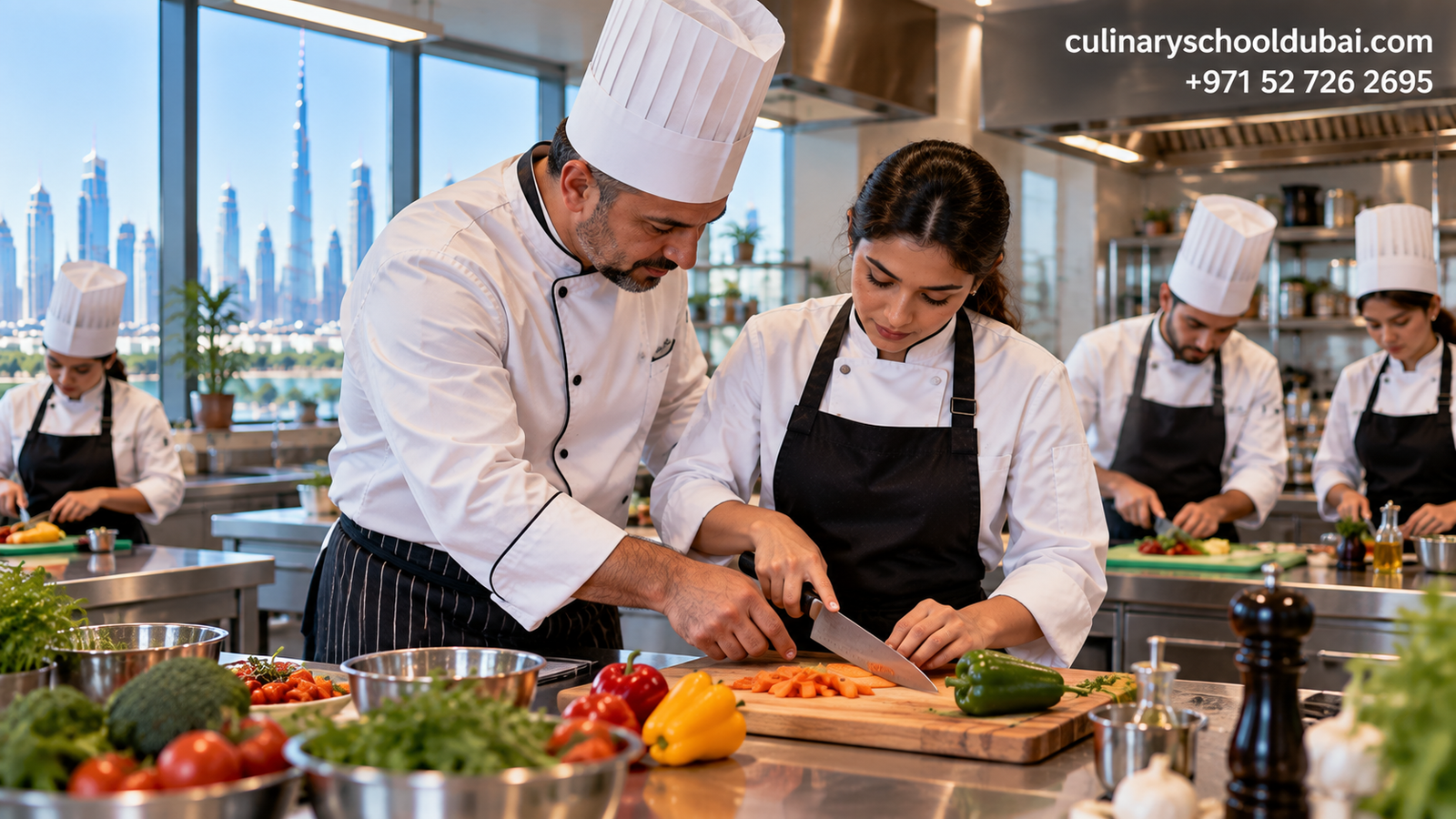
Culinary School for Beginners With No Experience
Starting a career in cooking can feel challenging when you have never worked in a professional kitchen. You may wonder whether culinary school is suitable for you, whether you need previous cooking experience, or whether you will be able to keep up with other students.
The good news is that many culinary programs are designed to teach fundamental skills from the beginning. A culinary school for beginners with no experience can introduce you to kitchen basics, cooking techniques, food safety, preparation methods, presentation, and professional kitchen practices in a structured environment.
For people living in Dubai, a culinary course for beginners in Dubai can also be a practical way to develop cooking skills while learning in an environment influenced by different cuisines and hospitality standards.
Whether your goal is to become a chef, improve your cooking skills, start a food business, or explore culinary arts as a new career, beginner-focused training can give you a strong foundation.
Can You Join Culinary School With No Experience?
Yes, beginners can study culinary arts without previous professional kitchen experience. In fact, introductory culinary programs are often structured specifically to help students understand the fundamentals before moving into more advanced techniques.
You do not necessarily need to know how to prepare complex dishes before starting. Instead, you learn step by step.
A culinary school for beginners Dubai program may begin with basic areas such as:
- Kitchen safety
- Personal hygiene
- Knife handling
- Ingredient preparation
- Basic cooking methods
- Food storage
- Kitchen equipment
- Basic sauces and stocks
- Food presentation
- Baking fundamentals
- Professional kitchen procedures
This approach allows students to develop their abilities gradually instead of expecting them to already have professional-level knowledge.
Why Choose a Beginner Culinary Course in Dubai?
Dubai has a diverse food culture, with restaurants, hotels, cafés, catering businesses, bakeries, and other food-related establishments serving customers from around the world.
For someone starting from zero, structured training can be more useful than trying to learn everything independently.
A beginner culinary course Dubai program can help you build skills in a logical order. Instead of learning random recipes, you can understand why particular cooking methods work and how professional kitchens organize their work.
The learning process can also help beginners become more comfortable with kitchen equipment, ingredients, recipes, measurements, preparation techniques, and professional terminology.

What Do Beginners Learn in Culinary School?
A beginner culinary program usually focuses on building a foundation before introducing more advanced culinary techniques.
Kitchen Fundamentals
The first stage of training often introduces students to the professional kitchen environment.
You may learn how different kitchen stations work, how equipment is used, how ingredients are organized, and how chefs maintain an efficient workspace.
Understanding kitchen organization is important because professional cooking involves much more than preparing food.
Students can learn about:
- Kitchen equipment
- Workstation organization
- Ingredient preparation
- Cooking terminology
- Basic measurements
- Kitchen workflow
- Cleaning procedures
- Safety practices
These fundamentals help beginners become more confident in a professional kitchen.
Knife Skills
Knife skills are one of the most important foundations of culinary education.
Beginners learn how to hold and use different knives safely and how to prepare ingredients using common cutting techniques.
Training may include:
- Slicing
- Dicing
- Chopping
- Julienne
- Mincing
- Peeling
- Portioning
Good knife skills can improve consistency, preparation speed, and safety.
For beginners, learning these techniques under supervision can be much more effective than simply watching cooking videos online.
Basic Cooking Techniques
A culinary training for beginners Dubai program can introduce students to essential cooking methods.
These may include:
- Boiling
- Simmering
- Steaming
- Sautéing
- Grilling
- Roasting
- Baking
- Frying
- Braising
Students learn how temperature, timing, ingredients, and cooking methods affect the final result.
The objective is not simply to follow a recipe. Beginners should gradually understand the cooking process itself.

Food Safety and Kitchen Hygiene
Food safety is a fundamental part of professional culinary education.
A culinary course with no experience Dubai can introduce beginners to proper hygiene and safe food-handling practices from their first lessons.
Students may learn about:
- Hand hygiene
- Clean workstations
- Safe food storage
- Cross-contamination prevention
- Temperature control
- Ingredient handling
- Cleaning and sanitization
- Personal protective practices
These skills are important for anyone who wants to work in restaurants, hotels, catering businesses, bakeries, or other food-service environments.
Learning Through Practical Culinary Training
One of the biggest advantages of beginner culinary education is practical learning.
A practical culinary training Dubai program allows students to apply concepts instead of only reading about them.
For example, a lesson about sauces may include an explanation of ingredients and techniques followed by actual preparation. Similarly, knife-skill lessons can involve preparing vegetables and other ingredients at a workstation.
This hands-on approach gives beginners an opportunity to practice, make mistakes, receive feedback, and improve.
Hands-On Culinary Training for Beginners
Hands-on culinary training Dubai can be particularly useful for people who have never worked in a professional kitchen.
Instead of watching an instructor perform every task, students can participate in preparation and cooking activities.
Practical sessions may cover:
- Ingredient preparation
- Basic recipes
- Cooking methods
- Sauce preparation
- Plating
- Baking
- Kitchen organization
- Food safety procedures
Repeated practice helps turn unfamiliar techniques into familiar routines.
For beginners, this experience can also reduce the fear of using professional equipment and working under kitchen-style conditions.
What About Cooking Classes for Beginners?
There is a difference between casual cooking classes and professional culinary education.
Cooking classes for beginners Dubai may focus primarily on preparing selected dishes or improving home-cooking abilities.
A professional culinary program can be broader.
It may combine cooking techniques with food safety, kitchen organization, menu planning, presentation, professional standards, and practical kitchen experience.
If your goal is simply to cook better meals at home, beginner cooking classes may be enough. If you want to explore a professional chef career, a structured culinary program may provide broader training.
Culinary Arts Course for Beginners in Dubai
A culinary arts course for beginners Dubai can introduce students to different areas of the culinary field rather than focusing on one type of food.
Depending on the course, students may explore:
- Culinary fundamentals
- International cuisine
- Baking and pastry
- Sauces and stocks
- Meat and seafood preparation
- Vegetable preparation
- Food presentation
- Menu development
- Kitchen management
- Food safety
This broader exposure can help beginners discover which areas of culinary arts interest them most.
For example, one student may enjoy pastry, while another may prefer hot kitchen cooking, international cuisine, or food presentation.
Do You Need to Be a Good Cook Before Starting?
No.
A common misconception is that you must already be an excellent cook before enrolling in a culinary program.
Beginner training exists precisely to help students develop their skills.
You may have limited experience preparing food at home, or you may have never cooked beyond simple meals. That does not automatically prevent you from learning culinary arts.
What matters more is your willingness to practice, follow instructions, accept feedback, and improve.
Chef Course for Beginners in Dubai
People interested in becoming professional chefs can consider a chef course for beginners Dubai program that starts with fundamental kitchen skills.
Professional chef training can introduce beginners to the responsibilities involved in a commercial kitchen.
Students may learn about:
- Food preparation
- Cooking techniques
- Kitchen hygiene
- Food safety
- Recipe execution
- Portion control
- Food presentation
- Kitchen teamwork
- Time management
- Station organization
The purpose of beginner chef training is to establish a foundation that students can continue developing through practice and professional experience.
Professional Culinary Course Dubai: Is It Suitable for Beginners?
A professional culinary course Dubai can be suitable for beginners when the program has a clear foundation level.
Before enrolling, check whether the course assumes previous experience.
A beginner-friendly course should explain fundamental techniques instead of immediately starting with advanced professional tasks.
Look for training that includes practical sessions, instructor guidance, demonstrations, and opportunities to repeat techniques.
This is especially important if you are changing careers or entering the culinary field for the first time.
Culinary Training for Career Changers
Culinary education is not limited to students who have planned to become chefs from a young age.
Adults from different professional backgrounds can decide to enter the food and hospitality industry later in their careers.
A culinary training with no experience Dubai program can provide a structured starting point for career changers.
For example, someone working in an office may decide to explore professional cooking because of a long-term interest in food. Another person may want to develop skills before opening a small food business.
Starting with fundamentals can make the transition more manageable.
Culinary Training for Personal Development
Not every beginner wants to become a professional chef.
Some people study culinary arts because they enjoy cooking and want to become more skilled.
A culinary classes for beginners Dubai program can help improve everyday cooking abilities while providing exposure to professional techniques.
You may develop better:
- Knife skills
- Ingredient knowledge
- Cooking confidence
- Food presentation skills
- Kitchen organization
- Recipe understanding
- Food safety awareness
These skills can be valuable even if cooking remains a personal interest rather than a career.
What Makes a Beginner-Friendly Culinary School?
Choosing the right training environment is important when you have no experience.
Look for Practical Learning
A course should provide opportunities to actually prepare and cook food.
Practical experience helps beginners understand how techniques work in real situations.
Check the Course Curriculum
Review the syllabus before enrolling.
Make sure it covers basic culinary techniques rather than focusing only on advanced recipes.
Ask About Instructor Support
Beginners may need more guidance than experienced students. Ask whether instructors provide individual feedback during practical sessions.
Understand Class Structure
Find out whether classes involve demonstrations, practical work, assignments, assessments, or other learning activities.
Check Equipment and Kitchen Facilities
A suitable training kitchen should allow students to practice using appropriate equipment and workstations.
What Skills Can You Develop?
A beginner culinary program can help develop both technical and professional skills.
Technical skills may include:
- Knife handling
- Cooking techniques
- Ingredient preparation
- Baking fundamentals
- Food presentation
- Sauce preparation
- Recipe execution
Professional skills can include:
- Time management
- Teamwork
- Kitchen discipline
- Communication
- Organization
- Cleanliness
- Attention to detail
These skills can support future culinary education and professional development.
Can Beginners Build a Culinary Career?
A beginner course can provide a foundation, but completing a course alone does not guarantee employment or career advancement.
Culinary careers are developed through a combination of education, practical experience, workplace performance, continued learning, and professional development.
After completing beginner training, some students may choose to gain additional experience or study more specialized areas.
Possible areas of development include:
- Professional chef training
- Pastry and baking
- International cuisine
- Restaurant operations
- Catering
- Food production
- Kitchen management
- Food entrepreneurship
The right path depends on your interests and career goals.
How to Get the Most From Culinary Classes
If you are completely new to cooking, take advantage of every practical session.
Practice techniques repeatedly rather than trying to memorize everything after one lesson.
Ask questions when you do not understand a process. Pay attention to instructor feedback and observe how experienced cooks organize their stations.
You can also keep notes about recipes, cooking temperatures, ingredient preparation, and techniques.
Most importantly, do not be discouraged by mistakes. Culinary skills develop through repetition.
Is Culinary School a Good Starting Point for Beginners?
For someone with no professional cooking experience, structured education can provide a clear starting point.
A beginner-focused culinary course in Dubai can introduce you to the kitchen environment while helping you develop fundamental cooking and professional skills.
You do not need to arrive as an experienced chef. You can start with basic techniques and gradually work toward more advanced culinary abilities.
The key is choosing a course that matches your current skill level and provides enough practical training.
Frequently Asked Questions
Can I join culinary school without cooking experience?
Yes. Beginner-focused culinary programs are designed to introduce students to fundamental cooking and kitchen skills, making them suitable for people with limited or no professional experience.
Is there a culinary course for beginners in Dubai?
Yes, training providers may offer beginner-level culinary courses and cooking programs. Check the course curriculum to make sure it is designed for students starting from the fundamentals.
What will I learn as a beginner?
You may learn kitchen safety, hygiene, knife skills, ingredient preparation, basic cooking methods, food presentation, baking fundamentals, and professional kitchen practices.
Can I become a chef after starting with no experience?
Beginner training can provide a foundation for a culinary career. Becoming a professional chef generally requires continued practice, workplace experience, and further skill development.
Are culinary classes only for people who want to become chefs?
No. People also take culinary classes to improve their cooking abilities, explore culinary arts, prepare for further education, or develop skills for a food-related business.
Is hands-on training important for beginners?
Yes. Practical training gives beginners the opportunity to apply techniques, use kitchen equipment, practice preparation methods, and receive feedback from instructors.
Final Thoughts
Starting culinary education with no experience is completely possible when you choose a program designed for beginners.
A culinary school for beginners with no experience can help you move from basic kitchen knowledge toward more confident and structured cooking skills. Through practical sessions, instructor guidance, food safety training, cooking techniques, and hands-on practice, you can build a foundation for further culinary development.
Whether you are looking for a beginner cooking course Dubai, a chef course for beginners Dubai, or a broader culinary arts course for beginners Dubai, focus on finding training that matches your current level and goals.
You do not need to know everything before you begin. Culinary education is about learning, practicing, improving, and gradually developing the skills needed for the kitchen.