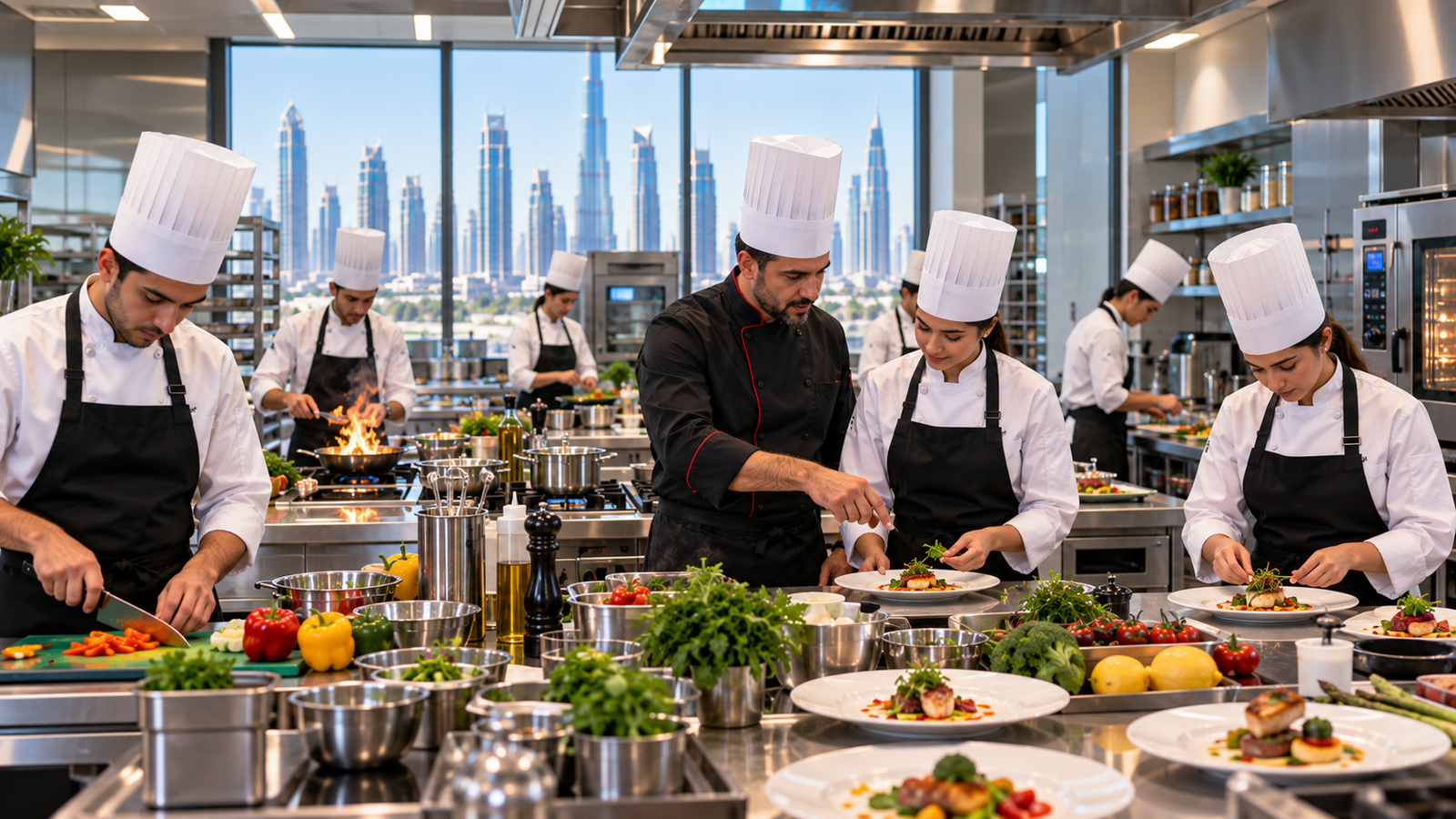
Culinary Arts Course Syllabus: Complete Guide
Choosing the right culinary program starts with understanding the culinary arts course syllabus. A well-designed syllabus shows what you will learn, which practical skills you will develop, and how the course prepares you for professional kitchen environments.
Whether you are a beginner interested in cooking, a student planning a career as a chef, or a working professional looking to improve your skills, reviewing the curriculum can help you choose the right training program.
A typical culinary arts course syllabus in Dubai combines theory with practical training. Students learn food preparation, cooking techniques, kitchen hygiene, food safety, international cuisines, bakery and pastry, food presentation, menu planning and other essential areas of professional culinary work.
The exact subjects can differ depending on the institute, qualification level and course duration. However, most professional programs cover a core set of culinary skills and knowledge.
What Is a Culinary Arts Course Syllabus?
A culinary arts course syllabus is a structured outline of the topics and practical skills covered during culinary training. It explains what students are expected to learn throughout the program.
A comprehensive syllabus may include:
- Kitchen safety and hygiene
- Food preparation
- Knife skills
- Cooking methods
- Stocks, soups and sauces
- Meat and poultry preparation
- Seafood preparation
- Bakery and pastry
- International cuisine
- Food presentation
- Nutrition
- Menu planning
- Food costing
- Kitchen operations
- Practical training
The purpose of a syllabus is to take students from basic culinary knowledge to more advanced professional skills.

Culinary Arts Course Syllabus in Dubai
Dubai has a diverse hospitality and food service industry, making practical culinary education particularly relevant for people interested in professional kitchen careers.
A culinary arts training syllabus in Dubai may be designed to introduce students to both fundamental and professional cooking skills. Depending on the program, students can learn how to prepare different types of food while following professional hygiene and safety standards.
A strong curriculum should not focus only on recipes. Students should also understand ingredients, cooking techniques, kitchen organization, food safety and professional behavior.
For beginners, the course normally starts with basic skills before progressing toward more complex culinary techniques.
Core Culinary Arts Course Modules
The following are some of the most common culinary arts course modules in Dubai.
1. Introduction to Culinary Arts
The first module usually introduces students to the culinary profession and professional kitchen environments.
Students may learn about:
- Different kitchen departments
- Chef responsibilities
- Kitchen hierarchy
- Professional kitchen equipment
- Cooking utensils
- Kitchen terminology
- Professional conduct
- Basic kitchen organization
This foundation helps students understand how a commercial kitchen operates.
2. Kitchen Safety and Hygiene
Food safety is one of the most important parts of any culinary training course syllabus in Dubai.
Students learn how to maintain a clean and safe working environment. Topics may include personal hygiene, safe food handling, cleaning procedures and prevention of cross-contamination.
Important areas can include:
- Personal hygiene
- Kitchen sanitation
- Food storage
- Temperature control
- Cross-contamination prevention
- Cleaning and sanitizing
- Safe equipment handling
- Food allergens
- Basic food safety principles
These skills are essential because professional kitchens require consistency, cleanliness and attention to safety.

3. Knife Skills
Knife skills are among the first practical skills students develop during culinary training.
The culinary skills course syllabus may teach students how to safely use different knives and perform standard cuts.
Students may practice:
- Chopping
- Slicing
- Dicing
- Mincing
- Julienne
- Brunoise
- Fine chopping
- Vegetable preparation
- Basic meat cutting
Good knife skills improve preparation speed, consistency and safety.
4. Mise en Place and Food Preparation
Mise en place means preparing and organizing ingredients before cooking. It is a fundamental practice in professional kitchens.
Students learn how to:
- Read recipes
- Measure ingredients
- Prepare vegetables
- Prepare meats
- Organize ingredients
- Set up a workstation
- Prepare cooking equipment
- Manage preparation time
This module helps students understand why organization is important during busy kitchen service.
Cooking Techniques in a Culinary Course
Cooking techniques are a major component of a culinary course syllabus in Dubai. Students learn how different cooking methods affect the flavor, texture, appearance and quality of food.
Dry-Heat Cooking
Students may learn techniques such as:
- Roasting
- Baking
- Grilling
- Broiling
- Sautéing
- Pan-frying
- Deep-frying
Moist-Heat Cooking
These techniques can include:
- Boiling
- Simmering
- Steaming
- Poaching
Combination Cooking
Students may also learn methods such as:
- Braising
- Stewing
Understanding these methods allows students to select the appropriate cooking technique for different ingredients and dishes.
Stocks, Soups and Sauces
Stocks, soups and sauces are important foundations of classical culinary education.
A professional chef course syllabus in Dubai may include the preparation of different stocks and sauces.
Students can learn about:
- Vegetable stock
- Chicken stock
- Meat stock
- Fish stock
- Clear soups
- Cream soups
- Pureed soups
- Basic sauces
- Sauce consistency
- Seasoning
These skills help students understand how professional kitchens build flavor and develop dishes.
Meat, Poultry and Seafood Preparation
Another important section of the professional culinary arts syllabus is protein preparation.
Students may learn how to safely handle, portion and cook different types of meat, poultry and seafood.
Topics may include:
- Meat preparation
- Poultry preparation
- Seafood handling
- Portion control
- Basic fabrication
- Marination
- Cooking temperatures
- Storage procedures
- Safe food handling
Practical exercises allow students to become familiar with different ingredients and cooking techniques.
Bakery and Pastry
Depending on the level of the program, bakery and pastry may be included as a dedicated module.
A culinary arts course outline in Dubai may introduce students to:
- Bread making
- Cakes
- Cookies
- Pastries
- Basic desserts
- Dough preparation
- Baking techniques
- Creams and fillings
- Dessert presentation
Students interested in becoming pastry chefs can later pursue more specialized pastry education.
International Cuisine
Modern culinary professionals often work with food from different cultures and culinary traditions.
International cuisine can therefore form an important part of the culinary training curriculum in Dubai.
Students may be introduced to:
- European cuisine
- Asian cuisine
- Middle Eastern cuisine
- Mediterranean cuisine
- South Asian cuisine
- American cuisine
The focus may include traditional ingredients, cooking techniques, flavor combinations and presentation styles.
Learning international cuisine can help students become more versatile in professional kitchen environments.
Food Presentation and Plating
Cooking is not only about flavor. Presentation also plays an important role in professional culinary work.
Students may learn:
- Basic plating principles
- Portion presentation
- Garnishing
- Color combinations
- Texture balance
- Plate selection
- Modern presentation techniques
The objective is to make dishes visually appealing while maintaining appropriate portions and practical presentation.
Nutrition and Food Science
Some culinary arts course subjects in Dubai include basic nutrition and food science.
Students can learn how ingredients contribute to a balanced diet and how different cooking methods can affect food.
Topics may include:
- Basic nutrition
- Food groups
- Nutrients
- Healthy cooking
- Dietary requirements
- Food allergies
- Ingredient properties
- Effects of cooking on food
This knowledge can help future chefs create dishes that meet different customer requirements.
Menu Planning and Recipe Development
Advanced culinary programs may include menu planning and recipe development.
Students learn how chefs create practical menus while considering ingredients, preparation time, customer preferences and costs.
Topics may include:
- Menu structure
- Recipe standardization
- Ingredient selection
- Portion sizes
- Recipe testing
- Seasonal ingredients
- Menu balance
- Basic recipe development
This module is particularly useful for students who eventually want to manage a kitchen or start a food business.
Food Costing and Portion Control
A professional chef needs to understand more than cooking.
Food costing helps culinary professionals understand how much it costs to produce a dish.
Students may learn:
- Ingredient costing
- Portion control
- Food waste management
- Inventory basics
- Purchasing
- Stock management
- Menu pricing
- Cost control
These skills are especially valuable for chefs moving into supervisory or management positions.
Kitchen Operations
Professional kitchens rely on teamwork and organization.
A culinary training course outline in Dubai may therefore include kitchen operations and workplace organization.
Students can learn about:
- Kitchen stations
- Chef responsibilities
- Team communication
- Work scheduling
- Preparation planning
- Service procedures
- Equipment management
- Kitchen cleanliness
- Professional communication
This prepares students for the fast-paced environment of restaurants, hotels, catering companies and other food service businesses.
Culinary Practical Training
Practical experience is one of the most important parts of culinary practical training in Dubai.
Students should have opportunities to apply classroom knowledge in a practical kitchen environment.
Practical sessions may involve:
- Preparing ingredients
- Setting up a workstation
- Practicing knife skills
- Preparing sauces and soups
- Cooking meat and vegetables
- Preparing seafood
- Baking and pastry work
- Preparing international dishes
- Practicing food presentation
- Cleaning and closing the workstation
Practical training allows students to build confidence and develop the speed and consistency required in professional kitchens.
Culinary Arts Modules for Beginners
Students with no previous cooking experience may prefer a beginner-focused program.
A typical culinary arts modules for beginners in Dubai structure can start with basic concepts and gradually introduce more advanced techniques.
Beginner Level
- Introduction to culinary arts
- Kitchen safety
- Food hygiene
- Kitchen tools
- Knife skills
- Basic food preparation
- Basic cooking methods
Intermediate Level
- Stocks and sauces
- Meat and poultry
- Seafood
- Baking
- International cuisine
- Food presentation
Advanced Level
- Menu planning
- Recipe development
- Food costing
- Kitchen operations
- Advanced cooking techniques
- Professional kitchen management
This progression allows students to develop skills step by step instead of attempting advanced techniques before mastering the fundamentals.
Culinary Certification Course Syllabus
A culinary certification course syllabus can vary significantly depending on the qualification and training provider.
Short certification programs may focus on a specific skill, while longer programs can provide broader culinary education.
A certificate-level program may include:
- Food safety
- Kitchen hygiene
- Knife skills
- Basic cooking
- Food preparation
- Sauces and soups
- Meat and seafood
- Baking basics
- Food presentation
- Practical assessments
Students should review the complete syllabus before enrolling to ensure that the course covers the skills they want to develop.
How Long Does a Culinary Course Take?
The duration depends on the type and level of training.
Short cooking courses may focus on specific techniques and can be completed relatively quickly. Certificate programs generally cover a broader range of subjects, while diploma-level programs may include more extensive practical training and kitchen operations.
Before choosing a course, consider:
- Course duration
- Number of practical sessions
- Course level
- Certification
- Curriculum
- Instructor experience
- Kitchen facilities
- Practical assessment
- Industry exposure
The best option depends on your career goals and previous experience.
Who Can Join a Culinary Arts Course?
Culinary programs can be suitable for a wide range of learners.
They may include:
- Beginners
- School graduates
- Students
- Aspiring chefs
- Home cooks
- Hospitality professionals
- Restaurant employees
- Entrepreneurs
- Professionals changing careers
The eligibility requirements depend on the institute and qualification level. Some beginner courses may have simple entry requirements, while advanced programs can require previous education or culinary experience.
Career Opportunities After Culinary Training
Completing a culinary program can provide a foundation for several hospitality careers.
Depending on your qualification and experience, potential career paths may include:
- Commis Chef
- Chef de Partie
- Line Cook
- Pastry Chef
- Bakery Assistant
- Sous Chef
- Catering Professional
- Private Chef
- Kitchen Supervisor
- Food Entrepreneur
Practical experience and continued professional development can help students progress toward more senior culinary positions.
How to Choose the Right Culinary Course in Dubai
When comparing culinary course subjects in Dubai, do not choose a program based only on its title or duration.
Look at the complete syllabus and ask whether it provides sufficient practical training.
Important factors include:
Practical Kitchen Experience
Choose a program that provides regular hands-on practice rather than relying heavily on classroom theory.
Comprehensive Curriculum
Look for a syllabus covering cooking fundamentals, food safety, food preparation, international cuisine and professional kitchen operations.
Experienced Trainers
Experienced instructors can provide practical guidance and help students understand professional kitchen standards.
Kitchen Facilities
Training kitchens should provide suitable equipment and enough opportunities for students to practice.
Course Certification
Check what certificate or qualification you receive after completing the program.
Career Relevance
Consider whether the curriculum matches your career goal, whether you want to work as a chef, enter hospitality, specialize in pastry or develop your own food business.
Final Thoughts
A strong culinary arts course syllabus should provide much more than basic cooking lessons. It should help students develop practical kitchen skills, culinary knowledge, food safety awareness and professional confidence.
From knife skills and food preparation to international cuisine, bakery, pastry, plating, menu planning and kitchen operations, each module contributes to a student's development as a culinary professional.
If you are searching for a culinary arts course syllabus in Dubai, compare the modules, practical training, course duration, certification and learning facilities before making your decision. Beginners should look for a structured program that starts with fundamentals and gradually introduces advanced culinary techniques.
The right culinary arts course curriculum in Dubai can provide a strong foundation for students who want to build a career in restaurants, hotels, catering, bakeries and other hospitality businesses.