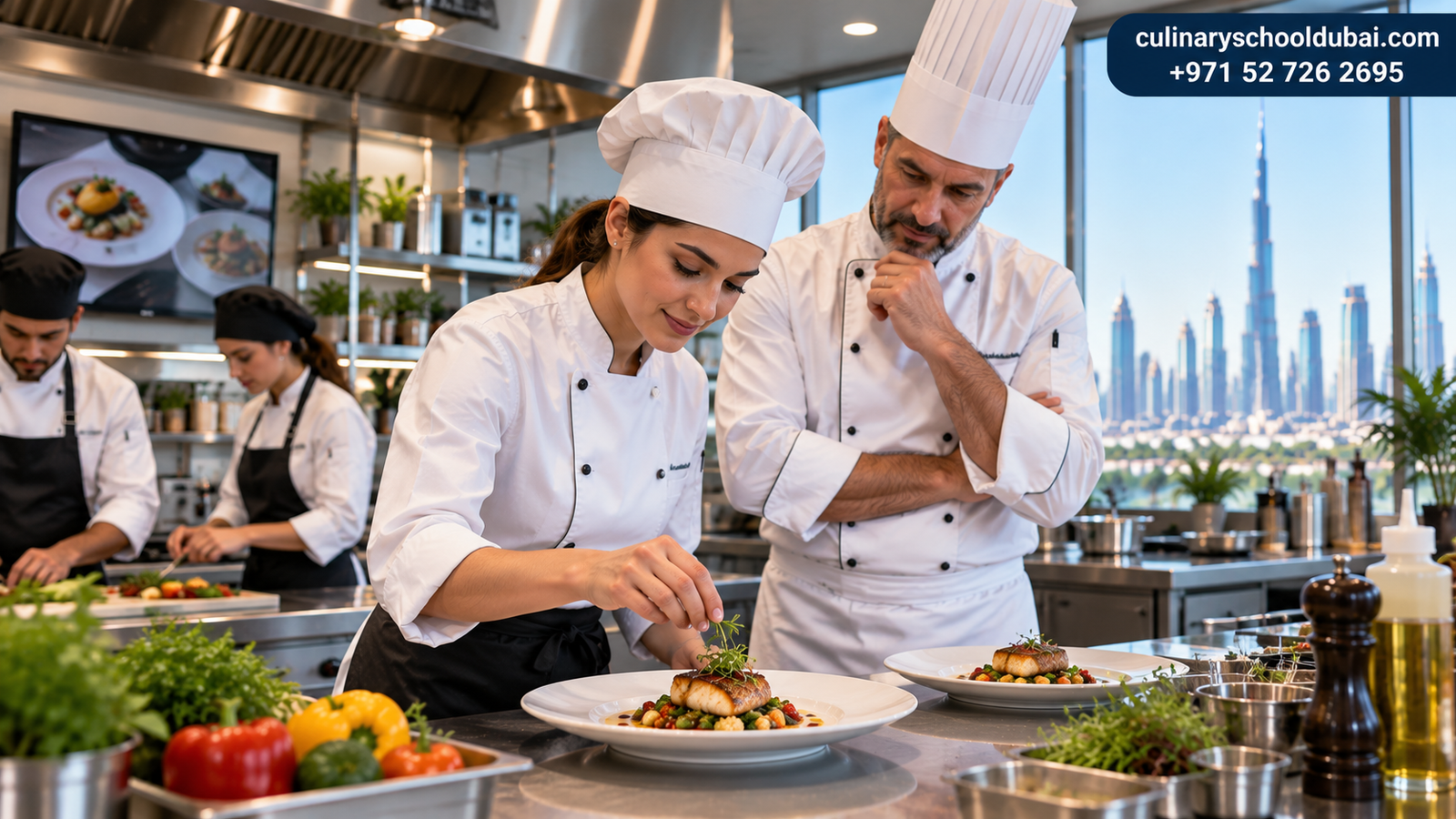
Culinary Certification Course in Dubai
Dubai is a leading destination for hotels, restaurants, resorts, catering companies, cafes, bakeries, and diverse food-service businesses. Its multicultural hospitality environment creates opportunities for people with professional cooking knowledge and practical culinary skills. For students, beginners, aspiring chefs, hospitality workers, and career changers, completing a culinary certification course in Dubai can provide a structured pathway to develop culinary knowledge and workplace skills.
Culinary education is not limited to learning recipes. Professional culinary training can introduce students to food preparation, cooking techniques, kitchen organization, hygiene, food safety, presentation, ingredients, equipment, teamwork, and professional kitchen procedures.
One of the major benefits of formal training is that students can learn these skills through a combination of theory and practical activities. A certificate can also provide formal recognition of completed training, although practical ability and professional experience remain important factors in culinary careers.
With many training providers available, selecting the right program requires careful research. Course content, certification, duration, practical training, instructors, kitchen facilities, and learning format can vary considerably.
This complete guide explains what a culinary certification Dubai program can offer, what students can learn, why practical training matters, who can enroll, how to select a suitable culinary institute, and what career opportunities can follow professional culinary training.
What Is a Culinary Certification Course?
A culinary certification course is a professional training program designed to teach the fundamentals and practical techniques of food preparation and professional cooking.
Depending on the level and curriculum, students may study:
- Food preparation
- Knife skills
- Cooking methods
- Ingredients
- Sauces and stocks
- Soups and salads
- Meat and seafood preparation
- Baking and pastry basics
- Food presentation
- Kitchen organization
- Food hygiene
- Food safety
- Professional kitchen communication
- Basic menu concepts
- Portion control
A culinary certificate course Dubai program may be designed for beginners, while advanced programs may target aspiring professional chefs or existing hospitality employees.
Before enrollment, students should carefully review the course curriculum to ensure it matches their goals.
Why Choose Culinary Certification Dubai?
A formal culinary certification Dubai program can provide a structured approach to learning professional cooking skills.
Instead of learning individual recipes without understanding the underlying techniques, students can learn fundamental methods that can be applied to many different dishes.
For example, understanding sautéing, roasting, braising, grilling, steaming, and baking can help a student work with a broad range of ingredients and recipes.
Certification can also provide evidence that a learner has completed organized training. When combined with practical skills and experience, this can strengthen a professional profile.
Benefits of Culinary Training in Dubai
Professional culinary training in Dubai can offer several benefits for learners.
Structured Learning
A course provides a planned sequence of topics, helping students progress from fundamental skills toward more advanced techniques.
Practical Experience
Students can practice cooking procedures, food preparation, plating, hygiene, and kitchen organization.
Professional Guidance
An experienced instructor can demonstrate techniques, identify mistakes, and provide feedback.
Culinary Confidence
Regular hands-on practice can help beginners become more comfortable with kitchen equipment and professional cooking procedures.
Career Preparation
Structured training can introduce students to the expectations of commercial kitchens and hospitality businesses.
What Do You Learn in a Culinary Course in Dubai?
A comprehensive culinary course in Dubai can cover a wide range of subjects.
Basic Food Preparation
Students may learn how to clean, peel, cut, portion, season, and prepare different ingredients.
Knife Skills
Knife handling is one of the fundamental culinary skills. Students may practice slicing, dicing, chopping, mincing, julienne, and other preparation techniques.
Cooking Methods
Training can introduce different methods, including:
- Grilling
- Roasting
- Baking
- Frying
- Sautéing
- Steaming
- Poaching
- Braising
Understanding these techniques helps students prepare food safely and consistently.
Food Presentation
Culinary training can also cover plating and presentation. Students may learn how to consider portion size, color, texture, arrangement, and overall appearance when presenting dishes.

Culinary Training Course Dubai for Beginners
A culinary training course Dubai program can be suitable for people with no professional kitchen experience.
Beginner-friendly training can introduce:
- Kitchen terminology
- Basic equipment
- Food preparation
- Knife skills
- Cooking techniques
- Kitchen hygiene
- Food safety
- Basic recipes
- Presentation
A good beginner course should explain concepts gradually and allow students enough time to practice.
Culinary Course for Beginners Dubai
A culinary course for beginners Dubai students can help transform an interest in cooking into a more structured skill set.
Beginners may initially focus on simple preparation tasks before progressing toward more complex dishes and techniques.
Practical exercises are particularly useful because culinary skills require repetition and coordination.
Professional Culinary Certification Dubai
A professional culinary certification Dubai program can be appropriate for learners who want career-focused training.
Professional programs may go beyond basic recipes and introduce commercial kitchen procedures, advanced preparation methods, food presentation, teamwork, time management, and professional standards.
Depending on the program, students may also learn about menu planning, portion control, ingredient management, and kitchen workflow.
When choosing professional training, review the complete curriculum and practical requirements.
Culinary Arts Certification Dubai
Culinary arts certification Dubai programs can provide broader exposure to the art and science of professional cooking.
Culinary arts may include:
- Food preparation
- Cooking methods
- Ingredients
- International cuisines
- Presentation
- Baking and pastry
- Kitchen operations
- Food safety
- Culinary creativity
Students interested in developing a broad culinary foundation may benefit from a course that covers several areas rather than focusing on only one cooking technique.
Culinary Certification Training Dubai
Culinary certification training Dubai should ideally combine theoretical instruction with meaningful hands-on learning.
Students can learn a concept from an instructor and then apply it in a practical kitchen environment.
For example, an instructor may demonstrate a sauce-making technique before students prepare the sauce themselves. The instructor can then assess consistency, seasoning, texture, and technique.
This approach allows learners to connect classroom concepts with actual culinary work.
Culinary Practical Training Dubai
Culinary practical training Dubai is one of the most important aspects to consider when selecting a course.
Cooking is a skill-based profession. Students need direct experience with ingredients, equipment, temperatures, timing, preparation, and presentation.
Practical sessions may include:
- Knife practice
- Vegetable preparation
- Meat preparation
- Seafood preparation
- Sauce preparation
- Soup preparation
- Cooking techniques
- Baking exercises
- Plating
- Portion control
- Kitchen organization
Practical work can also help learners develop speed, precision, consistency, and confidence.
Hands-On Culinary Training Dubai
Hands-on culinary training Dubai allows students to practice techniques instead of simply watching demonstrations.
Repeated practice is particularly important for culinary skills because students need to develop muscle memory, timing, coordination, and attention to detail.
A hands-on class may involve an instructor demonstration followed by student practice and individual feedback.
Students should ask potential training providers how many hours are dedicated specifically to kitchen practice.
Food Safety and Hygiene in Culinary Training
Food safety should be an essential part of any professional culinary program.
Students need to understand the importance of:
- Personal hygiene
- Clean workstations
- Safe food storage
- Cross-contamination prevention
- Proper food handling
- Temperature control
- Cleaning and sanitation
- Safe equipment operation
These practices help protect customers and support professional kitchen standards.
When comparing a culinary certification course in Dubai, confirm that food hygiene and safety are included in the curriculum.
Kitchen Equipment and Professional Workflows
Professional culinary training should introduce students to the appropriate kitchen equipment for the course level.
Depending on the curriculum, students may work with:
- Knives
- Cutting boards
- Ovens
- Stoves
- Mixers
- Frying equipment
- Refrigeration equipment
- Food processors
- Measuring tools
- Basic pastry equipment
Students should also learn how to organize their workstation efficiently and maintain cleanliness while working.
International Cuisine and Culinary Techniques
Dubai's diverse food culture makes knowledge of different cuisines useful for aspiring culinary professionals.
Some culinary training course Dubai programs introduce students to multiple cuisines and cooking styles.
Depending on the curriculum, learners may explore different ingredients, seasoning approaches, preparation methods, and presentation techniques.
Students should check the actual syllabus rather than assuming every program includes the same cuisines.
Baking and Pastry Fundamentals
Some culinary courses include introductory baking and pastry training.
Students may learn about:
- Dough preparation
- Baking methods
- Cakes
- Pastries
- Desserts
- Basic decoration
- Portioning
Those who want to specialize in pastry should check whether the institute provides dedicated pastry modules or a separate professional pastry program.
Chef Certification Course Dubai
A chef certification course Dubai can be useful for students who want a formal culinary qualification or course-completion credential.
Chef-focused programs may cover professional cooking techniques, kitchen organization, food preparation, presentation, hygiene, and workplace procedures.
Before enrolling, students should check what certification is provided and whether the certification fee is included in the total course cost.
Chef Certification Dubai and Career Preparation
Chef certification Dubai can demonstrate completion of structured training, but it is important to understand that certification alone does not guarantee employment.
Culinary employers may also consider:
- Cooking ability
- Practical experience
- Food safety knowledge
- Speed and consistency
- Teamwork
- Communication
- Kitchen discipline
- Professional attitude
- Relevant qualifications
A certificate is most useful when supported by practical ability and workplace experience.
Culinary Training Institute Dubai
Choosing the right culinary training institute Dubai is an important decision.
Before enrollment, evaluate:
- Course curriculum
- Kitchen facilities
- Practical training hours
- Instructor experience
- Course duration
- Certification
- Class size
- Training schedule
- Learning resources
- Student support
A suitable institute should provide a professional environment where students can practice regularly.
Culinary Institute in Dubai: How to Evaluate One
When comparing a culinary institute in Dubai, do not focus only on the course title or fee.
Check the Kitchen Facilities
Students should have access to suitable equipment and workspaces for the skills being taught.
Ask whether the practical kitchen includes the tools and equipment required for the course.
Review Practical Hours
A culinary program should provide meaningful cooking practice.
Ask how many practical hours are included and whether students prepare dishes themselves.
Research the Trainers
Experienced instructors can demonstrate techniques clearly and give feedback on student performance.
Review the Curriculum
Make sure the course includes the areas you want to learn, whether general cooking, culinary arts, pastry, or professional chef skills.
Culinary Certification Course Duration
The duration of a culinary certification program depends on its scope.
Short courses may focus on specific culinary skills, while broader professional programs can include more techniques, practical training, and assessments.
Instead of comparing only calendar duration, compare:
- Total training hours
- Practical kitchen hours
- Number of modules
- Assessments
- Projects
- Certification requirements
A longer course is not automatically better. The content and practical experience are equally important.
Class Format: Classroom vs Online
Culinary education is highly practical, so classroom and kitchen-based learning can be particularly valuable.
Classroom Training
Classroom sessions provide direct interaction with instructors. When combined with practical kitchen work, students can observe demonstrations and receive immediate feedback.
Online Learning
Online theory classes can be useful for subjects such as food safety, culinary terminology, menu concepts, and basic theory.
However, students should make sure that practical cooking requirements are adequately addressed for a professional culinary program.
Who Can Join a Culinary Certification Course?
A culinary certification course can be suitable for:
- School graduates
- College students
- University students
- Beginners
- Career changers
- Home cooks
- Hospitality workers
- Restaurant employees
- Hotel employees
- Aspiring chefs
- Culinary enthusiasts
The appropriate course depends on the learner's existing knowledge and career objective.
Culinary Skills You Can Develop
A comprehensive culinary certification course in Dubai can help students develop a combination of practical and professional skills.
Knife Skills
Students can improve cutting precision, speed, consistency, and safety.
Cooking Techniques
Understanding different cooking methods provides a strong foundation for preparing a wide variety of foods.
Food Presentation
Plating techniques help students present dishes attractively and professionally.
Kitchen Organization
Students learn how to arrange ingredients, equipment, and workstations efficiently.
Time Management
Professional kitchens often require multiple tasks to be completed simultaneously, making timing and organization important skills.
Teamwork
Commercial kitchens depend on coordinated work between chefs, assistants, service teams, and management.
Building a Culinary Portfolio
Although cooking is primarily a practical skill, students can document their work as part of a professional portfolio.
A culinary portfolio may include:
- Photographs of prepared dishes
- Menu concepts
- Plating examples
- Baking projects
- Practical assessments
- Culinary project descriptions
- Food presentation exercises
A portfolio can help demonstrate creativity and practical ability alongside certification and experience.
Career Opportunities After Culinary Certification
Completing culinary training can help prepare learners for different food-service roles, depending on their skills and experience.
Potential career paths include:
- Commis Chef
- Junior Chef
- Line Cook
- Kitchen Assistant
- Chef de Partie
- Catering Chef
- Pastry Assistant
- Food Production Staff
- Restaurant Kitchen Staff
With experience, professionals may progress into senior culinary, supervisory, or management positions.
Actual career opportunities depend on qualifications, experience, practical skills, workplace performance, and employer requirements.
How to Choose the Best Culinary Certification Course in Dubai
Finding the best culinary certification course in Dubai requires more than comparing certificates or prices.
Match the Course to Your Goal
Decide whether you want general cooking skills, professional chef preparation, culinary arts education, or specialization in pastry or another area.
Check Practical Training
Make practical kitchen hours a priority.
Evaluate the Facilities
Ensure the institute has suitable equipment and workspaces.
Review the Trainers
Look for instructors with relevant professional culinary and teaching experience.
Confirm Certification
Ask what certificate is provided and whether any additional certification fees apply.
Compare Course Duration
Look at total hours and practical sessions rather than only the number of weeks.
Questions to Ask Before Enrolling
Before joining a culinary program, ask:
- What subjects are covered?
- How many practical cooking hours are included?
- What kitchen facilities are available?
- Who teaches the program?
- Is the course suitable for beginners?
- Which cooking techniques are taught?
- Are food safety and hygiene included?
- Is certification included?
- Are ingredients and materials included?
- What is the total course duration?
Getting clear answers can help you compare different programs.
Common Mistakes When Choosing Culinary Training
Students sometimes select a course based only on price or the word "certification."
Common mistakes include:
- Choosing a program with little practical cooking
- Not checking kitchen facilities
- Ignoring the curriculum
- Selecting the wrong skill level
- Failing to ask about certification terms
- Not researching instructors
- Ignoring practical training hours
- Choosing a course without considering career goals
Careful research can help learners select a program that provides greater practical value.
Is Culinary Certification Worth It?
For people who want to pursue professional cooking or hospitality careers, formal culinary training can be a useful investment.
It can provide a structured foundation in cooking techniques, food preparation, hygiene, presentation, and kitchen operations.
However, culinary careers depend heavily on practical ability and experience. Students should continue practicing after completing formal training and seek opportunities to gain professional kitchen exposure.
Certification can support a professional profile, but it works best alongside practical competence and a strong work ethic.
Final Thoughts
A culinary certification course in Dubai can provide a structured pathway for people who want to develop professional cooking skills and learn about commercial kitchen operations.
When choosing a program, look beyond the certificate. Review the curriculum, practical kitchen hours, facilities, instructor experience, course duration, certification requirements, and overall learning environment.
Beginners can start with a culinary course for beginners Dubai program that introduces food preparation, knife skills, cooking techniques, hygiene, and basic presentation. Those seeking professional careers may prefer broader culinary arts or chef-focused training.
Hands-on culinary training Dubai can be particularly valuable because cooking skills improve through repeated practice. Students need opportunities to work directly with ingredients and equipment, perform techniques, receive feedback, and improve their results.
Professional culinary training in Dubai can also expose learners to different cuisines, kitchen workflows, food safety practices, plating techniques, and teamwork.
Ultimately, the best culinary certification course in Dubai is one that fits your career objectives, current skill level, schedule, and learning needs while offering strong practical training.
With consistent practice, professional guidance, relevant certification, and real-world experience, students can build a solid foundation for pursuing opportunities in restaurants, hotels, resorts, catering businesses, bakeries, and other food-service environments.