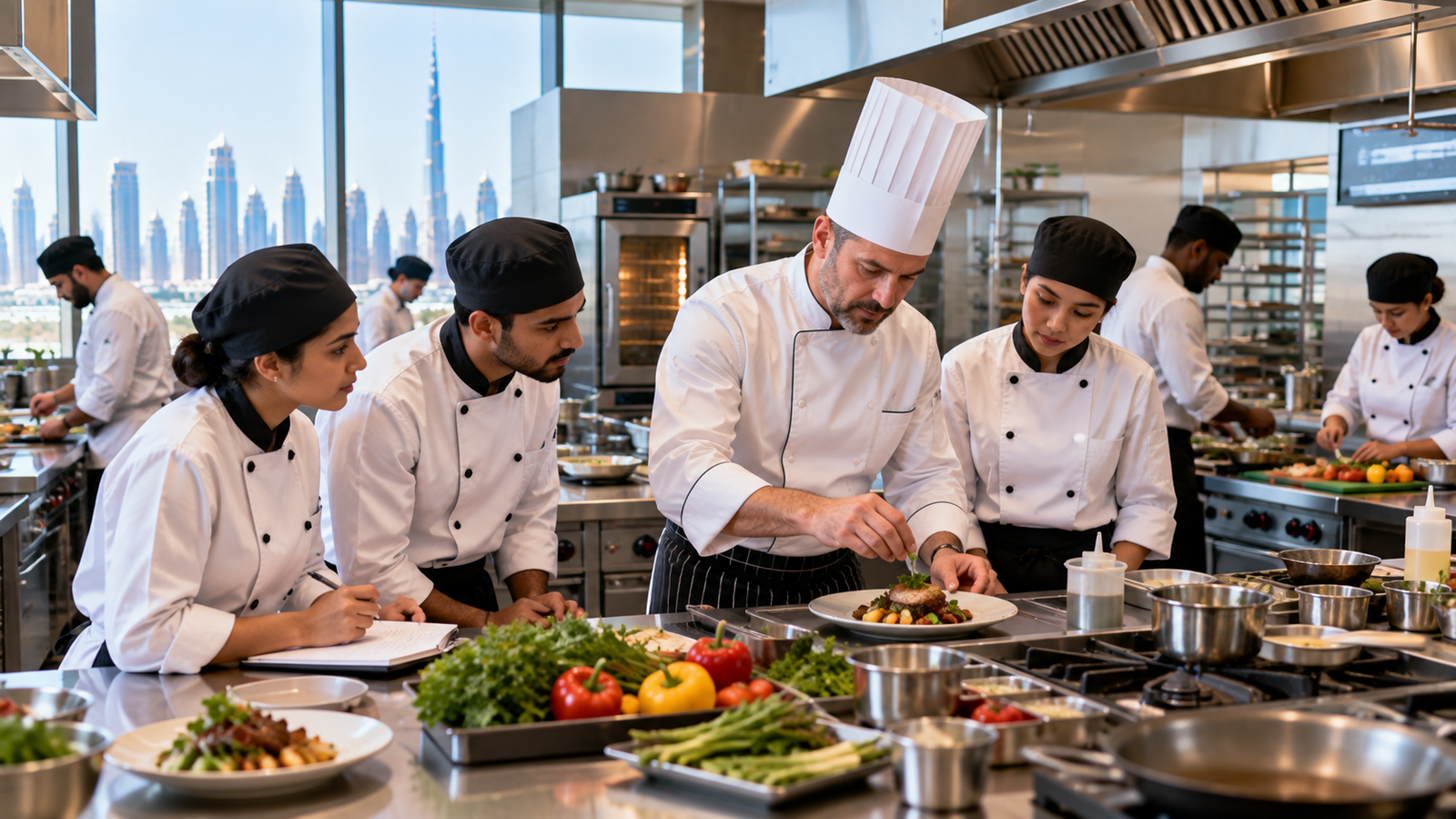
Culinary Course Fees in Dubai: Complete Guide to Course Costs, Training & Certification
Choosing the right culinary course in Dubai is an important decision for anyone who wants to build a career in professional cooking, hospitality, restaurants, hotels, catering, or food businesses. One of the first questions students usually ask is: How much are culinary course fees in Dubai?
The cost of culinary education can vary depending on the course level, duration, practical training, certification, institute, and facilities included in the program. Short-term culinary classes may be more affordable, while professional culinary diplomas and advanced chef training programs generally cost more because they include more extensive practical learning.
This guide explains culinary course fees in Dubai, what affects the total culinary course cost, what students can expect to learn, and how to choose a suitable culinary training program.
What Are the Culinary Course Fees in Dubai?
Culinary course fees in Dubai vary according to the type and level of training. A basic cooking or culinary class may have a lower fee, while a professional culinary arts course with practical kitchen training and certification can require a higher investment.
Students should look beyond the advertised price and compare what is included in the course. Some programs may include ingredients, practical sessions, learning materials, assessments, and certification, while others may charge additional fees.
The main factors that influence culinary course price in Dubai include:
- Course duration
- Level of culinary training
- Practical kitchen sessions
- Certification
- Training facilities
- Ingredients and equipment
- Instructor experience
- Course specialization
- Class size
- Assessment and examination fees
For this reason, it is better to compare the complete course package rather than choosing a program based only on its initial price.

Factors That Affect Culinary Course Cost in Dubai
The culinary course cost in Dubai depends on several factors. Understanding these factors can help students select a course that provides good value for their career goals.
Course Duration
The duration of a culinary program has a direct effect on its overall cost. Short courses may take a few weeks, while professional programs can continue for several months.
A short culinary course is suitable for beginners who want to learn basic cooking skills or improve specific techniques. Longer programs provide more time for practical training, advanced techniques, kitchen operations, and professional preparation.
Level of Training
Culinary programs are available at different levels. Beginner courses generally focus on fundamental cooking skills, kitchen safety, food preparation, and basic techniques.
Intermediate and advanced programs may cover professional cooking methods, international cuisines, menu planning, food presentation, kitchen management, and other industry-related skills.
As the level of training increases, the culinary training fees in Dubai may also increase.
Practical Training
Practical training is one of the most important parts of professional culinary education. Students need opportunities to work with ingredients, kitchen equipment, cooking methods, and professional food preparation techniques.
A course with extensive hands-on training may cost more than a theory-focused program. However, practical experience can be highly valuable for students planning to work in professional kitchens.
Certification
Certification can also influence culinary certification course fees in Dubai. A recognized certificate can provide evidence that a student has completed structured culinary training.
Before enrolling, students should check what type of certificate is provided, who issues it, and whether the certification is relevant to their career plans.
What Is Included in Culinary Training Fees?
When comparing culinary training fees in Dubai, students should ask what is included in the total course price.
Depending on the institute and program, the package may include:
- Classroom instruction
- Practical kitchen training
- Cooking ingredients
- Kitchen equipment
- Training materials
- Assessments
- Course certification
- Instructor support
- Recipe development
- Food preparation exercises
Not every institute includes the same items. Therefore, asking for a complete fee breakdown before enrollment can help avoid unexpected costs.
Culinary Course Fees vs. Culinary Classes Fees in Dubai
There is a difference between a structured culinary course and individual cooking classes.
Culinary classes in Dubai may focus on a particular skill, cuisine, recipe, or cooking technique. They are often suitable for hobbyists, beginners, or people who want to learn a specific skill.
A professional culinary course in Dubai, on the other hand, usually follows a structured curriculum and may include several areas of culinary education.
For example, a professional program may cover:
- Knife skills
- Food preparation
- Cooking techniques
- Sauces and stocks
- Meat and poultry preparation
- Seafood preparation
- Baking fundamentals
- Food presentation
- Kitchen hygiene
- Food safety
- Menu planning
- Professional kitchen practices
Students who want a career in the food industry should generally consider a comprehensive training program rather than isolated cooking classes.
Culinary School Fees in Dubai: What Should Students Compare?
When researching culinary school fees in Dubai, price should not be the only consideration.
Students should compare the following factors:
Practical Kitchen Facilities
Check whether the institute provides a proper training kitchen where students can practice cooking techniques. Hands-on training is especially important for beginners and aspiring chefs.
Course Curriculum
Review the syllabus before enrollment. A strong culinary curriculum should cover both fundamental skills and practical professional techniques.
Instructor Experience
Experienced instructors can provide practical knowledge about professional kitchen environments, food preparation, cooking standards, and common industry practices.
Certification
Find out whether the course includes certification and what the certificate represents.
Class Size
Smaller classes may allow students to receive more individual attention during practical sessions.
Location and Schedule
A conveniently located institute with flexible class timings can make it easier to attend training consistently.
Chef Course Fees in Dubai
Students searching for chef course fees in Dubai often have a specific career goal: becoming a professional chef or developing the skills required to work in commercial kitchens.
Chef training can cover a wide range of subjects depending on the course level.
A professional chef training program may include:
- Basic culinary techniques
- Advanced cooking methods
- Food preparation
- Kitchen organization
- Food hygiene
- International cuisine
- Plating and presentation
- Menu development
- Portion control
- Kitchen safety
- Professional kitchen workflow
The cost of chef training depends on the duration, curriculum, practical sessions, certification, and level of specialization.
Before selecting a program, students should consider whether the course matches their intended career path.
What Do You Learn in a Professional Culinary Course?
A professional culinary course in Dubai is designed to develop practical skills that can be applied in professional food-service environments.
Basic Kitchen Skills
Beginners typically learn how to use knives safely, prepare ingredients, organize a workstation, and follow basic kitchen procedures.
Cooking Techniques
Students can learn techniques such as sautéing, grilling, roasting, boiling, steaming, frying, baking, and braising.
Food Preparation
Food preparation includes cleaning, cutting, portioning, seasoning, marinating, and preparing ingredients for different dishes.
Sauces, Stocks and Soups
Students can develop an understanding of basic stocks, sauces, soups, and their applications in professional cooking.
Meat, Poultry and Seafood
Depending on the curriculum, students may learn appropriate preparation and cooking methods for meat, poultry, and seafood.
Food Presentation
Presentation is an important part of modern culinary work. Students learn how to arrange dishes attractively and maintain consistency.
Hygiene and Food Safety
Professional kitchens require high standards of cleanliness and food safety. Culinary training introduces students to hygienic food handling, storage, preparation, and kitchen practices.
Is a Culinary Arts Course Worth It in Dubai?
For people who are serious about developing professional cooking skills, a culinary arts course in Dubai can be a valuable investment.
Dubai has a large hospitality and food-service sector, including hotels, restaurants, catering companies, cafés, bakeries, resorts, and other food businesses.
Formal training can help students develop structured culinary knowledge rather than relying only on self-learning.
A good culinary program can help students:
- Build practical cooking skills
- Understand professional kitchen procedures
- Improve food preparation techniques
- Learn food safety practices
- Develop presentation skills
- Gain a formal certificate
- Prepare for entry-level culinary roles
- Build confidence in a kitchen environment
However, students should select a course based on their individual goals, budget, schedule, and preferred specialization.
Culinary Certification Course Fees in Dubai
Certification is an important consideration for students looking for professional training.
Culinary certification in Dubai can demonstrate that a student has completed a particular training program. However, students should understand that certification alone does not replace practical experience.
When comparing culinary certification course fees, ask:
- What certificate will I receive?
- Is the certificate included in the course fee?
- Are practical sessions included?
- Are ingredients included?
- Are assessments included?
- What is the course duration?
- What topics are covered?
- Does the program match my career objective?
Getting answers to these questions makes it easier to compare different culinary programs.
Culinary Diploma Course Fees in Dubai
A culinary diploma course in Dubai generally provides more extensive training than a short-term cooking class.
Diploma-level programs may cover a broader range of culinary topics and provide more opportunities for practical learning.
Students considering a culinary diploma should carefully review:
- Total course duration
- Practical training hours
- Syllabus
- Certification
- Assessment structure
- Training kitchen
- Instructor support
- Additional costs
- Attendance requirements
The total culinary diploma course fees in Dubai depend on the specific program and what is included.
Practical Culinary Training in Dubai
Practical experience is essential for anyone planning to work in a professional kitchen.
Practical culinary training in Dubai allows students to apply concepts learned during lessons. Instead of only watching demonstrations, students can participate in food preparation and cooking activities.
Hands-on training can help students improve:
- Knife handling
- Ingredient preparation
- Cooking speed
- Kitchen organization
- Food presentation
- Equipment handling
- Hygiene practices
- Recipe execution
- Time management
Students should therefore give significant importance to the practical component when comparing culinary programs.
How to Choose the Best Culinary Course in Dubai
Finding the best culinary course in Dubai depends on your individual needs. There is no single course that is perfect for every student.
Consider these steps before enrolling.
Define Your Career Goal
Decide whether you want to become a professional chef, work in hospitality, start a food business, improve your cooking skills, or specialize in a particular cuisine.
Compare the Syllabus
A detailed syllabus can tell you exactly what you will learn. Compare different programs to identify which one provides the skills you need.
Check Practical Training
Prioritize programs that provide meaningful hands-on kitchen experience.
Understand the Complete Fee
Ask about registration, certification, ingredients, equipment, examination, and other potential charges.
Consider Course Duration
Choose a duration that fits your current schedule and career objective.
Ask About Certification
Understand what certificate you will receive after successfully completing the course.
Visit the Training Facility
If possible, visit the institute before enrolling. This allows you to see the classrooms, kitchen facilities, equipment, and learning environment.
How Much Should You Budget for Culinary Training?
Instead of focusing only on the lowest culinary course price in Dubai, students should think about the value they receive for their investment.
A low-cost course may not always provide enough practical training, while a more comprehensive program may offer better facilities, more training hours, and stronger support.
Create a budget that considers:
- Tuition fees
- Registration charges
- Transportation
- Uniform or chef clothing
- Ingredients, if not included
- Equipment, if required
- Certification fees
- Examination charges
- Additional learning materials
Comparing the complete cost gives you a more realistic idea of your investment.
Who Can Join a Culinary Course in Dubai?
Culinary training can be suitable for a wide range of learners.
It may be appropriate for:
- Beginners
- Aspiring chefs
- Hospitality students
- Restaurant employees
- Home cooks
- Food entrepreneurs
- Career changers
- Hotel industry professionals
- Students interested in culinary arts
Entry requirements depend on the specific program. Some beginner courses may have minimal requirements, while advanced or diploma-level programs may have additional eligibility criteria.
Why Practical Skills Matter More Than Price Alone
When comparing culinary course fees in Dubai, it is easy to focus entirely on the price. However, culinary education is a practical field.
The value of a course depends heavily on the skills you develop during training.
A program that provides regular practical sessions can help you gain confidence with professional kitchen equipment, ingredients, recipes, cooking techniques, and food presentation.
Therefore, consider the relationship between course cost, training hours, practical experience, curriculum, certification, and career goals before making your decision.
Final Thoughts on Culinary Course Fees in Dubai
Understanding culinary course fees in Dubai is the first step toward choosing the right culinary training program. Course costs can vary significantly depending on duration, training level, practical sessions, facilities, certification, and curriculum.
Whether you are searching for a short culinary class, professional chef training, culinary certification, or a culinary diploma, compare the complete course package rather than looking at tuition fees alone.
The right culinary course in Dubai should provide a balance of practical training, relevant knowledge, experienced instruction, suitable facilities, and certification that supports your career goals.
If your objective is to build a professional career in the hospitality and food industry, investing in structured culinary training can give you a stronger foundation and the confidence to work in a professional kitchen.
Before enrolling, review the syllabus, ask for a complete fee breakdown, understand the certification, and confirm how much practical training is included. This approach will help you make a more informed decision and choose a culinary program that fits your goals and budget.