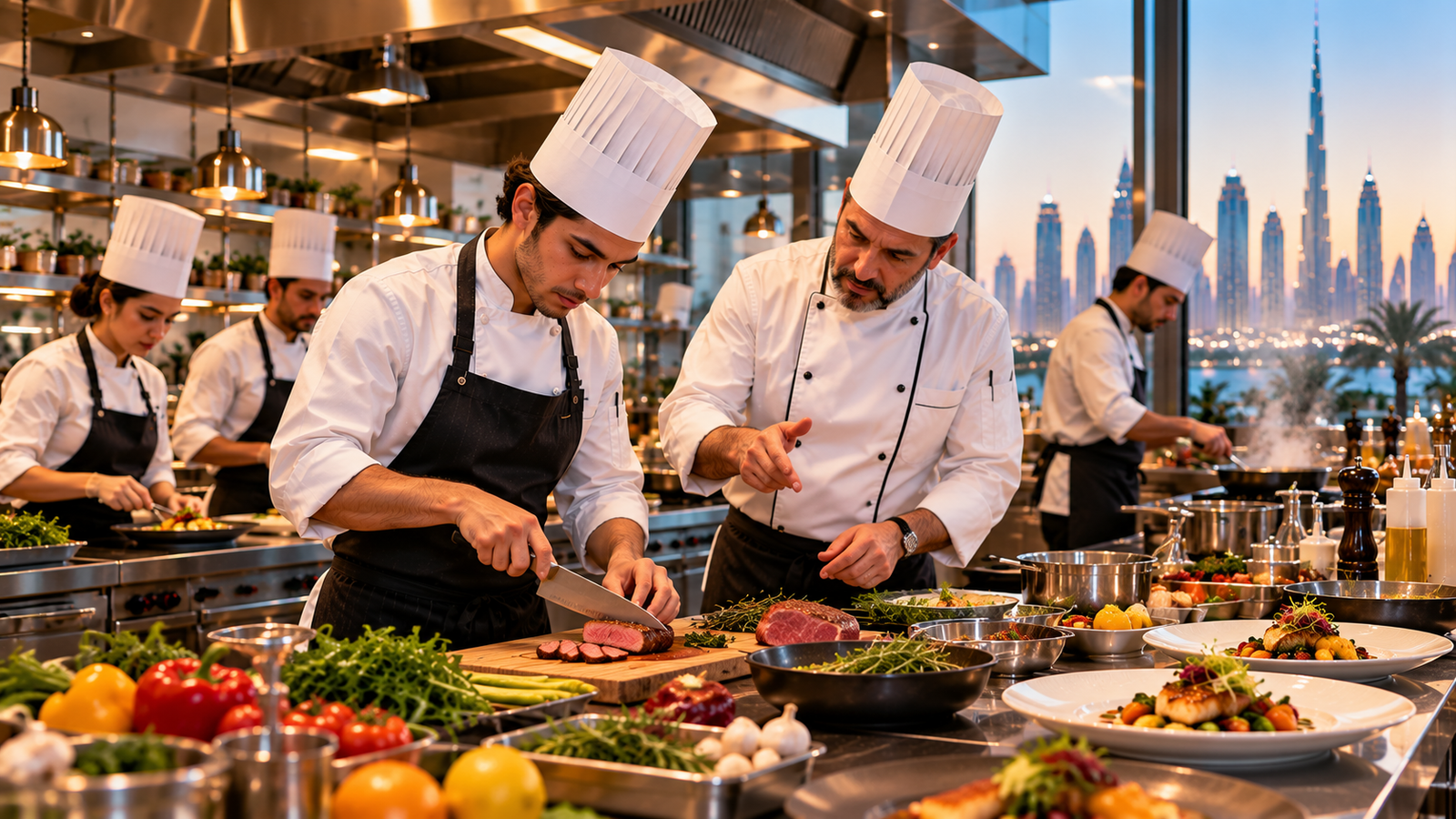
How to Become a Chef in Dubai
Becoming a professional chef requires a combination of culinary knowledge, practical kitchen skills, discipline, creativity, food safety awareness, and experience. For people who enjoy cooking and want to turn their interest into a professional career, Dubai offers a diverse hospitality environment with hotels, restaurants, cafes, resorts, catering companies, bakeries, and other food-service businesses.
But how to become a chef in Dubai?
The process can begin with learning basic culinary techniques and gradually developing professional kitchen skills. A structured culinary course can help beginners understand food preparation, cooking methods, kitchen organization, hygiene, food safety, and presentation.
As experience grows, aspiring chefs can develop specializations and take on greater responsibilities.
This guide explains how to become a chef in Dubai UAE, including qualifications, courses, practical training, certification, essential skills, career paths, and potential job opportunities.
What Does a Chef Do?
A chef's responsibilities depend on their position and the type of kitchen where they work.
A chef may be responsible for:
- Preparing ingredients
- Planning food production
- Cooking dishes
- Following recipes
- Developing recipes
- Managing portions
- Maintaining food quality
- Plating dishes
- Monitoring hygiene
- Managing kitchen equipment
- Coordinating with kitchen staff
- Checking food storage
- Supporting menu development
Senior chefs may also supervise employees, manage kitchen sections, monitor food costs, coordinate service, and support overall kitchen operations.
How to Become a Chef in Dubai UAE
If you are researching how to become a chef in Dubai UAE, it helps to follow a structured career pathway.
A typical route can include:
- Learn basic culinary skills
- Complete chef or culinary training
- Develop practical cooking techniques
- Learn food safety and hygiene
- Practice professional kitchen procedures
- Gain practical kitchen experience
- Obtain relevant certification
- Apply for entry-level culinary positions
- Develop a specialization
- Continue professional development
The exact pathway can vary depending on your education, experience, culinary specialization, and career objectives.
Chef Qualifications Dubai
Chef qualifications Dubai can vary according to the employer and position.
Some chefs enter the profession through formal culinary education, while others develop their skills through professional training and practical kitchen experience.
Relevant educational backgrounds can include:
- Culinary arts
- Hospitality
- Professional cooking
- Food production
- Baking and pastry
- Hotel management
Professional courses can also provide focused training in practical cooking techniques and kitchen operations.
When applying for a specific job, candidates should review the qualifications and experience requirements listed by the employer.

Chef Courses in Dubai
Chef courses in Dubai can provide a structured way to develop professional cooking skills.
A comprehensive course may cover:
- Culinary fundamentals
- Food preparation
- Knife skills
- Cooking methods
- Sauces
- Stocks
- Meat preparation
- Seafood
- Vegetables
- Plating
- Food safety
- Kitchen organization
Beginners should look for courses that combine theory with practical kitchen training.
Chef Course for Beginners Dubai
A chef course for beginners Dubai can introduce people with little or no professional kitchen experience to the fundamentals of cooking.
Kitchen Equipment
Students can learn how to use common kitchen equipment safely and effectively.
Knife Skills
Proper knife handling and cutting techniques are important for safe and efficient food preparation.
Food Preparation
Learners can practice:
- Washing
- Peeling
- Cutting
- Measuring
- Portioning
- Marinating
- Preparing ingredients
Basic Cooking Methods
Training can introduce:
- Boiling
- Steaming
- Roasting
- Grilling
- Baking
- Frying
- Sautéing
- Braising
These fundamentals provide a foundation for more advanced culinary work.
Professional Chef Course Dubai
A professional chef course Dubai can help learners develop skills relevant to commercial kitchen environments.
Training can include:
- Advanced cooking techniques
- Food preparation
- Recipe following
- Portion control
- Plating
- Kitchen organization
- Food safety
- Ingredient management
- Service preparation
Professional training can also introduce learners to the pace and discipline expected in commercial kitchens.
Culinary Courses Dubai
Culinary courses Dubai can cover a wide range of food preparation and cooking topics.
Depending on the program, learners may study:
- Culinary fundamentals
- International cuisine
- Baking
- Pastry
- Sauces
- Meat
- Seafood
- Vegetables
- Desserts
- Food presentation
Aspiring chefs can choose courses according to their current level and long-term career interests.
Culinary Training Dubai
Culinary training Dubai can help students develop practical skills through structured lessons and kitchen exercises.
Training may be suitable for:
- Beginners
- Fresh graduates
- Career changers
- Hospitality workers
- Kitchen assistants
- Aspiring chefs
The appropriate level depends on previous experience.
A beginner may require fundamental instruction, while an experienced kitchen employee may benefit from advanced culinary training.
Culinary Arts Course Dubai
A culinary arts course Dubai can combine technical cooking knowledge with creativity.
Culinary arts involves understanding:
- Flavor
- Texture
- Ingredients
- Seasoning
- Cooking temperatures
- Presentation
- Portion sizes
- Menu concepts
Aspiring chefs can learn how different ingredients and techniques work together to create balanced dishes.
Chef Training Dubai
Chef training Dubai can introduce learners to the skills and discipline required in professional kitchens.
Training can include:
- Knife skills
- Food preparation
- Cooking methods
- Sauces
- Stocks
- Protein preparation
- Vegetable preparation
- Plating
- Food safety
- Kitchen organization
Advanced programs may also introduce menu planning, food costing, inventory management, and team supervision.
Chef Training Institute Dubai
When looking for a chef training institute Dubai, students should compare training providers carefully.
Important factors can include:
- Course curriculum
- Practical kitchen facilities
- Instructor experience
- Training level
- Course duration
- Certification
- Practical assignments
- Food safety content
A training environment that provides regular hands-on practice can help students develop greater confidence.
Practical Chef Training Dubai
Practical chef training Dubai allows learners to apply cooking techniques directly.
A typical practical session can include:
- Reviewing the recipe
- Preparing ingredients
- Organizing the workstation
- Applying cooking techniques
- Checking seasoning
- Completing the dish
- Plating
- Cleaning the workstation
- Reviewing the result
This process helps students understand how theory translates into professional kitchen practice.
Hands-On Chef Training Dubai
Hands-on chef training Dubai is important because cooking is a practical skill.
Watching someone prepare a dish is different from preparing it yourself.
Hands-on training allows students to practice:
- Knife skills
- Cooking temperatures
- Timing
- Seasoning
- Portioning
- Plating
- Kitchen organization
- Equipment handling
Instructor feedback can help learners identify and correct mistakes.
Chef Skills Dubai
Professional chefs need a broad combination of skills.
Cooking Skills
Chefs need to understand cooking methods, temperatures, timing, and seasoning.
Preparation Skills
Efficient preparation helps kitchens maintain a smooth workflow.
Food Safety Skills
Chefs must understand hygiene, safe food handling, storage, and cross-contamination prevention.
Presentation Skills
Plating requires attention to balance, portion size, color, texture, and visual composition.
Communication Skills
Professional kitchens depend on effective communication between team members.
Organizational Skills
Chefs need to manage ingredients, equipment, preparation schedules, and service requirements.
Food Safety and Hygiene for Chefs
Food safety is an essential part of professional culinary work.
Chef training can cover:
- Personal hygiene
- Hand washing
- Cross-contamination
- Food storage
- Temperature control
- Cleaning
- Sanitization
- Allergen awareness
- Safe handling of raw ingredients
Chefs and kitchen teams should follow applicable food safety regulations and workplace procedures.
The Importance of Mise en Place
Mise en place is a fundamental concept in professional kitchens.
It generally means preparing and organizing ingredients and equipment before cooking begins.
Good mise en place can include:
- Washing ingredients
- Cutting ingredients
- Measuring quantities
- Preparing sauces
- Organizing tools
- Checking equipment
- Setting up workstations
- Reviewing the preparation schedule
Good preparation can help chefs work more efficiently during busy service periods.
Chef Certification Dubai
Chef certification Dubai can document the completion of professional culinary training.
A certificate can demonstrate that an individual completed a particular course.
However, aspiring chefs should consider the complete training experience rather than certification alone.
Look at:
- Practical training
- Course content
- Instructor support
- Kitchen facilities
- Food safety coverage
- Course level
- Practical projects
Employers may also consider practical experience, technical ability, and professional behavior.
Culinary Certification Course Dubai
A culinary certification course Dubai can provide structured training along with documentation of completion.
Depending on the course, students may study:
- Food preparation
- Cooking techniques
- Culinary arts
- Kitchen hygiene
- Food safety
- Plating
- Kitchen operations
Before enrolling, learners should understand what the certification represents and whether it matches their career objectives.
Building Practical Kitchen Experience
Training is only one part of becoming a chef.
Practical experience can help learners understand:
- Kitchen hierarchy
- Service pressure
- Teamwork
- Preparation schedules
- Customer expectations
- Food quality
- Workplace discipline
Experience can be gained through:
- Internships
- Entry-level jobs
- Restaurant work
- Hotel kitchens
- Catering
- Apprenticeship-style opportunities
- Training projects
Working alongside experienced chefs can also provide valuable practical knowledge.
Chef Jobs in Dubai
People searching for chef jobs in Dubai can explore different levels of culinary employment.
Potential entry-level roles include:
- Kitchen assistant
- Commis chef
- Junior cook
- Prep cook
- Pastry assistant
- Bakery assistant
With experience, professionals may progress into positions such as:
- Chef de partie
- Sous chef
- Head chef
- Executive chef
Job requirements vary between employers and positions.
Chef Career in Dubai
A chef career in Dubai can develop gradually through experience and increasing responsibility.
A possible career path is:
Kitchen Assistant → Commis Chef → Chef de Partie → Sous Chef → Head Chef → Executive Chef
This is only one possible progression.
Some chefs specialize instead of following a general kitchen management route.
Specializations can include:
- Pastry
- Bakery
- Seafood
- Meat
- Fine dining
- International cuisine
- Catering
- Private cooking
Chef Career Path Dubai
A chef career path Dubai can take different forms depending on a professional's interests and abilities.
Someone who enjoys leadership may eventually move toward kitchen management.
Someone who prefers creative cooking may specialize in a particular cuisine.
A professional interested in desserts may focus on pastry and bakery.
Other chefs may develop careers in catering, food production, private kitchens, or culinary education.
Chef Career Opportunities Dubai
Chef career opportunities Dubai can exist across different hospitality environments.
Hotels
Hotels can have multiple culinary departments, including restaurants, banquets, pastry, and room service.
Restaurants
Restaurants can offer opportunities across different cuisines and kitchen sections.
Catering
Catering operations involve food production for events, weddings, corporate functions, and other occasions.
Cafes and Bakeries
These environments can be suitable for professionals interested in bakery, pastry, desserts, or casual food production.
Private Kitchens
Experienced culinary professionals may also work in private households or specialized food-service environments.
How to Develop Your Culinary Skills
Becoming a chef requires continuous practice.
You can develop your skills by:
- Practicing knife techniques
- Learning different cooking methods
- Studying ingredients
- Practicing sauces
- Improving seasoning
- Working on plating
- Learning different cuisines
- Practicing food safety
- Improving kitchen organization
- Seeking feedback
The goal is to become consistent rather than simply learning a large number of recipes.
How to Improve Speed in the Kitchen
Professional kitchens can be fast-paced.
Aspiring chefs can gradually improve their efficiency by:
- Organizing ingredients
- Preparing mise en place
- Learning recipes thoroughly
- Practicing knife skills
- Keeping tools organized
- Planning preparation steps
- Communicating with teammates
- Managing cooking times
Speed should always be balanced with food safety and quality.
How to Build a Culinary Career Portfolio
Unlike some design professions, chefs do not always rely on a traditional portfolio.
However, aspiring chefs can still document their development.
A professional culinary portfolio can include:
- Culinary training certificates
- Photographs of completed dishes
- Menu projects
- Specialization projects
- Practical training records
- Culinary competition participation
- Relevant work experience
A well-organized CV can also highlight culinary education, skills, experience, and areas of specialization.
Common Mistakes Aspiring Chefs Should Avoid
Learning Only Recipes
Understanding cooking techniques is more important than memorizing recipes.
Ignoring Food Safety
Safe food handling should always be a priority.
Neglecting Knife Skills
Good knife skills support preparation efficiency and consistency.
Avoiding Practical Experience
Professional cooking requires hands-on practice.
Ignoring Teamwork
A professional kitchen operates as a team.
Trying to Specialize Too Early
Beginners can benefit from developing broad culinary fundamentals before choosing a specialization.
How to Choose the Right Chef Training Program
Before enrolling in a chef course, consider the following factors.
Course Curriculum
Check whether the program covers cooking techniques, food preparation, hygiene, food safety, and kitchen operations.
Practical Training
Look for sufficient hands-on kitchen practice.
Instructor Experience
Experienced instructors can provide useful technical guidance and feedback.
Training Facilities
Check whether the course provides appropriate kitchen equipment and workstations.
Course Level
Choose a program appropriate for your current experience.
Certification
Understand what certification is provided and what it represents.
A Step-by-Step Roadmap to Becoming a Chef
Step 1: Learn Culinary Fundamentals
Start with ingredients, kitchen equipment, preparation, hygiene, and basic cooking methods.
Step 2: Develop Knife Skills
Practice safe and consistent cutting techniques.
Step 3: Learn Cooking Techniques
Practice grilling, roasting, baking, sautéing, frying, steaming, boiling, and braising.
Step 4: Complete Chef Training
Take a structured professional culinary or chef course.
Step 5: Gain Practical Experience
Work in a kitchen environment and learn from experienced professionals.
Step 6: Develop a Specialization
Explore areas such as pastry, bakery, international cuisine, or fine dining.
Step 7: Continue Learning
Keep developing culinary, food safety, and kitchen management skills.
Step 8: Progress Through Your Career
Take on greater responsibilities as your skills and experience develop.
Final Thoughts on How to Become a Chef in Dubai
Understanding how to become a chef in Dubai starts with building a strong culinary foundation and gradually developing professional kitchen experience.
A suitable chef course for beginners Dubai can introduce learners to food preparation, knife skills, cooking techniques, food safety, hygiene, and kitchen organization. More advanced professional chef course Dubai programs can help professionals develop specialized cooking and kitchen management skills.
Practical experience is one of the most important parts of culinary development. Through practical chef training Dubai and hands-on chef training Dubai, learners can practice cooking techniques, work with professional equipment, improve timing, and receive feedback.
A chef certification Dubai can document completed training, but professional development also depends on practical ability, experience, discipline, teamwork, and continuous learning.
The culinary industry offers several potential career paths. Professionals may begin in entry-level kitchen roles and progress toward positions such as chef de partie, sous chef, head chef, or executive chef. Others may specialize in pastry, bakery, fine dining, international cuisine, catering, or private cooking.
If your goal is to become a chef, focus on building your skills step by step: learn the fundamentals, practice consistently, gain real kitchen experience, develop a specialization, and continue learning as your career progresses.
With the right training, practical experience, and professional approach, aspiring chefs can build a foundation for exploring culinary opportunities across Dubai's hospitality and food-service industry.