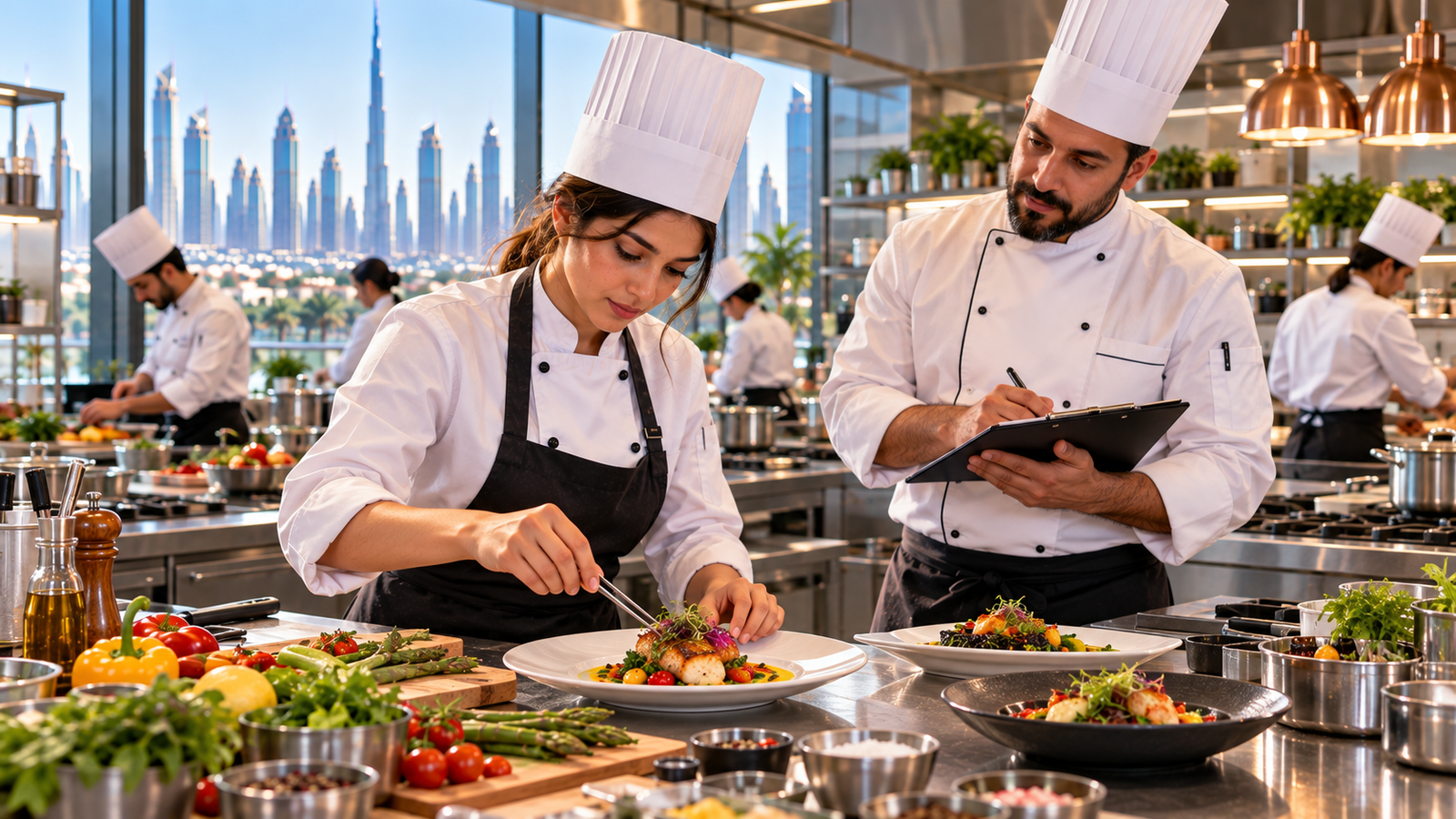
Culinary Courses for Aspiring Chefs in Dubai
Becoming a professional chef requires more than an interest in cooking. Aspiring chefs need to understand ingredients, cooking techniques, food preparation, kitchen organization, food safety, presentation, timing, and teamwork.
For people who want to turn their interest in cooking into professional skills, culinary courses for aspiring chefs can provide a structured starting point. Practical training allows learners to move from basic kitchen knowledge toward professional cooking techniques and real-world kitchen workflows.
Dubai's hospitality environment includes hotels, restaurants, resorts, cafes, catering companies, bakeries, and other food-service businesses. This creates different areas where culinary professionals can develop their skills and experience.
A well-structured culinary course for aspiring chefs Dubai can help beginners understand the foundations of professional cooking while providing hands-on opportunities to practice.
Why Should Aspiring Chefs Take Culinary Training?
Cooking at home and cooking in a professional kitchen are very different experiences.
Professional kitchens require speed, consistency, organization, hygiene, teamwork, and the ability to prepare multiple components within specific timeframes.
A culinary course can help aspiring chefs develop:
- Knife skills
- Food preparation techniques
- Cooking methods
- Ingredient knowledge
- Seasoning skills
- Plating
- Food safety
- Kitchen organization
- Time management
- Teamwork
- Professional kitchen discipline
Training also provides an opportunity to make mistakes, receive feedback, and improve techniques before entering a professional kitchen.
Culinary Course for Aspiring Chefs Dubai
A culinary course for aspiring chefs Dubai can introduce learners to the fundamentals of professional food preparation.
A comprehensive course may include:
- Culinary fundamentals
- Kitchen equipment
- Knife skills
- Food preparation
- Cooking techniques
- Sauces
- Stocks
- Meat preparation
- Seafood preparation
- Vegetable preparation
- Food presentation
- Food safety
- Kitchen organization
The exact curriculum depends on the training provider and course level.
Beginners should look for programs that provide enough practical time to apply what they learn.
Culinary Training for Aspiring Chefs Dubai
Culinary training for aspiring chefs Dubai can help learners develop both technical and practical abilities.
Training may begin with basic skills and gradually introduce more advanced techniques.
For example, students can start by learning how to prepare vegetables and basic ingredients before progressing to sauces, proteins, complete dishes, and professional plating.
This gradual progression allows learners to develop confidence without becoming overwhelmed.
Chef Courses for Aspiring Chefs Dubai
Chef courses for aspiring chefs Dubai can be suitable for people who want to understand what professional kitchen work involves.
Depending on the level, a chef course may introduce:
- Kitchen terminology
- Food preparation
- Cooking techniques
- Recipe management
- Portion control
- Plating
- Hygiene
- Kitchen organization
- Professional workflow
As students gain experience, they can explore more specialized areas of culinary work.
Professional Culinary Course Dubai
A professional culinary course Dubai can provide a structured environment for developing workplace-oriented cooking skills.
Professional training can cover both the technical and operational sides of culinary work.
Students may learn how to:
- Prepare ingredients efficiently
- Organize a workstation
- Follow recipes
- Control cooking temperatures
- Manage cooking times
- Season food correctly
- Prepare sauces
- Plate dishes
- Maintain hygiene
The objective is to help students understand how individual cooking techniques fit into a complete kitchen workflow.
Professional Chef Training Dubai
Professional chef training Dubai can help aspiring chefs build a stronger culinary foundation.
Depending on the program, training may cover different culinary areas.
Knife Skills
Safe and efficient knife work is one of the basic skills every chef needs.
Students can practice different cutting techniques and learn how consistent cutting affects cooking and presentation.
Cooking Techniques
Training can introduce methods such as:
- Sautéing
- Roasting
- Grilling
- Baking
- Frying
- Steaming
- Boiling
- Braising
Understanding how heat affects different ingredients is essential for consistent cooking.
Sauces and Stocks
Stocks and sauces can form an important part of professional culinary training.
Students can learn how ingredients, cooking time, temperature, and seasoning influence the final result.
Culinary Arts Course Dubai
A culinary arts course Dubai combines technical cooking with creativity.
Culinary arts involves understanding:
- Flavor
- Texture
- Ingredients
- Seasoning
- Cooking methods
- Presentation
- Portion sizes
- Menu concepts
Aspiring chefs can learn how to combine these elements to create dishes that are both functional and visually appealing.

Culinary Training Course Dubai
A complete culinary training course Dubai can take learners through multiple stages of food production.
A typical project may involve:
- Selecting ingredients
- Preparing the workstation
- Preparing ingredients
- Applying cooking techniques
- Adjusting seasoning
- Completing the dish
- Plating
- Evaluating the final result
- Cleaning and organizing the workstation
This approach helps learners understand the complete cooking process.
Culinary Training in Dubai for Beginners
Beginners may need to start with foundational knowledge before moving into advanced techniques.
Culinary training in Dubai can introduce beginners to:
- Kitchen equipment
- Food preparation
- Knife skills
- Cooking methods
- Basic recipes
- Food safety
- Kitchen terminology
- Plating
Beginners should focus on developing consistency before trying to master complicated dishes.
Chef Course in Dubai
A chef course in Dubai can provide an introduction to professional kitchen operations.
Students can learn how different kitchen sections work together and how food moves from preparation to service.
Depending on the program, training may include:
- Hot kitchen
- Cold kitchen
- Preparation areas
- Pastry
- Bakery
- Food storage
- Plating
- Kitchen hygiene
Understanding the complete kitchen environment can help aspiring chefs identify areas they may want to specialize in.
Chef Training Course Dubai
A chef training course Dubai can provide practical instruction in professional cooking techniques.
Training may include:
- Ingredient preparation
- Knife techniques
- Cooking methods
- Sauces
- Stocks
- Meat
- Seafood
- Vegetables
- Plating
- Kitchen hygiene
More advanced training can introduce menu development, food cost awareness, inventory, and kitchen management.
Chef Training in Dubai
Chef training in Dubai can be useful for people at different stages.
It can suit:
- Complete beginners
- Culinary students
- Hospitality graduates
- Kitchen assistants
- Career changers
- Aspiring chefs
- Hospitality professionals
The right course depends on the learner's existing knowledge and career goals.
Culinary Certification Course Dubai
A culinary certification course Dubai can provide formal documentation of completed training.
A certificate can demonstrate that a student completed a specific course or training program.
However, aspiring chefs should consider several factors when selecting a course.
These include:
- Practical kitchen training
- Curriculum
- Instructor experience
- Course level
- Kitchen facilities
- Food safety content
- Practical assignments
A certificate is one part of professional development; practical ability and experience are also important.
Culinary Skills Training Dubai
Strong culinary skills develop through practice.
Culinary skills training Dubai can focus on several important areas.
Ingredient Knowledge
Chefs need to understand how different ingredients behave during preparation and cooking.
Seasoning
Salt, herbs, spices, acids, and other ingredients influence flavor balance.
Cooking Control
Temperature and timing can affect texture, moisture, and overall quality.
Plating
Presentation requires attention to arrangement, portion size, color, texture, and balance.
Kitchen Organization
An organized workstation can improve efficiency and reduce unnecessary movement.
Practical Culinary Training Dubai
Practical culinary training Dubai gives aspiring chefs the opportunity to apply techniques directly.
A practical session can include:
- Preparing ingredients
- Measuring quantities
- Setting up a workstation
- Cooking
- Adjusting seasoning
- Plating
- Cleaning
- Reviewing the finished dish
Instructor feedback can help students identify areas where they need more practice.
Hands-On Culinary Training Dubai
Hands-on culinary training Dubai is particularly useful for aspiring chefs because professional cooking is a practical skill.
Students can learn by performing the techniques themselves rather than simply watching demonstrations.
Hands-on practice can improve:
- Knife skills
- Cooking control
- Timing
- Portioning
- Plating
- Kitchen organization
- Confidence
Repeated practice also helps learners become more familiar with professional kitchen equipment.
Cooking Techniques Training Dubai
Cooking techniques training Dubai can introduce aspiring chefs to different methods and explain how each method affects food.
Dry-Heat Methods
These may include:
- Roasting
- Grilling
- Baking
- Sautéing
- Frying
Moist-Heat Methods
These may include:
- Boiling
- Steaming
- Poaching
Combination Methods
These can include techniques such as braising, where different cooking methods are combined.
Understanding these techniques allows chefs to choose an appropriate method for different ingredients.
Food Safety for Aspiring Chefs
Food safety is a fundamental part of professional culinary training.
Aspiring chefs should understand:
- Personal hygiene
- Hand washing
- Cross-contamination
- Safe storage
- Temperature control
- Cleaning
- Sanitization
- Allergen awareness
- Safe handling of raw ingredients
Professional kitchens must follow applicable food safety regulations and workplace procedures.
The Importance of Mise en Place
Mise en place is an important concept in professional kitchens.
It generally means having ingredients and equipment prepared and organized before cooking begins.
Good mise en place can involve:
- Washing ingredients
- Cutting ingredients
- Measuring quantities
- Preparing sauces
- Organizing tools
- Setting up equipment
- Checking the preparation list
Good preparation can help chefs work efficiently during service.
How Aspiring Chefs Can Develop Speed
Speed should not come at the expense of safety or quality.
Aspiring chefs can gradually improve speed by:
- Practicing knife skills
- Organizing workstations
- Preparing ingredients efficiently
- Learning recipes thoroughly
- Improving equipment familiarity
- Planning preparation steps
- Practicing time management
With experience, professionals can become more efficient without compromising consistency.
How to Develop Professional Kitchen Discipline
Professional kitchens can be fast-paced environments.
Aspiring chefs should develop habits such as:
- Arriving prepared
- Maintaining clean workstations
- Organizing ingredients
- Following safety procedures
- Communicating with team members
- Respecting preparation schedules
- Cleaning as they work
- Checking food quality
Kitchen discipline can be just as important as cooking ability.
Culinary Career Training Dubai
Culinary career training Dubai can help aspiring chefs understand what is expected in professional kitchen environments.
Training can provide a foundation for exploring roles such as:
- Kitchen assistant
- Commis chef
- Cook
- Chef de partie
- Pastry assistant
- Bakery assistant
- Catering cook
Career progression depends on experience, qualifications, performance, specialization, and employer requirements.
How to Build a Culinary Career
Completing a course is only the beginning.
Aspiring chefs can build their careers by:
- Developing foundational culinary skills
- Completing practical training
- Gaining kitchen experience
- Learning from experienced chefs
- Exploring different cuisines
- Developing a specialization
- Improving food presentation
- Learning food safety
- Developing teamwork skills
- Continuing professional development
Experience in different kitchen environments can also help professionals understand which culinary area suits their interests.
Potential Culinary Career Paths
There is no single career path for every chef.
One possible route is:
Kitchen Assistant → Commis Chef → Chef de Partie → Sous Chef → Executive Chef
Other professionals may specialize in:
- Pastry
- Bakery
- International cuisine
- Fine dining
- Catering
- Banquet operations
- Private cooking
- Food production
As experience grows, some chefs may also move toward kitchen management, menu development, or culinary education.
How to Choose a Culinary Course for Aspiring Chefs
Before enrolling in a course, consider your goals.
Check the Practical Training
Make sure students have sufficient time to practice cooking techniques.
Review the Curriculum
Look for coverage of food preparation, cooking, food safety, hygiene, and kitchen operations.
Consider Your Skill Level
Beginners should choose beginner-friendly programs, while experienced professionals may need advanced training.
Review the Kitchen Facilities
Practical training is more useful when students have access to appropriate equipment and workstations.
Understand the Certification
Find out what the certificate represents and whether it supports your professional goals.
Common Mistakes Aspiring Chefs Should Avoid
Trying to Learn Everything at Once
Start with fundamentals before moving to advanced techniques.
Ignoring Knife Skills
Knife skills form an important part of kitchen preparation.
Focusing Only on Recipes
Understanding techniques is more valuable than memorizing recipes.
Neglecting Food Safety
Hygiene and safe food handling should always be priorities.
Avoiding Feedback
Constructive feedback can help identify weaknesses and improve techniques.
Focusing Only on Presentation
A dish should be properly prepared and cooked before focusing on visual presentation.
A Step-by-Step Roadmap for Aspiring Chefs
Step 1: Learn Culinary Fundamentals
Understand ingredients, equipment, hygiene, and basic cooking methods.
Step 2: Develop Knife Skills
Practice safe, accurate, and consistent cutting.
Step 3: Learn Cooking Techniques
Practice different dry-heat, moist-heat, and combination methods.
Step 4: Complete Hands-On Training
Prepare complete dishes under instructor supervision.
Step 5: Learn Food Safety
Understand hygiene, storage, temperature control, and cross-contamination prevention.
Step 6: Gain Kitchen Experience
Seek internships, entry-level positions, or other practical opportunities.
Step 7: Explore Specializations
Consider pastry, bakery, international cuisine, catering, or other areas.
Step 8: Continue Learning
Develop new techniques and improve your professional skills throughout your career.
Final Thoughts on Culinary Courses for Aspiring Chefs
Choosing culinary courses for aspiring chefs can be an important first step for people who want to turn an interest in cooking into professional skills.
A structured culinary course for aspiring chefs Dubai can introduce learners to food preparation, knife skills, cooking methods, food safety, kitchen organization, plating, and professional kitchen workflows.
For beginners, a chef course for beginners Dubai can provide the foundation needed to understand professional culinary work. As learners gain experience, more advanced professional chef training Dubai can help them develop specialized techniques and prepare for greater responsibilities.
Practical experience should remain a central part of culinary development. Through hands-on culinary training Dubai, students can practice techniques directly, work with kitchen equipment, receive instructor feedback, and develop greater confidence.
A culinary certification can document completed training, but professional growth also depends on practical ability, experience, discipline, teamwork, and continuous learning.
Aspiring chefs should therefore focus on building their careers step by step: learn the fundamentals, practice consistently, gain real kitchen experience, explore different culinary areas, develop a specialization, and continue improving your skills.
With a strong foundation and practical experience, aspiring chefs can explore different opportunities across Dubai's hospitality and food-service industry.