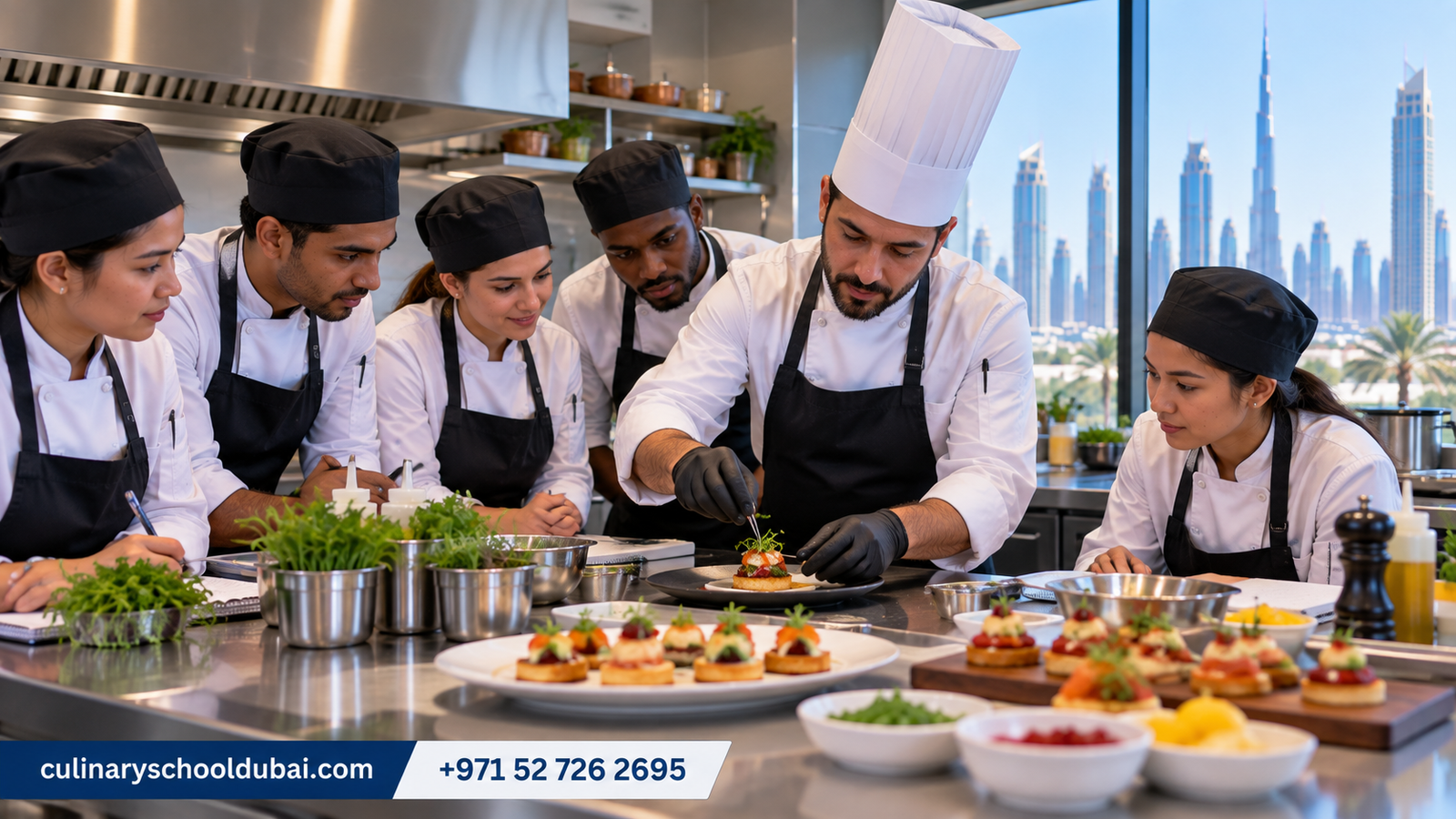
Intensive Culinary Training in Dubai
Learning professional culinary skills can require time, practice and consistent hands-on training. However, not everyone can commit to a long-term culinary program. For aspiring chefs, working professionals, hospitality employees and beginners who want focused education, intensive culinary training in Dubai can provide a concentrated approach to developing practical cooking skills.
An intensive culinary course is designed to cover important culinary concepts and techniques within a focused training schedule. Instead of spreading learning across a lengthy period, students may attend more frequent practical sessions and work through multiple skills in a shorter timeframe.
Dubai's hospitality industry includes restaurants, hotels, catering businesses, cafés, bakeries and other food service operations. This creates interest in culinary education among people who want to improve their skills or prepare for professional kitchen environments.
But what exactly does intensive culinary training involve? What skills can you learn, who can benefit from an intensive course and what should you consider before enrolling?
This guide explores the key aspects of intensive culinary education in Dubai.
What Is Intensive Culinary Training?
Intensive culinary training in Dubai is a focused educational program designed to teach culinary techniques and professional kitchen skills within a concentrated schedule.
Rather than attending occasional cooking classes, learners may participate in multiple practical sessions over a shorter period.
Depending on the program, an intensive culinary course may cover:
- Food preparation
- Knife skills
- Cooking techniques
- Sauce preparation
- Food safety
- Kitchen organization
- Recipe execution
- Plating
- Professional kitchen equipment
- International cuisines
- Menu preparation
- Professional kitchen practices
The exact curriculum and duration depend on the training provider.
Why Choose Intensive Culinary Training in Dubai?
The main reason people choose intensive training is the focused learning format.
A learner may want to develop culinary skills without spending several months or years completing a traditional long-term program.
Intensive training can be suitable for:
- Aspiring chefs
- Beginners
- Working professionals
- Hospitality employees
- Career changers
- Home cooks
- Food entrepreneurs
- Culinary enthusiasts
The right format depends on the learner's existing experience and objectives.
Accelerated Culinary Courses in Dubai
An accelerated culinary course in Dubai can provide a concentrated learning experience for people who want to develop skills within a shorter timeframe.
The course may begin with fundamental techniques and progress toward more advanced practical tasks.
A typical learning progression could include:
- Kitchen safety
- Equipment familiarization
- Knife skills
- Ingredient preparation
- Basic cooking methods
- Sauces and stocks
- Protein preparation
- Plating
- Menu preparation
- Professional kitchen workflow
This type of structure can help learners build skills in a logical sequence.

Fast-Track Culinary Training
Fast-track culinary training in Dubai is designed for learners who prefer a focused and accelerated approach.
Fast-track training can be useful for someone who already has a clear learning objective.
For example, a beginner may want to learn fundamental professional cooking techniques, while someone with existing experience may want to improve specific culinary skills.
Before enrolling, it is important to understand that a shorter training schedule does not automatically mean the course covers everything included in a long-term culinary qualification.
Compare the curriculum and practical hours rather than looking only at the course duration.
What Do You Learn in Intensive Culinary Training?
The subjects covered depend on the course level and specialization.
A comprehensive culinary arts training program in Dubai may include several core areas.
Knife Skills
Knife skills are among the first techniques taught in many culinary programs.
Students can practice:
- Safe knife handling
- Slicing
- Dicing
- Chopping
- Julienne
- Mincing
- Portioning
- Ingredient preparation
Good knife technique can improve efficiency, consistency and kitchen safety.
Food Preparation
Professional cooking begins with organized preparation.
Students may learn how to:
- Prepare ingredients
- Measure quantities
- Organize ingredients
- Marinate food
- Portion ingredients
- Prepare vegetables
- Prepare proteins
- Organize mise en place
Preparation skills are essential for maintaining an efficient kitchen workflow.
Cooking Techniques
A professional culinary course in Dubai may introduce learners to a range of cooking methods.
These can include:
- Sautéing
- Grilling
- Roasting
- Baking
- Frying
- Steaming
- Poaching
- Braising
- Boiling
Students can learn how heat, timing and cooking methods affect different ingredients.
Practical repetition is particularly important because cooking techniques require coordination and judgment.
Sauce, Stock and Flavor Development
Sauces and stocks are important components of many professional kitchens.
Depending on the course, learners may study:
- Basic stocks
- Sauces
- Gravies
- Reductions
- Marinades
- Dressings
- Seasoning techniques
Students can also learn how ingredients and cooking methods affect flavor, texture and consistency.
Practical Culinary Training
A major feature of intensive education should be practical learning.
Practical culinary training in Dubai gives students the opportunity to apply concepts directly in a kitchen environment.
Instead of simply watching demonstrations, learners can practice:
- Food preparation
- Cooking
- Plating
- Equipment operation
- Recipe execution
- Kitchen organization
- Food safety procedures
Practical sessions also allow instructors to observe techniques and provide feedback.
Hands-On Culinary Training
Hands-on culinary training in Dubai can be particularly valuable for beginners because culinary skills are physical and technical.
Students need to understand not only what a recipe says but also how to:
- Control heat
- Handle ingredients
- Judge texture
- Adjust seasoning
- Manage cooking time
- Use equipment
- Present food
These abilities develop through repeated practical experience.
Intensive Culinary Training for Beginners
Beginners can join intensive culinary programs if the course is designed for entry-level learners.
A beginner-focused program should ideally start with fundamentals before progressing to more complex techniques.
Beginner Training May Cover
- Kitchen safety
- Equipment identification
- Knife skills
- Basic food preparation
- Cooking methods
- Sauces
- Seasoning
- Plating
- Food hygiene
- Kitchen organization
Students should check the course level before enrolling to make sure the pace is appropriate.
Advanced Culinary Training in Dubai
Experienced cooks and hospitality professionals may want to develop more advanced skills.
Advanced culinary training in Dubai can focus on areas such as:
- Advanced cooking techniques
- Complex sauces
- Professional plating
- Menu development
- Recipe consistency
- Advanced food preparation
- Kitchen workflow
- Specialized cuisines
The actual content varies between training providers.
Advanced courses are generally more appropriate for learners who already understand fundamental culinary techniques.
Intensive Chef Training in Dubai
People who want to develop professional chef skills may consider intensive chef training in Dubai.
Chef-focused training can include:
- Professional food preparation
- Cooking techniques
- Recipe execution
- Menu preparation
- Plating
- Portion control
- Kitchen organization
- Food safety
- Professional equipment
- Kitchen workflow
However, becoming a professional chef involves more than completing a training course. Real kitchen experience, teamwork, consistency and continued skills development are also important.
Professional Culinary Training
A professional culinary training program in Dubai can focus on skills that are relevant to commercial kitchens.
Professional culinary environments often require consistency and organization.
Students may learn about:
- Mise en place
- Recipe standardization
- Portion control
- Kitchen communication
- Time management
- Food safety
- Equipment handling
- Food presentation
- Kitchen workflow
These concepts can help learners understand the differences between home cooking and professional kitchen operations.
Culinary Certification Courses
Some intensive programs provide certification after completion.
A culinary certification course in Dubai can document that a learner has completed specific training.
Before enrolling, check:
- Who issues the certificate
- Course duration
- Practical hours
- Assessment process
- Course curriculum
- Certification requirements
A certificate can be useful as part of a professional profile, but practical ability and work experience are also important.
Benefits of Intensive Culinary Training
Intensive training can offer several benefits for learners who prefer a concentrated format.
Focused Learning
Students can concentrate on culinary skills without long gaps between lessons.
Frequent Practice
More frequent practical sessions can provide opportunities to repeat techniques.
Efficient Use of Time
Learners can cover key subjects within a concentrated schedule.
Career Exploration
Beginners can use intensive training to explore whether professional cooking suits their interests.
Skill Development
Experienced learners can focus on specific culinary techniques they want to improve.
Practical Experience
Hands-on sessions can help bridge the gap between theory and real kitchen work.
Who Should Consider Intensive Culinary Training?
Intensive culinary training can be suitable for several types of learners.
Aspiring Chefs
People interested in professional kitchen careers can develop foundational skills.
Beginners
Beginners can learn essential culinary techniques through structured training.
Hospitality Professionals
Existing hospitality workers can expand their culinary knowledge.
Career Changers
People considering a move into the food industry can use intensive training as an introduction.
Home Cooks
Experienced home cooks can develop more professional cooking techniques.
Food Entrepreneurs
People planning food businesses can learn practical cooking and kitchen management skills.
Is Intensive Culinary Training Suitable for Working Professionals?
It depends on the schedule.
Some intensive programs may require frequent attendance during weekdays, while others may provide weekend or flexible options.
Working professionals should check:
- Class times
- Number of training days
- Practical hours
- Total course duration
- Attendance requirements
If a full intensive schedule is difficult to manage, a part-time culinary course in Dubai or weekend program may be more appropriate.
Intensive vs Regular Culinary Courses
The main difference is the pace and scheduling.
Intensive Culinary Training
An intensive program may offer:
- More frequent classes
- Concentrated learning
- Shorter overall training period
- Frequent practical sessions
- Focused skill development
Regular Culinary Training
A regular program may:
- Spread lessons over a longer period
- Provide more time between classes
- Allow gradual skill development
- Fit more easily into some schedules
Neither format is automatically appropriate for everyone. The right choice depends on learning preferences, availability and career objectives.
Intensive Training vs Cooking Classes
A cooking class often focuses on a specific dish, cuisine or technique.
Intensive culinary training usually has a broader educational objective.
A professional program may include:
- Multiple cooking techniques
- Food preparation
- Kitchen safety
- Professional equipment
- Plating
- Recipe consistency
- Kitchen workflow
- Practical assessments
If your goal is recreational cooking, a short cooking class may be enough. If you want structured professional skills, a culinary training program may be more relevant.
What Should You Look for in an Intensive Culinary Course?
Choosing a course requires more than comparing prices or duration.
Course Curriculum
Review the subjects included in the program.
Practical Hours
Find out how much time you will spend actually cooking.
Kitchen Facilities
Check whether the training environment includes suitable professional equipment.
Instructor Experience
Consider the culinary and teaching experience of the instructors.
Class Size
A manageable practical class size can provide more opportunities for instructor guidance.
Certification
Check whether a certificate is provided and what it represents.
Course Level
Make sure the course matches your existing experience.
Schedule
Confirm that you can attend all required practical sessions.
Questions to Ask Before Enrolling
Before joining an intensive culinary course in Dubai, ask the training provider:
- How long is the course?
- How many practical hours are included?
- Is the course suitable for beginners?
- What cooking techniques are covered?
- Is advanced training included?
- What equipment will students use?
- Are ingredients included?
- Who teaches the course?
- Is certification provided?
- How are students assessed?
- What are the class timings?
- Is the course designed for professional career development?
Getting clear answers can help you compare programs more effectively.
Why Practical Training Matters
Culinary skills develop through practice.
Reading a recipe does not teach a learner exactly how to control temperature, judge texture, adjust seasoning or coordinate several preparation tasks.
Practical culinary training in Dubai allows students to experience these elements directly.
Instructor feedback can also help learners correct mistakes and improve technique.
For intensive training, practical learning is especially important because the concentrated schedule should provide meaningful opportunities to apply the concepts being taught.
How to Get the Most From Intensive Culinary Training
Intensive programs move quickly, so preparation can help learners keep up.
During training:
- Pay close attention to demonstrations
- Practice techniques repeatedly
- Ask questions
- Take notes
- Learn proper equipment use
- Focus on food safety
- Practice organization
- Accept instructor feedback
- Review techniques between sessions when possible
Try to understand why each technique works rather than simply memorizing recipes.
Can Intensive Culinary Training Prepare You for a Culinary Career?
Intensive training can provide foundational or advanced culinary skills, depending on the program.
However, professional culinary careers generally involve more than formal education.
Employers may also look for:
- Practical kitchen experience
- Food safety knowledge
- Technical cooking skills
- Teamwork
- Time management
- Communication
- Consistency
- Ability to work under pressure
- Familiarity with professional kitchen operations
A training course can therefore be one part of a broader professional development path.
How Certification Can Complement Practical Skills
Certification and practical experience serve different purposes.
Training provides the opportunity to learn and practice specific skills, while certification can document completion of a particular course.
For learners seeking professional development, it can be useful to combine:
Training + Practical Skills + Experience + Continued Learning
This approach can provide a more complete foundation than relying on a certificate alone.
Final Thoughts on Intensive Culinary Training in Dubai
Intensive culinary training in Dubai can provide a focused approach to developing cooking and professional kitchen skills within a concentrated schedule.
Depending on the program, learners can study knife skills, food preparation, cooking techniques, sauces, food safety, plating, kitchen organization and professional kitchen practices. More advanced programs may also cover complex cooking techniques, menu development and professional kitchen operations.
For beginners, intensive training can provide a structured introduction to culinary skills. For experienced cooks and hospitality professionals, advanced training can help develop specific techniques and broaden existing knowledge.
When selecting an intensive culinary course, do not focus only on how quickly it can be completed. Review the curriculum, practical hours, kitchen facilities, instructors, class size, certification and course level.
A strong hands-on culinary training program should provide meaningful opportunities to practice what you learn. This is particularly important because culinary ability develops through repetition, feedback and real practical experience.
Whether your goal is to become a chef, improve your professional skills, explore the culinary industry or develop your cooking abilities, an intensive program can provide a focused starting point. The most suitable course will depend on your current experience, schedule, learning goals and desired level of professional development.