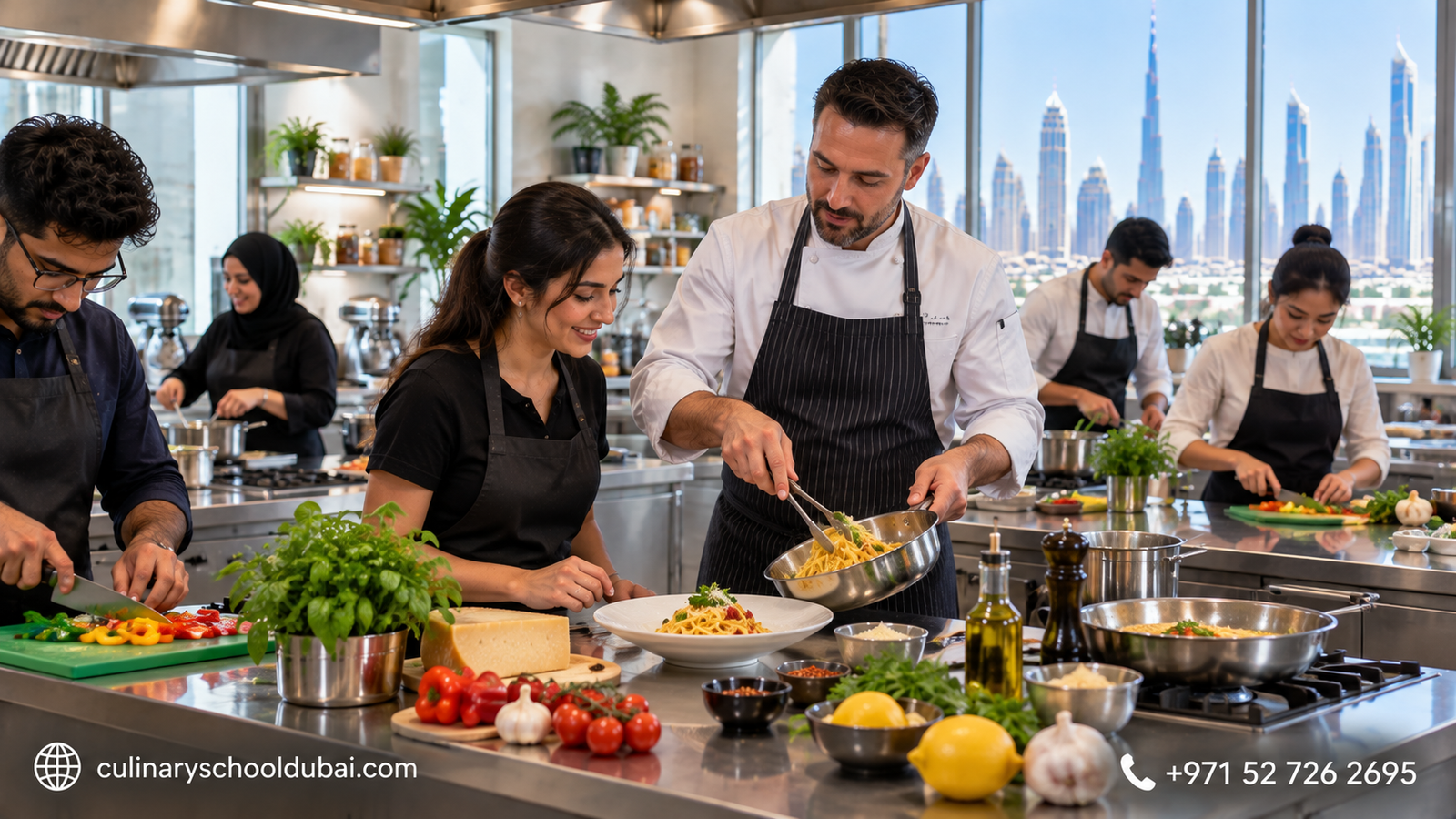
Weekend Culinary Courses in Dubai
Finding time for professional education can be challenging when you have a full-time job, business, family responsibilities or other commitments. This is one reason weekend culinary courses in Dubai can be an attractive option for people who want to learn professional cooking skills without changing their weekday schedule.
Dubai has a diverse hospitality and food service industry, creating interest in culinary education among aspiring chefs, home cooks, hospitality professionals and people considering a career change. A weekend culinary course can provide an opportunity to develop practical kitchen skills while keeping weekdays available for work or other responsibilities.
Unlike casual cooking classes that may focus on a single recipe or cuisine, a professional culinary program can cover broader areas such as food preparation, knife skills, cooking techniques, kitchen organization, food safety, presentation and professional kitchen practices.
Whether you are a beginner, a working professional or someone looking to develop a career in the culinary industry, choosing the right weekend culinary training in Dubai starts with understanding what these courses offer and how they fit your goals.
What Are Weekend Culinary Courses?
Weekend culinary courses are training programs scheduled primarily on Saturdays, Sundays or other weekend periods. They are designed to provide culinary education for learners who may not be available during regular weekday hours.
Depending on the training provider, a weekend culinary course in Dubai may include classroom instruction, demonstrations and practical kitchen sessions.
Topics can include:
- Basic cooking techniques
- Knife skills
- Food preparation
- Baking and pastry fundamentals
- International cuisines
- Kitchen organization
- Food safety
- Ingredient selection
- Sauce preparation
- Meat and seafood preparation
- Plating and presentation
- Professional kitchen practices
The exact curriculum, schedule and duration vary between programs.
Why Choose a Weekend Culinary Course in Dubai?
The main advantage of weekend training is flexibility.
People who work Monday through Friday may find it difficult to attend a full-time culinary program. A weekend schedule allows them to dedicate specific days to learning while maintaining their existing weekday commitments.
A weekend program can be useful for:
- Working professionals
- Hospitality employees
- Beginners
- Entrepreneurs
- Home cooks
- Career changers
- Students with weekday commitments
- Food enthusiasts
The suitability of a weekend program depends on the learner's objectives and the course structure.
Weekend Culinary Courses for Working Professionals
Working professionals often need flexible education options.
A culinary course for working professionals in Dubai can allow learners to develop cooking skills without leaving their current employment.
For example, someone working during the week can use weekends to practice:
- Knife techniques
- Food preparation
- Cooking methods
- Sauce preparation
- Plating
- Kitchen organization
- Professional recipes
This can make culinary education more accessible to people who cannot commit to a weekday full-time schedule.

Part-Time Culinary Courses in Dubai
A part-time culinary course in Dubai can provide another flexible option for learners who want to study alongside work or other commitments.
Part-time programs may spread training across several weeks or months rather than requiring students to attend intensive daily sessions.
The structure can vary considerably between providers, so learners should check:
- Class days
- Class timings
- Total course duration
- Practical hours
- Course modules
- Assessment method
- Certification
- Attendance requirements
Understanding the schedule before enrollment helps ensure the course fits your routine.
What Do You Learn in a Culinary Course?
The skills taught depend on the program level and specialization, but professional culinary training generally covers several core areas.
Knife Skills and Food Preparation
Knife skills are fundamental for professional cooking.
Students may learn:
- Basic knife handling
- Cutting techniques
- Slicing
- Dicing
- Chopping
- Julienne
- Food preparation
- Ingredient organization
Efficient preparation can improve consistency, speed and kitchen organization.
Cooking Techniques
A professional culinary arts course in Dubai can introduce students to different cooking methods.
These may include:
- Sautéing
- Grilling
- Roasting
- Baking
- Steaming
- Poaching
- Braising
- Frying
- Boiling
Understanding how different cooking methods affect ingredients is an important part of culinary education.
Sauce and Stock Preparation
Sauces and stocks are fundamental elements of many professional kitchens.
Depending on the curriculum, students may learn how to prepare different types of:
- Stocks
- Sauces
- Reductions
- Gravies
- Dressings
- Marinades
These techniques help learners understand flavor development and professional food preparation.
Hands-On Culinary Training
One of the most important features to look for in a culinary course is practical experience.
Hands-on culinary training in Dubai allows students to work directly with ingredients, kitchen equipment and professional cooking techniques.
Instead of only watching demonstrations, students can practice:
- Ingredient preparation
- Knife techniques
- Cooking methods
- Plating
- Recipe execution
- Kitchen organization
- Food presentation
Practical training can help learners build confidence and improve consistency.
Practical Culinary Training for Beginners
Beginners may benefit from starting with fundamental techniques before moving into more advanced cooking.
A structured practical culinary training program can introduce beginners to:
- Kitchen safety
- Basic equipment
- Knife skills
- Ingredient preparation
- Cooking methods
- Basic sauces
- Plating
- Recipe execution
- Kitchen organization
- Food hygiene
This progression can help learners develop a strong foundation.
Weekend Chef Courses in Dubai
People interested in becoming professional chefs may consider a weekend chef course in Dubai.
Chef-focused programs can provide broader exposure to professional kitchen practices than casual cooking classes.
Depending on the curriculum, learners may study:
- Culinary fundamentals
- Food preparation
- Professional cooking methods
- Menu items
- Kitchen workflow
- Food presentation
- Food safety
- Portion control
- Recipe consistency
- Professional kitchen standards
Before enrolling, check whether the course is designed for hobby cooking or professional career development.
Culinary Training for Working Professionals
Working professionals may already have experience in hospitality, food service or another industry.
A flexible culinary program can allow them to build new skills while continuing their current work.
For example, a hospitality employee may want to develop culinary knowledge to expand their responsibilities, while an entrepreneur may want practical skills before opening a food-related business.
A culinary training course for working professionals in Dubai can provide structured learning without necessarily requiring a full-time weekday commitment.
Professional Culinary Courses in Dubai
A professional culinary course in Dubai generally goes beyond basic home cooking.
It may focus on:
- Professional cooking techniques
- Kitchen workflow
- Food presentation
- Consistency
- Portion control
- Ingredient handling
- Food safety
- Recipe execution
- Professional equipment
The depth of training depends on the program.
If your goal is professional development, look for a course that clearly explains its practical components and learning outcomes.
Culinary Certification Courses
Some learners want formal recognition of their training.
A culinary certification course in Dubai may provide a certificate after the learner completes the required training and assessment.
Before enrolling, check:
- Who issues the certificate
- Course duration
- Assessment requirements
- Practical training hours
- Curriculum
- Certification conditions
A certificate documents course completion, but practical culinary ability and experience are also important for professional kitchen work.
Cooking Classes vs Professional Culinary Training
The terms "cooking class" and "culinary course" can refer to different types of education.
Cooking Classes
Cooking classes often focus on specific dishes, cuisines or techniques.
They can be suitable for:
- Hobby cooks
- Beginners
- Food enthusiasts
- People looking for recreational learning
Professional Culinary Training
Professional training generally covers broader technical skills and kitchen practices.
It may include:
- Multiple cooking methods
- Food preparation
- Kitchen workflow
- Food safety
- Professional equipment
- Plating
- Recipe consistency
- Practical assessments
Choosing between them depends on your objective.
If you simply want to learn new recipes, a cooking class may be enough. If you want broader professional culinary skills, a structured culinary course may be more appropriate.
What Makes a Good Weekend Culinary Course?
Not all weekend culinary programs are the same.
When comparing weekend culinary courses in Dubai, consider several factors.
1. Practical Training Hours
Find out how much time you will actually spend working in the kitchen.
2. Course Curriculum
Check whether the course covers the skills you want to develop.
3. Kitchen Facilities
Consider whether students have access to appropriate professional kitchen equipment.
4. Instructor Experience
Look at the instructors' culinary background and teaching experience.
5. Class Size
Smaller practical groups can sometimes provide more opportunities for individual guidance.
6. Certification
If certification is important to you, confirm exactly what certificate is awarded.
7. Schedule
Make sure the weekend schedule fits your availability.
8. Course Level
Choose a program suitable for your existing culinary knowledge.
Who Can Join Weekend Culinary Classes?
Weekend culinary classes in Dubai can be suitable for a wide range of learners.
Beginners
People with little or no professional cooking experience can start with foundational techniques.
Working Professionals
Employees can use weekends to develop culinary skills without changing their weekday schedule.
Hospitality Professionals
People already working in hospitality can expand their technical cooking knowledge.
Home Cooks
Experienced home cooks can develop more structured professional techniques.
Career Changers
People considering a move into the culinary industry can use training to explore the field.
Food Entrepreneurs
People planning food-related businesses may benefit from practical culinary knowledge.
Benefits of Flexible Culinary Courses
Flexible culinary education can offer several practical advantages.
Maintain Your Work Schedule
Weekend training allows you to keep your weekday commitments.
Develop Practical Skills
Regular kitchen practice can improve technical ability.
Learn at a Manageable Pace
Part-time training can provide more time between classes to review techniques.
Explore a New Career
A weekend program can help you explore culinary work before making a larger career change.
Build Confidence
Repeated practical sessions can help learners become more comfortable working with ingredients and equipment.
Can a Weekend Culinary Course Help You Become a Chef?
A weekend course can provide culinary knowledge and practical skills, but becoming a professional chef generally requires more than completing one course.
Professional kitchen careers can involve:
- Formal training
- Practical experience
- Kitchen employment
- Continued skills development
- Knowledge of food safety
- Understanding of professional kitchen operations
- Experience with different cuisines and techniques
A weekend course can be one step in this process, particularly for people who need a flexible way to begin their culinary education.
Culinary Skills You Can Practice on Weekends
A good culinary skills training program in Dubai can provide practical opportunities to develop skills such as:
- Knife handling
- Food preparation
- Mise en place
- Cooking techniques
- Sauce preparation
- Seasoning
- Plating
- Portioning
- Kitchen organization
- Food presentation
Repeated practice is important because culinary skills improve through consistency and experience.
How to Choose the Right Weekend Culinary Course
Before enrolling, define your objective.
Ask yourself:
Do I want to cook better at home?
A recreational cooking class may be suitable.
Do I want professional culinary skills?
Look for a structured professional culinary course.
Do I want to become a chef?
Consider a career-focused program with extensive practical training.
Do I work during the week?
Look for a genuine weekend or part-time schedule.
Do I need certification?
Check the certificate details before enrolling.
Your goal should determine the type of training you choose.
Questions to Ask a Culinary Training Provider
Before joining a weekend culinary course in Dubai, ask the provider:
- What days are classes held?
- How many practical hours are included?
- What cooking techniques are covered?
- Is the course beginner-friendly?
- What equipment will students use?
- How large are the practical classes?
- Who teaches the course?
- Is a certificate provided?
- Are ingredients included?
- What is the total course duration?
- Is the course designed for professional or recreational learning?
These questions can help you compare programs more effectively.
Is Weekend Culinary Training Suitable for Working Professionals?
For many working professionals, weekend training can be a practical way to continue education without giving up weekday employment.
The biggest consideration is consistency. Culinary skills require practice, so learners should choose a program that provides enough practical sessions to develop their abilities.
A flexible schedule is most useful when it still provides meaningful hands-on training.
Why Practical Learning Matters in Culinary Education
Culinary skills are physical and technical. Reading a recipe does not necessarily teach you how to control heat, handle a knife, adjust seasoning or present a dish.
Practical learning allows students to experience:
- Ingredient textures
- Heat control
- Cooking times
- Equipment handling
- Food presentation
- Kitchen workflow
Instructor feedback can also help learners correct mistakes and improve their technique.
This is why hands-on culinary training in Dubai can be an important consideration when comparing courses.
Final Thoughts on Weekend Culinary Courses in Dubai
Weekend culinary courses in Dubai provide a flexible option for people who want to develop cooking and professional culinary skills while maintaining weekday commitments.
Whether you are a beginner, working professional, hospitality employee, home cook or aspiring chef, a weekend program can provide structured opportunities to learn food preparation, cooking techniques, kitchen organization, food presentation and professional culinary practices.
When choosing a course, look beyond the schedule. Consider the practical training hours, curriculum, instructors, kitchen facilities, certification and course level.
For people who want professional development, a professional culinary course with substantial hands-on training may provide broader skills than a casual cooking class. For beginners and hobby cooks, shorter weekend culinary classes may be sufficient.
The right choice ultimately depends on your goals, schedule and desired level of culinary training. By selecting a program that combines flexible scheduling with meaningful practical experience, you can use your weekends to build valuable culinary skills without putting your weekday responsibilities on hold.