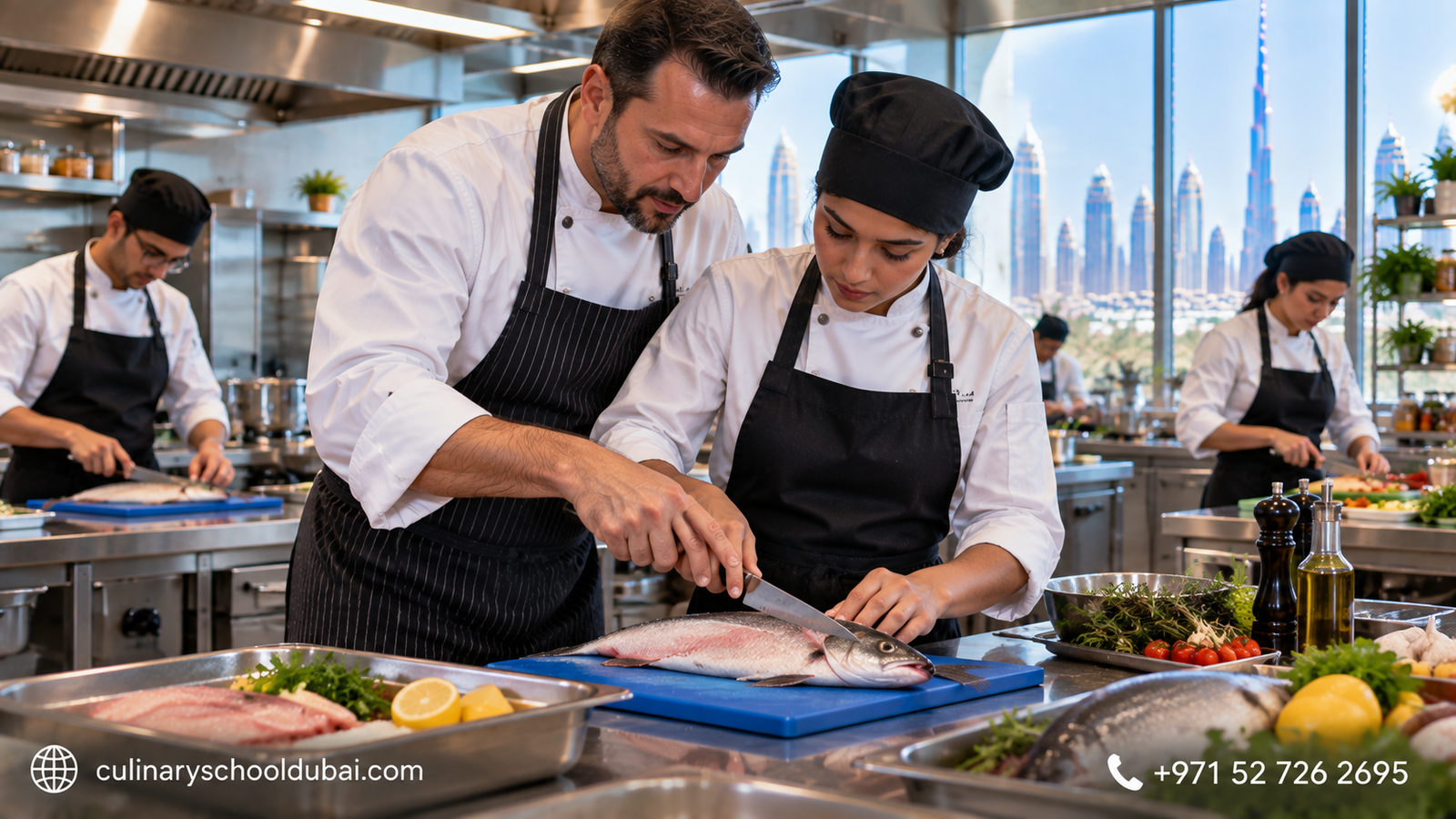
Practical Culinary Training: Why Hands-On Learning Matters
Learning culinary skills involves much more than reading recipes or watching cooking demonstrations. Professional cooking requires physical practice, coordination, timing, equipment handling and the ability to respond to different ingredients and kitchen situations.
This is why practical culinary training plays such an important role in culinary education.
For beginners, hands-on training can provide an opportunity to develop fundamental cooking skills under instructor supervision. For aspiring chefs and hospitality professionals, practical training can help build familiarity with professional kitchen equipment, workflow, food preparation and cooking techniques.
In Dubai, learners can find different types of culinary education, including short courses, professional culinary programs, chef training and specialized workshops. However, the amount of practical experience can vary between programs.
So, why does hands-on learning matter? What can students learn through practical culinary training, and what should you look for when choosing a culinary course?
Let's explore the role of practical learning in culinary education.
What Is Practical Culinary Training?
Practical culinary training in Dubai involves learning cooking and kitchen skills by actively performing tasks rather than relying only on theoretical instruction.
Instead of simply watching an instructor prepare a dish, students may participate directly in the preparation and cooking process.
Practical training can include:
- Ingredient preparation
- Knife skills
- Cooking techniques
- Sauce preparation
- Baking
- Plating
- Food safety
- Kitchen organization
- Equipment handling
- Recipe execution
- Menu preparation
The exact activities depend on the course level and curriculum.
Why Is Hands-On Culinary Training Important?
Cooking is a practical skill. Understanding a recipe does not automatically mean a learner can execute it correctly.
A student may understand that a steak needs to be cooked at a certain temperature, for example, but practical experience teaches them how to recognize changes in texture, control heat and manage cooking time.
Hands-on training helps learners develop these physical and decision-making skills.
It can also provide opportunities to make mistakes, receive feedback and repeat techniques until they become more familiar.
Practical Learning vs Culinary Theory
Theory is an important part of culinary education.
Students need to understand:
- Ingredients
- Cooking methods
- Food safety
- Nutrition
- Kitchen terminology
- Recipes
- Food storage
- Equipment
However, theory and practice serve different purposes.
Culinary Theory
Theory helps learners understand why a technique works.
Practical Training
Practical training helps learners understand how to perform the technique.
A strong culinary course in Dubai can combine both approaches.
Students can first learn the principles and then apply them in a practical kitchen environment.

Develop Professional Cooking Techniques
One of the primary benefits of a practical culinary course in Dubai is the opportunity to practice professional cooking methods.
Students may learn and practice:
- Sautéing
- Grilling
- Roasting
- Baking
- Frying
- Steaming
- Poaching
- Braising
- Boiling
Each technique requires different levels of heat, timing and ingredient preparation.
Practical repetition can help learners understand these differences more clearly.
Build Strong Knife Skills
Knife handling is one of the fundamental skills taught in culinary education.
Students can practice:
- Chopping
- Slicing
- Dicing
- Julienne
- Mincing
- Cutting vegetables
- Portioning ingredients
A practical kitchen environment allows instructors to observe knife handling and correct unsafe or inefficient techniques.
Developing good knife skills can improve preparation speed, consistency and kitchen safety.
Improve Food Preparation Skills
Professional cooking starts with preparation.
Before ingredients reach the cooking stage, chefs need to wash, peel, cut, measure, portion and organize them.
Food preparation training in Dubai can help students develop efficient preparation habits.
Practical exercises may involve:
- Measuring ingredients
- Preparing vegetables
- Preparing proteins
- Marinating
- Portioning
- Organizing ingredients
- Preparing sauces
- Setting up a workstation
These activities help students understand the importance of preparation and organization.
Learn Kitchen Organization
Professional kitchens depend heavily on organization.
Students need to understand how to arrange ingredients, tools and equipment so that they can work efficiently.
Practical kitchen skills training in Dubai may introduce concepts such as:
- Mise en place
- Workstation organization
- Equipment placement
- Ingredient organization
- Cleaning routines
- Preparation sequences
- Time management
Students can experience how organization affects the speed and quality of food preparation.
Practice Food Safety Procedures
Food safety is an essential part of professional culinary education.
Food safety training in Dubai can introduce learners to safe food handling practices, but practical application is equally important.
Students may practice:
- Hand hygiene
- Safe ingredient handling
- Proper storage
- Cross-contamination prevention
- Cleaning procedures
- Temperature awareness
- Safe equipment handling
Practical training can help turn food safety principles into everyday kitchen habits.
Learn How to Use Professional Kitchen Equipment
Professional kitchens can contain equipment that differs from what learners may use at home.
Depending on the training facility, students may work with:
- Commercial ovens
- Cooktops
- Mixers
- Food processors
- Refrigeration equipment
- Preparation stations
- Professional knives
- Kitchen utensils
A professional culinary training program in Dubai can introduce students to the safe and appropriate use of this equipment.
Hands-on experience can help learners become more comfortable with professional kitchen environments.
Develop Timing and Coordination
Professional cooking often requires several tasks to happen at the same time.
A chef may need to:
- Prepare ingredients
- Monitor cooking
- Prepare a sauce
- Coordinate plating
- Check temperatures
- Maintain a clean workstation
Practical training gives students opportunities to practice coordinating these tasks.
Over time, repeated practice can help learners become more comfortable managing multiple activities.
Learn Recipe Execution
Following a recipe is more than measuring ingredients.
Students need to understand:
- Preparation sequence
- Cooking temperatures
- Timing
- Ingredient order
- Texture
- Seasoning
- Presentation
Hands-on culinary training in Dubai allows learners to execute recipes themselves.
If something does not work as expected, the instructor can help identify the problem and explain how to correct it.
Develop Food Presentation Skills
Presentation is an important part of culinary work.
Practical training can allow students to practice:
- Plate selection
- Portion placement
- Garnishing
- Color balance
- Arrangement
- Sauce presentation
- Portion consistency
Students can see how different presentation choices affect the appearance of a finished dish.
Learn Through Instructor Feedback
One of the major advantages of classroom-based practical training is direct instructor feedback.
An instructor can observe a learner preparing food and identify areas for improvement.
For example, they may correct:
- Knife technique
- Cooking temperature
- Portion size
- Seasoning
- Plating
- Equipment handling
- Kitchen organization
This immediate feedback can help learners improve more efficiently than practicing entirely independently.
Build Confidence in the Kitchen
Beginners can sometimes feel uncomfortable using unfamiliar equipment or preparing dishes they have never attempted before.
Repeated practical sessions can gradually build confidence.
Students become more familiar with:
- Ingredients
- Equipment
- Cooking methods
- Kitchen terminology
- Preparation processes
- Professional workflow
Confidence does not mean avoiding mistakes. It means becoming more comfortable learning from mistakes and improving techniques.
Project-Based Culinary Training
Project-based culinary training in Dubai can take hands-on learning a step further.
Instead of practicing one isolated technique, students may complete a larger culinary task or project.
For example, a project might involve:
- Selecting a menu
- Preparing ingredients
- Organizing the workstation
- Cooking multiple components
- Managing timing
- Plating dishes
- Presenting the final result
- Reviewing the process
This type of learning can help students understand how individual skills work together.
Culinary Workshops and Practical Learning
A culinary workshop in Dubai can provide focused practical training around a specific topic.
Workshops may focus on:
- Baking
- Pastry
- Chocolate
- Bread
- International cuisine
- Sauces
- Plating
- Knife skills
- Specific cooking techniques
Workshops can be useful for learners who want to develop a particular skill without enrolling in a long-term program.
Practical Culinary Training for Beginners
Beginners can benefit from hands-on training because they need opportunities to develop fundamental techniques.
A beginner-focused practical course may introduce:
Basic Kitchen Safety
Students learn how to work safely around knives, heat and equipment.
Food Preparation
Students practice cleaning, cutting, measuring and organizing ingredients.
Basic Cooking
Learners practice fundamental cooking methods.
Food Presentation
Students learn basic plating principles.
Kitchen Organization
Learners develop habits for keeping their workstation organized.
Starting with these fundamentals can provide a foundation for more advanced culinary training.
Practical Chef Training
Aspiring chefs can benefit from chef practical training in Dubai because professional kitchen work requires more than recipe knowledge.
Chef-focused practical training may cover:
- Food preparation
- Cooking
- Plating
- Portioning
- Kitchen organization
- Recipe consistency
- Time management
- Food safety
- Equipment handling
Students can practice working through complete dishes rather than isolated cooking steps.
Practical Training for Hospitality Professionals
People already working in hospitality may use practical culinary training to expand their skill set.
For example, a hospitality professional may want to improve:
- Cooking techniques
- Food preparation
- Menu knowledge
- Kitchen workflow
- Food presentation
A practical course can provide focused opportunities to develop these areas while maintaining existing professional commitments.
Why Repetition Matters in Culinary Education
Culinary skills improve through repetition.
The first time a learner performs a technique, it may feel unfamiliar. Repeating the process allows them to develop better coordination and consistency.
For example, repeated knife practice can improve:
- Cutting speed
- Precision
- Safety
- Consistency
Repeated cooking practice can improve:
- Heat control
- Timing
- Texture judgment
- Seasoning
- Presentation
This is one reason practical training hours are an important factor when comparing culinary programs.
How Practical Training Supports Professional Kitchen Readiness
Professional kitchens require people to perform tasks efficiently and consistently.
Practical training can expose learners to:
- Kitchen workflow
- Preparation schedules
- Equipment
- Food safety
- Team coordination
- Time management
- Workstation organization
Although classroom training cannot completely replace real employment experience, it can provide an introduction to the environment and routines of professional cooking.
What Should You Look for in a Practical Culinary Course?
When choosing a hands-on culinary course in Dubai, consider several factors.
Practical Hours
Ask how much time students actually spend cooking.
Kitchen Facilities
Check what equipment and facilities are available.
Class Size
Smaller practical groups may provide more opportunities for instructor feedback.
Curriculum
Review the cooking techniques and subjects included.
Instructor Experience
Consider the instructors' culinary and teaching backgrounds.
Assessment
Find out how practical skills are evaluated.
Certification
If certification matters to you, confirm what certificate is awarded and who issues it.
Questions to Ask a Culinary Training Provider
Before enrolling, ask:
- How many practical hours are included?
- Will every student work directly with ingredients?
- What equipment will students use?
- Is the course suitable for beginners?
- What cooking techniques are taught?
- Are food safety procedures included?
- Are practical assessments included?
- What is the class size?
- Who teaches the course?
- Is certification provided?
- Are ingredients included in the course fee?
These questions can help you understand how practical the program really is.
Can Online Culinary Training Provide Practical Skills?
Online culinary education can provide useful theoretical knowledge and demonstrations.
However, the practical experience depends on the learner's own kitchen, equipment and ability to practice independently.
For learners seeking structured hands-on culinary training, classroom-based practical sessions can provide direct access to equipment and instructor feedback.
A blended learning model can also combine online theory with physical kitchen sessions.
How to Get the Most From Practical Culinary Training
To make the most of practical sessions:
- Arrive prepared
- Listen carefully to demonstrations
- Practice techniques repeatedly
- Ask questions
- Follow food safety procedures
- Keep your workstation organized
- Accept instructor feedback
- Review mistakes
- Practice techniques outside class when possible
The objective should be to develop transferable skills rather than simply complete individual recipes.
Practical Culinary Training and Career Development
Practical training can form one part of a broader culinary career-development path.
People interested in professional kitchen roles may combine:
Culinary education + Hands-on practice + Work experience + Continued learning
A certificate can document completion of training, but employers may also consider practical skills, experience, teamwork, communication and knowledge of professional kitchen procedures.
For aspiring chefs, practical training can therefore be a useful foundation rather than the final stage of professional development.
Final Thoughts: Why Hands-On Culinary Learning Matters
Practical culinary training in Dubai matters because cooking is a skill that needs to be performed, practiced and refined.
Theory can explain cooking techniques, food safety principles, ingredients and recipes. Hands-on training allows students to apply that knowledge by preparing ingredients, operating equipment, controlling heat, managing timing, cooking dishes and presenting food.
A strong hands-on culinary training program can also provide instructor feedback, practical repetition and exposure to professional kitchen equipment and workflow.
For beginners, practical training can build fundamental skills and confidence. For aspiring chefs, it can provide an introduction to professional kitchen practices. For experienced cooks and hospitality professionals, it can provide opportunities to strengthen specific techniques.
When comparing culinary training courses in Dubai, look beyond the course title. Consider the practical hours, kitchen facilities, instructor experience, class size, curriculum, assessment process and opportunities for direct feedback.
Whether you are learning basic food preparation, advanced cooking techniques, professional plating or kitchen organization, practical experience can help turn culinary knowledge into usable skills.
Ultimately, the most valuable culinary education is not only about knowing what to do. It is about developing the ability to do it safely, consistently and confidently in a real kitchen environment.