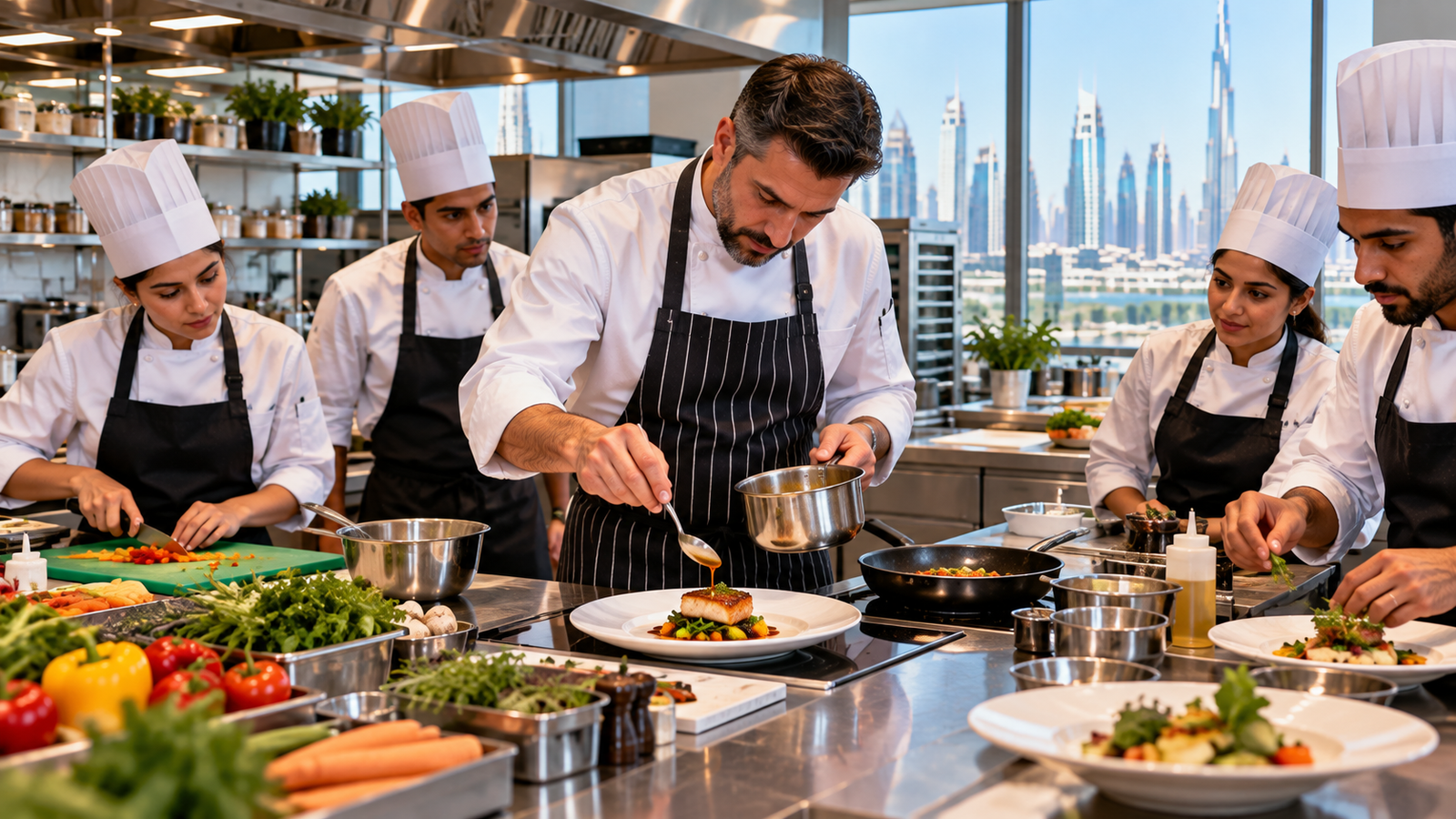
Chef Job Description: Duties and Responsibilities
A chef plays an essential role in the success of a restaurant, hotel, catering company, or any business that prepares food professionally. Beyond cooking, chefs are responsible for maintaining food quality, organizing kitchen operations, managing ingredients, following hygiene standards, and ensuring that meals are prepared and served on time.
A professional chef must combine culinary knowledge with practical skills, creativity, teamwork, and attention to detail. Depending on the workplace and job level, the role may also involve menu planning, cost control, staff training, inventory management, and kitchen supervision.
In Dubai and across the UAE, chefs work in a wide range of hospitality establishments, from luxury hotels and fine-dining restaurants to cafés, resorts, catering companies, and private kitchens. Although responsibilities vary by employer, the main objective remains the same: prepare safe, high-quality food while supporting efficient kitchen operations.
This guide explains the professional chef job description, daily duties and responsibilities, essential skills, kitchen management tasks, and career opportunities for chefs in Dubai.
What Is a Chef Job Description?
A chef job description explains the main duties, responsibilities, qualifications, and skills required to work in a professional kitchen. It helps employers communicate their expectations and enables job seekers to understand what the position involves.
A chef may specialize in a particular cuisine, cooking method, or kitchen section. For example, a pastry chef focuses on desserts and baked products, while a restaurant chef may prepare main courses, sauces, and other menu items.
In general, a chef's responsibilities include:
- Preparing and cooking food according to recipes and established standards.
- Planning preparation tasks and coordinating food production.
- Maintaining food quality, taste, portion sizes, and presentation.
- Following food safety and kitchen hygiene procedures.
- Monitoring ingredient availability and reducing food waste.
- Maintaining clean and organized workstations.
- Coordinating with other kitchen team members.
- Supporting menu planning and recipe development.
- Following workplace procedures and customer dietary requirements.
- Supervising kitchen staff when required by the position.
The exact responsibilities depend on the chef's seniority, the size of the kitchen, the cuisine being served, and the expectations of the employer.
1. Food Preparation and Cooking Duties
Food preparation is one of the most important duties of a chef. Chefs must prepare ingredients correctly, follow recipes, use suitable cooking techniques, and maintain consistent quality throughout service.
Preparing Ingredients
Before cooking begins, chefs organize the ingredients required for the menu. This process may involve washing vegetables, cutting meat, preparing seafood, measuring spices, preparing sauces, and arranging ingredients for easy access.
Proper preparation helps the kitchen operate efficiently during busy periods. Chefs must also check ingredient freshness and report any quality concerns.
Cooking Menu Items
Chefs use different cooking methods depending on the dish, ingredients, and recipe. These methods may include grilling, roasting, frying, steaming, baking, braising, and sautéing.
They must understand cooking times, temperatures, seasoning, and texture to achieve the intended result. Consistency is particularly important in restaurants and hotels, where customers expect the same quality whenever they order a dish.
Following Recipes and Portion Standards
Professional kitchens often use standardized recipes to maintain consistent flavor, presentation, and cost.
Chefs must follow ingredient quantities, preparation instructions, and portion sizes. They may also adjust recipes when authorized to accommodate menu changes, ingredient availability, or approved dietary requirements.
Checking Food Quality
Before food is served, chefs should check its appearance, texture, temperature, seasoning, and overall quality.
Any dish that does not meet the required standard should be corrected before serving, following the kitchen's procedures.
2. Daily Duties of a Chef
The daily duties of a chef depend on the establishment's opening hours, menu, and service schedule. However, most professional kitchens follow a routine that includes preparation, cooking, cleaning, and coordination.
Before Service
At the beginning of a shift, chefs may review the menu, check available ingredients, inspect their workstations, and prepare the items needed for service.
Typical tasks include:
- Reviewing reservations, expected orders, or catering requirements.
- Checking ingredient quality and availability.
- Preparing sauces, stocks, marinades, and other components.
- Organizing ingredients and equipment.
- Reviewing special dietary requests with the appropriate team members.
- Confirming that the workstation is clean and ready.
Good preparation reduces delays and helps chefs manage multiple orders efficiently.
During Service
During service, chefs prepare dishes according to incoming orders while coordinating with other kitchen sections.
They must manage cooking times, maintain portion consistency, communicate delays, and ensure that dishes meet the required quality standards.
Chefs may also need to respond to changing order volumes, ingredient shortages, or equipment issues. Staying organized and communicating clearly helps prevent mistakes.
After Service
After service, chefs may store ingredients correctly, label prepared food according to workplace procedures, clean equipment, organize workstations, and record stock requirements.
They may also review waste, report maintenance issues, prepare handover notes, and identify items that need to be ordered before the next shift.
These activities help maintain a safe, organized kitchen and prepare the team for future service periods.
3. Menu Planning and Development
Menu planning is an important responsibility, particularly for chefs who manage a kitchen or contribute to food development.
A well-designed menu should reflect the establishment's concept, customer preferences, ingredient availability, operational capacity, and budget.
Creating New Dishes
Chefs may develop new dishes by experimenting with ingredients, cooking techniques, flavors, and presentation styles.
They need to consider how a dish will taste, how long it takes to prepare, whether the ingredients are consistently available, and whether the kitchen can produce it efficiently during busy periods.
Standardizing Recipes
When a dish is added to a menu, chefs may document its ingredients, preparation steps, cooking methods, portion size, and presentation requirements.
Standardized recipes help different team members prepare the same dish consistently and make it easier to estimate ingredient requirements and food costs.
Considering Dietary Requirements
Menu planning may also involve identifying vegetarian options, allergen information, and dishes suitable for specific dietary needs.
Chefs should follow the establishment's procedures for communicating allergens and preventing cross-contact. They must not make unsupported claims that a dish is allergen-free when safe preparation cannot be confirmed.
Monitoring Menu Performance
Senior chefs may review customer feedback, ingredient costs, preparation time, and dish popularity to evaluate menu performance.
These insights can help the kitchen improve its menu, reduce unnecessary waste, and maintain a balance between food quality and business requirements.
4. Chef Food Safety Responsibilities
Food safety is a fundamental responsibility in every professional kitchen. Chefs must handle ingredients correctly and follow the food safety procedures applicable to their workplace.
Poor food handling can create risks for customers and damage a business's reputation. For this reason, chefs must understand safe preparation, storage, cooking, and cleaning practices.
Important food safety responsibilities include:
- Maintaining appropriate personal hygiene.
- Washing hands at the required times.
- Preventing cross-contamination between raw and ready-to-eat foods.
- Following approved food storage and temperature-control procedures.
- Checking ingredient condition and expiry information.
- Using clean utensils and suitable food-contact equipment.
- Following allergen-handling procedures.
- Reporting suspected food safety problems.
- Keeping required food safety records where applicable.
Chefs working in Dubai should follow the applicable local food safety requirements and their employer's approved procedures. Specific training, documentation, and operating requirements may vary according to the establishment and role.

5. Kitchen Hygiene and Cleaning Duties
Kitchen hygiene duties support food safety, employee wellbeing, and efficient daily operations.
Chefs are responsible for keeping their work areas clean and following the establishment's cleaning schedules. Their responsibilities may include cleaning preparation surfaces, sanitizing suitable equipment, managing waste, and ensuring that tools are stored correctly.
Other hygiene tasks include:
- Maintaining clean uniforms and appropriate protective clothing.
- Keeping floors and workstations free from unnecessary clutter.
- Using separate equipment or preparation arrangements where required to prevent contamination.
- Following instructions for cleaning and sanitizing equipment.
- Storing ingredients in designated areas.
- Reporting pests, damaged equipment, or other hygiene concerns.
- Following safe procedures when handling cleaning products.
In a larger kitchen, cleaning tasks may be shared among chefs, kitchen assistants, stewards, and cleaning staff. However, each chef remains responsible for maintaining the hygiene of their own work area and following the establishment's procedures.
6. Chef Inventory Management and Stock Control
Inventory management involves monitoring ingredients, checking stock levels, and helping ensure that the kitchen has the supplies needed for daily operations.
Poor stock control can lead to food shortages, unnecessary purchases, spoilage, and higher operating costs.
Checking Stock Levels
Chefs may inspect refrigerators, freezers, dry storage areas, and preparation stations to determine which ingredients are available and which need replenishment.
They should report shortages early so that the kitchen can plan purchases or adjust preparation arrangements appropriately.
Monitoring Ingredient Quality
Ingredients must be checked for freshness, condition, and appropriate storage. Chefs should follow the workplace's stock rotation and labeling procedures to reduce spoilage and maintain traceability where required.
Reducing Food Waste
Chefs can help control waste by preparing appropriate quantities, using ingredients efficiently, storing products correctly, and following approved procedures for leftovers and surplus food.
Supporting Purchasing Decisions
Depending on their position, chefs may prepare order lists, estimate ingredient requirements, communicate with suppliers, or assist the head chef with purchasing decisions.
Senior kitchen professionals may also monitor food costs and compare ingredient usage with expected quantities.
7. Chef Staff Supervision and Teamwork
A professional kitchen depends on teamwork. Even highly skilled chefs need to coordinate with other employees to ensure that meals are prepared correctly and served on time.
Staff supervision is usually a greater responsibility for senior chefs, but all team members must communicate effectively and contribute to a professional working environment.
Assigning Tasks
Supervising chefs may assign preparation duties, organize kitchen sections, establish priorities, and ensure that responsibilities are understood.
Clear instructions help employees avoid duplication, reduce errors, and complete preparation tasks on schedule.
Training Junior Chefs
Senior chefs often demonstrate cooking techniques, explain recipes, teach hygiene practices, and provide feedback to junior team members.
Training helps improve consistency and gives employees opportunities to develop their culinary skills.
Coordinating Kitchen Sections
In larger kitchens, different teams may handle starters, main courses, desserts, bakery products, or specialized cuisines.
Chefs must coordinate preparation and cooking times so that orders can be completed together and meet the restaurant's service standards.
Maintaining Professional Conduct
Chefs should communicate respectfully, follow instructions, accept constructive feedback, and report problems promptly.
Strong teamwork helps create a more productive workplace, particularly during busy services when several orders must be prepared simultaneously.
8. Chef Food Presentation Responsibilities
Food presentation influences the customer's dining experience. A dish may taste excellent, but inconsistent plating can affect how customers perceive its quality.
Chefs must follow the establishment's presentation standards and ensure that each dish is assembled correctly before it leaves the kitchen.
Their responsibilities may include:
- Using the correct plates and serving equipment.
- Maintaining consistent portion sizes.
- Arranging ingredients neatly.
- Applying garnishes appropriately.
- Keeping plate edges clean.
- Ensuring that the dish matches the approved recipe and presentation.
- Checking special requests before dispatching an order.
Fine-dining restaurants may have detailed plating standards, while cafés and casual restaurants may prioritize speed, consistency, and practicality.
Regardless of the setting, chefs should understand how presentation supports the restaurant's identity and customer expectations.
9. Kitchen Management Responsibilities of a Head Chef
A head chef generally has broader responsibility for kitchen performance than a junior or section chef.
The role combines culinary leadership with planning, cost management, quality control, and staff supervision.
Managing Kitchen Operations
The head chef organizes food production, establishes preparation priorities, coordinates kitchen sections, and ensures that the team follows established procedures.
They may also work with restaurant managers to plan service schedules, coordinate special events, and resolve operational problems.
Controlling Food Costs
Food cost management involves monitoring ingredient prices, controlling portion sizes, reducing waste, and using standardized recipes.
A head chef may review food cost reports and work with management to keep spending within the approved budget without compromising quality or safety.
Managing Staff
Depending on the business, the head chef may participate in recruitment, training, performance reviews, scheduling, and disciplinary procedures.
They are also responsible for setting expectations and helping the team maintain professional standards.
Maintaining Quality
Head chefs monitor food quality, hygiene, presentation, and consistency. They may inspect dishes, review customer feedback, update recipes, and introduce improvements when necessary.
The exact responsibilities vary by establishment. In some businesses, a general manager or food and beverage manager shares responsibility for budgets, purchasing, staffing, and wider operational decisions.
10. Chef Skills and Qualifications
Employers look for a combination of practical culinary ability, professional behavior, and relevant experience when hiring chefs.
Essential Technical Skills
Useful technical skills include:
- Knife handling and ingredient preparation.
- Knowledge of cooking methods.
- Recipe execution and portion control.
- Sauce, stock, and seasoning preparation.
- Food presentation and plating.
- Knowledge of relevant cuisine styles.
- Safe use of kitchen equipment.
- Food storage and hygiene practices.
The skills required depend on the role. A pastry chef may need specialist baking skills, while a grill chef may require experience preparing meat, seafood, and grilled dishes.
Important Soft Skills
Soft skills are equally important in many kitchen environments.
Chefs should demonstrate time management, communication, teamwork, attention to detail, adaptability, and problem-solving ability.
They must be able to work under pressure while maintaining quality and following food safety procedures.
Education and Professional Training
Some employers prefer or require a culinary arts qualification, professional cookery certificate, hospitality diploma, or relevant food safety training.
Other employers may place greater emphasis on hands-on experience and practical cooking assessments.
Candidates should review each vacancy to understand the required qualifications, experience, and certifications. Completing a culinary course can help build a foundation, but it does not guarantee employment or replace experience where that is required.
11. Different Chef Roles and Their Responsibilities
Chef duties vary according to the position and the structure of the kitchen.
Commis Chef
A commis chef is generally an entry-level kitchen professional who supports senior chefs. Responsibilities may include washing and cutting ingredients, preparing basic dishes, maintaining a workstation, and following instructions.
Chef de Partie
A chef de partie usually manages a particular kitchen section. Duties can include organizing preparation, cooking assigned dishes, checking quality, monitoring section stock, and coordinating with colleagues.
Sous Chef
A sous chef supports the head chef and may supervise staff, coordinate food production, monitor quality, organize shifts, and help manage stock and kitchen costs.
Head Chef or Executive Chef
A head chef or executive chef generally oversees broader kitchen operations, including menu development, food quality, staffing, purchasing coordination, budgets, and kitchen standards.
The title and scope of each position vary among employers. Some businesses use different titles for similar responsibilities, so applicants should read the full job description rather than relying on the title alone.
12. Chef Responsibilities in Dubai and the UAE
Chef responsibilities in Dubai are influenced by the type of establishment, customer expectations, and applicable workplace requirements.
Chefs may work in international hotels, independent restaurants, fine-dining venues, casual dining chains, bakeries, catering companies, resorts, or private kitchens. Each environment has its own menu, service standards, and operational demands.
For example, a hotel chef may prepare food for restaurants, room service, banquets, and events. A catering chef may focus on large-volume food production, transport arrangements, and coordinated service schedules. A restaurant chef may concentrate on menu execution, order timing, and customer consistency.
Chefs working in Dubai should be prepared to follow the employer's hygiene procedures, applicable food safety requirements, and workplace policies. They may also need to accommodate a diverse customer base and work collaboratively with colleagues from different professional and cultural backgrounds.
Working hours, shift patterns, and weekend duties depend on the employer and role. Applicants should review these conditions when considering an offer.
13. Chef Career Opportunities in Dubai
Dubai offers career opportunities for chefs across several areas of the hospitality industry. The right role depends on your experience, culinary specialization, qualifications, and professional goals.
Possible career paths include:
- Restaurant chef.
- Hotel chef.
- Pastry chef or baker.
- Commis chef.
- Chef de partie.
- Sous chef.
- Head chef or executive chef.
- Catering chef.
- Private chef.
- Specialist cuisine chef.
Candidates can strengthen their career prospects by developing technical expertise, gaining practical experience, learning food safety procedures, and improving leadership and communication skills.
Those who want to progress into senior positions should also understand menu costing, inventory management, staff supervision, and kitchen performance.
When applying for chef vacancies in Dubai, prepare a clear CV that highlights your relevant experience, cuisine specialization, training, and achievements. Check each job advertisement for its specific requirements and provide accurate information about your background.
Conclusion
A professional chef job description includes much more than preparing and cooking food. Chefs are responsible for ingredient preparation, food quality, presentation, hygiene, stock control, and teamwork. Depending on their seniority, they may also contribute to menu development, staff supervision, cost control, and overall kitchen management.
Understanding these duties and responsibilities helps employers recruit suitable candidates and enables aspiring chefs to prepare for the demands of professional kitchen work.
For those pursuing chef career opportunities in Dubai and the UAE, developing strong culinary skills, following food safety practices, gaining relevant experience, and maintaining a professional attitude can provide a solid foundation for career development.
Whether you are beginning as a commis chef or working toward a head chef position, consistent performance, continuous learning, and a commitment to quality remain essential to long-term success in the culinary industry.