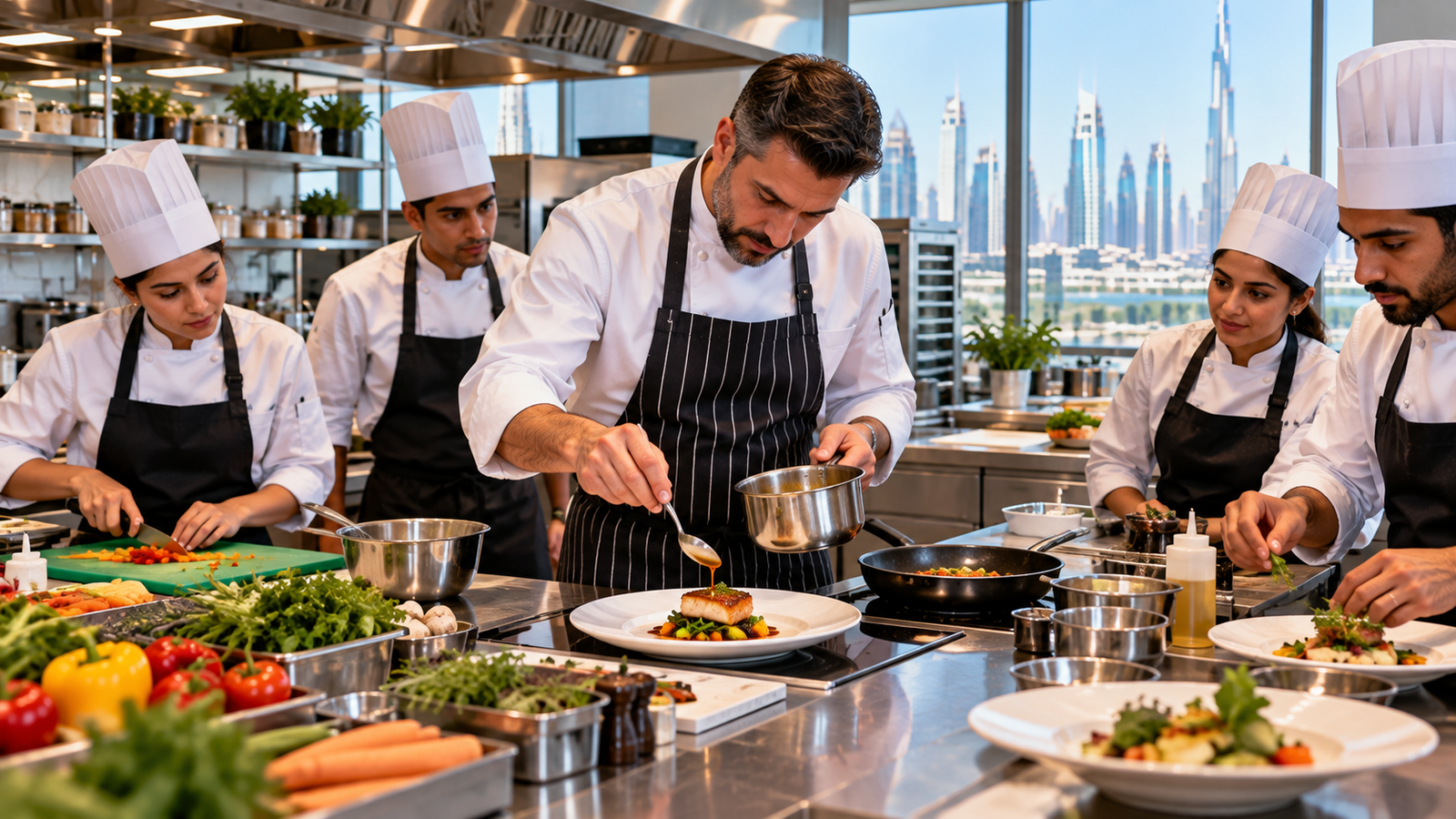
Commis Chef vs Chef de Partie: Differences, Duties, Salary, and Career Growth in Dubai
Introduction
A successful professional kitchen depends on teamwork, discipline, technical skills, and a clear division of responsibilities. Every chef has a role to play, from preparing ingredients and assisting senior cooks to managing an entire kitchen station during busy service periods. Two important positions in this hierarchy are the Commis Chef and the Chef de Partie.
Although both positions involve preparing food, maintaining hygiene, and supporting kitchen operations, their levels of responsibility differ significantly. A Commis Chef is generally an entry-level cook who learns professional kitchen techniques under supervision. A Chef de Partie, on the other hand, is an experienced chef responsible for a specific section of the kitchen, such as the grill, pastry, sauce, or vegetable station.
Understanding the difference between a Commis Chef and a Chef de Partie is particularly valuable for aspiring culinary professionals in Dubai. The city's hotels, restaurants, resorts, catering companies, and hospitality businesses offer career opportunities for chefs at different experience levels.
In this guide, we will explore their duties, qualifications, skills, salary expectations, and career progression to help you understand which position is right for your culinary career.
What Is a Commis Chef?
A Commis Chef is a junior chef who works under the supervision of more experienced kitchen professionals. This position is commonly considered an entry point into a professional culinary career.
Commis Chefs learn how commercial kitchens operate while developing practical cooking skills, food preparation techniques, and knowledge of kitchen safety standards. They may work in hotels, restaurants, catering companies, cruise ships, or other food service establishments.
Their responsibilities depend on the size and type of kitchen. In a small restaurant, a Commis Chef might assist with several types of food preparation. In a large hotel, they may be assigned to a particular section and focus on specific tasks.
Commis Chef Duties and Responsibilities
The daily duties of a Commis Chef typically include:
- Preparing ingredients: Washing, peeling, chopping, measuring, and portioning vegetables, meat, seafood, and other ingredients.
- Assisting senior chefs: Supporting Chef de Parties, Sous Chefs, and other kitchen team members during preparation and service.
- Following recipes: Preparing dishes according to established recipes, portion sizes, and presentation standards.
- Maintaining cleanliness: Cleaning workstations, utensils, cutting boards, and kitchen equipment.
- Following food safety procedures: Practising proper food storage, temperature control, personal hygiene, and cross-contamination prevention.
- Organising ingredients: Labelling, dating, storing, and rotating food products using appropriate stock rotation procedures.
- Learning cooking techniques: Developing skills in grilling, sautéing, roasting, boiling, baking, and other methods under supervision.
- Supporting service: Helping prepare ingredients and assembling dishes during busy restaurant service periods.
A Commis Chef is expected to be willing to learn, follow instructions carefully, work efficiently, and maintain professional standards.
Commis Chef Job Requirements
Employers generally look for candidates who demonstrate a combination of basic culinary knowledge and a strong willingness to develop their skills.
Common requirements include:
- A culinary arts certificate, diploma, or relevant practical training, depending on the employer.
- Basic knowledge of food preparation and cooking techniques.
- Understanding of food hygiene and kitchen safety.
- Good communication and teamwork skills.
- Physical stamina and the ability to work in a fast-paced environment.
- Attention to detail and willingness to accept feedback.
- Flexibility to work shifts, weekends, and public holidays when required.
Some employers accept candidates with limited experience if they have completed relevant culinary training. Others prefer previous experience in a restaurant or hotel kitchen.
What Is a Chef de Partie?
A Chef de Partie is a professional chef responsible for managing a particular section, or station, within a commercial kitchen. The position is also known as a station chef.
Unlike a Commis Chef, who primarily supports senior chefs and develops technical skills, a Chef de Partie is expected to take ownership of assigned tasks, maintain consistent food quality, and organise the work of the station.
Depending on the establishment, a Chef de Partie may supervise Commis Chefs, kitchen assistants, or other junior team members.
Common kitchen stations include the following:
- Saucier: Responsible for sauces, gravies, and certain sautéed dishes.
- Grillardin: Specialises in grilled and sometimes broiled foods.
- Poissonnier: Handles fish and seafood preparations.
- Entremetier: Prepares vegetables, soups, and other assigned hot dishes.
- Garde manger: Manages cold food preparation, salads, appetisers, and related items.
- Pâtissier: Specialises in pastries, desserts, and other sweet preparations.
The exact responsibilities and station titles vary by kitchen. Not every restaurant uses the full traditional brigade system.
Chef de Partie Duties and Responsibilities
A Chef de Partie has greater responsibility for station performance and food quality.
Key duties usually include:
- Managing a kitchen station: Organising preparation and service activities within the assigned section.
- Preparing and cooking dishes: Producing menu items to the restaurant's recipes, specifications, and presentation standards.
- Supervising junior staff: Assigning tasks, supporting Commis Chefs, and checking their work.
- Maintaining consistency: Ensuring dishes meet the expected standards for taste, portion size, temperature, and appearance.
- Controlling food waste: Monitoring ingredient usage, portioning, storage, and stock rotation.
- Maintaining station readiness: Ensuring ingredients, equipment, and mise en place are ready before service begins.
- Following hygiene standards: Enforcing food safety procedures and maintaining a clean, organised working environment.
- Coordinating with other stations: Communicating with the Sous Chef, Head Chef, and colleagues to ensure dishes are completed on time.
- Managing service pressure: Prioritising orders, maintaining composure, and resolving routine problems during busy periods.
- Training junior chefs: Demonstrating techniques and helping less experienced employees improve their performance.
A Chef de Partie must balance cooking ability with organisation, communication, and leadership.
Chef de Partie Job Requirements
Employers usually expect more practical experience and greater independence from a Chef de Partie than from a Commis Chef.
Typical requirements include:
- A culinary arts qualification or equivalent professional experience.
- Several years of relevant kitchen experience, depending on the establishment.
- Strong knowledge of the assigned kitchen station.
- Ability to prepare dishes consistently without continuous supervision.
- Understanding of food costing, portion control, and stock management.
- Knowledge of food safety, sanitation, and kitchen organisation.
- Leadership, communication, and problem-solving skills.
- Ability to supervise junior employees and work under pressure.
Luxury hotels and high-volume restaurants may require more specialised experience, while smaller establishments may consider candidates with a broader range of practical skills.
Commis Chef vs Chef de Partie: Key Differences
The main difference is the level of independence and responsibility. A Commis Chef primarily learns and assists, whereas a Chef de Partie independently manages an assigned kitchen section.
| ComparisonCommis ChefChef de Partie | ||
| Career level | Junior or entry-level | Experienced station chef |
| Main purpose | Learn and support kitchen operations | Manage an assigned kitchen station |
| Supervision | Works under senior chefs | Works with greater independence |
| Cooking responsibilities | Basic preparation and assigned cooking tasks | Complete station-specific preparation and cooking |
| Staff management | Usually no formal supervisory responsibility | May supervise Commis Chefs and assistants |
| Menu knowledge | Learns recipes and procedures | Applies detailed knowledge of station dishes |
| Stock control | Assists with storage and rotation | Monitors station stock and ingredient usage |
| Quality control | Follows instructions and standards | Takes responsibility for station consistency |
| Problem-solving | Refers complex issues to senior staff | Handles routine station problems independently |
| Experience | May begin with limited experience | Usually requires substantial practical experience |
| Career objective | Develop culinary skills | Demonstrate expertise and leadership |
Difference in Daily Responsibilities
Imagine a hotel restaurant preparing dinner for 150 guests.
The Commis Chef might wash and cut vegetables, portion ingredients, prepare basic components, and assist with plating under instructions from a senior chef.
The Chef de Partie might organise the station's preparation list, check ingredient availability, prepare and cook assigned dishes, coordinate orders with other stations, and ensure that junior chefs complete their tasks correctly.
Both positions contribute to the same service. However, the Chef de Partie is more accountable for the performance of the assigned section.
Difference in Skills and Qualifications
A Commis Chef needs foundational cooking knowledge, attention to detail, discipline, and the ability to follow instructions.
A Chef de Partie needs those same foundations, combined with advanced station-specific techniques, time management, independent decision-making, and supervisory skills.
Formal culinary education can help candidates qualify for either position, but practical performance remains important. Completing a course does not automatically qualify someone for a Chef de Partie role without the necessary experience and competence.

Commis Chef Salary in Dubai
The salary of a Commis Chef in Dubai depends on the employer, hotel category, restaurant concept, previous experience, and employment benefits.
For general career planning, an illustrative monthly salary range is AED 2,000–3,500. Some employers may offer less or more depending on their requirements and compensation structure.
Entry-level candidates may start near the lower end of this range, while chefs with stronger technical skills or experience in established hotels may receive higher compensation.
Benefits can significantly affect the overall value of an employment package. Candidates should check whether the offer includes:
- Accommodation or an accommodation allowance.
- Staff meals during working shifts.
- Transportation or transport allowance.
- Medical insurance.
- Overtime arrangements and applicable leave benefits.
- Service charges or other additional payments, where offered.
These figures are indicative estimates, not verified current market averages or guaranteed offers. Candidates should compare recent vacancies and written employment packages before making a decision.
Chef de Partie Salary in Dubai
Chef de Partie salaries are generally higher than Commis Chef salaries because the position requires greater technical expertise, independence, and responsibility for station performance.
For general planning, an illustrative monthly salary range is AED 3,500–6,000. Some specialised positions, luxury hotels, and high-end restaurants may offer higher compensation, while smaller establishments may pay less.
Salary expectations can vary according to:
- The type and reputation of the hotel or restaurant.
- Experience in a particular station, such as pastry, grill, or sauce.
- Ability to supervise and train junior staff.
- Knowledge of food costing and stock control.
- Experience with high-volume service or fine dining.
- The benefits included in the employment package.
As with Commis Chef salaries, these figures are indicative estimates rather than verified live vacancy data. Actual offers should be confirmed directly with employers.
Commis Chef vs Chef de Partie Salary Comparison
| PositionIllustrative monthly salary | |
| Commis Chef | AED 2,000–3,500 |
| Chef de Partie | AED 3,500–6,000 |
The potential difference reflects the higher level of responsibility associated with managing a station. However, salary alone should not determine which position to pursue. Training opportunities, working conditions, benefits, and long-term career development are also important.
Career Path: From Commis Chef to Chef de Partie
Culinary careers usually progress through practical experience, technical development, and increasing responsibility. The exact timeline depends on individual performance, training, employer requirements, and available vacancies.
Step 1: Start as a Commis Chef
The first priority is to learn the fundamentals of professional kitchen work.
Develop knife skills, understand ingredient preparation, follow recipes accurately, practise safe food handling, and become familiar with kitchen equipment. Learn how to organise a workstation and complete preparation tasks within the required time.
Seek feedback from senior chefs and practise consistently.
Step 2: Develop Station-Specific Skills
As experience increases, learn how different kitchen stations operate.
For example, you might develop expertise in grill preparation, sauce production, vegetable cookery, cold kitchen operations, or pastry. Becoming reliable in a specific area makes you more useful to the kitchen team.
You should also learn mise en place, which means preparing and organising everything needed before service begins.
Step 3: Progress to Demi Chef de Partie
Some professional kitchens have an intermediate position called Demi Chef de Partie. This role typically sits between Commis Chef and Chef de Partie, although titles and responsibilities vary between employers.
A Demi Chef de Partie may handle more complex preparation, assist with supervising junior staff, and take responsibility for specific station duties when the senior station chef is unavailable.
Not every kitchen has this position, so it is not a mandatory career step.
Step 4: Become a Chef de Partie
To progress to Chef de Partie, demonstrate that you can manage your assigned station reliably.
You should be able to organise preparation, cook dishes to specification, maintain hygiene standards, control waste, coordinate with colleagues, and guide junior team members.
Your performance during busy service periods is particularly important because it demonstrates whether you can maintain quality under pressure.
Step 5: Progress to Sous Chef
After gaining sufficient experience as a Chef de Partie, you may progress to Sous Chef.
This position usually involves broader kitchen responsibilities, including staff supervision, coordination between stations, inventory management, quality control, and assisting the Head Chef with daily operations.
Further progression may lead to Head Chef or Executive Chef positions, depending on the organisation.
Essential Skills for Both Positions
Although their responsibilities differ, Commis Chefs and Chef de Parties need a common set of professional skills.
Technical Cooking Skills
Chefs should understand knife techniques, cooking methods, ingredient preparation, seasoning, and recipe execution. A Chef de Partie generally needs deeper knowledge of the assigned station.
Food Safety and Hygiene
Safe food handling is essential at every career level. Chefs must understand appropriate storage, temperature control, cleaning procedures, personal hygiene, and cross-contamination prevention.
Time Management
Restaurant kitchens work to strict service schedules. Chefs must prepare ingredients efficiently, prioritise tasks, and coordinate the timing of dishes.
Teamwork and Communication
Kitchen staff need to communicate clearly and work cooperatively. A Chef de Partie must also communicate expectations to junior employees and coordinate with other stations.
Organisation and Attention to Detail
Correct portion sizes, ingredient labels, preparation lists, and workstation organisation help reduce waste and improve consistency.
Leadership and Problem-Solving
These skills become increasingly important as chefs advance. A Chef de Partie should be able to identify routine problems, make appropriate decisions, and seek senior support when necessary.
How to Become a Chef de Partie in Dubai
Dubai's hospitality industry includes international hotel groups, independent restaurants, resorts, catering companies, and large food service operations. Aspiring chefs can prepare for these opportunities by combining structured training with relevant kitchen experience.
Complete Culinary Training
Consider a recognised culinary arts course that covers food preparation, cooking methods, hygiene, kitchen organisation, and professional kitchen practices.
Practical training is especially valuable because employers need candidates who can apply their knowledge in real working environments.
Gain Professional Kitchen Experience
Apply for entry-level roles such as Commis Chef, kitchen trainee, or other suitable junior kitchen positions. Focus on learning professional standards rather than rushing into a senior title.
Where possible, gain experience in the type of establishment that matches your career goals, such as a hotel, fine-dining restaurant, bakery, or catering business.
Build a Specialisation
Choose a station that matches your strengths and interests. Specialisation can help you develop deeper technical knowledge and become a stronger candidate for station chef opportunities.
Develop Leadership Skills
Practise organising tasks, helping junior colleagues, managing preparation schedules, and communicating clearly during service. Learn basic inventory management, food costing, and portion control.
Prepare a Professional CV
Highlight culinary qualifications, kitchen experience, food safety knowledge, specialist skills, and measurable responsibilities. Be accurate about your experience and the stations you can manage independently.
Search for vacancies using relevant terms such as Commis Chef, Demi Chef de Partie, and Chef de Partie. Review each employer's requirements and apply for positions that match your practical abilities.
Which Role Should You Choose?
The right role depends on your current experience, training, and professional goals.
Choose a Commis Chef position if:
- You are starting your culinary career.
- You want to learn from experienced chefs.
- You need more practical experience before managing a station.
- You want to build a strong foundation in professional cooking.
Aim for a Chef de Partie position if:
- You have substantial experience in a commercial kitchen.
- You can independently manage a specific station.
- You consistently prepare dishes to professional standards.
- You can organise work, coordinate with colleagues, and supervise junior staff.
If you are an aspiring chef, starting as a Commis Chef is a valuable way to build experience. If you already have the necessary skills and experience, a Chef de Partie position may offer greater responsibility and a stronger foundation for future leadership roles.
Conclusion
The difference between a Commis Chef and a Chef de Partie comes down to experience, independence, and responsibility. A Commis Chef supports kitchen operations while developing essential culinary skills. A Chef de Partie manages an assigned station, maintains food quality, organises preparation, and may supervise junior team members.
Both roles are important to the success of a professional kitchen. For newcomers, the Commis Chef position provides an opportunity to learn and grow. For experienced cooks, becoming a Chef de Partie is a significant step towards senior kitchen management.
For anyone planning a culinary career in Dubai, combining practical kitchen experience with professional training, strong hygiene practices, and continuous skill development can create a solid foundation for long-term growth in the hospitality industry.
Frequently Asked Questions (FAQs)
1. Is a Commis Chef higher than a Chef de Partie?
No. A Chef de Partie is generally a more senior position because they manage a particular kitchen station and may supervise junior chefs. A Commis Chef typically works under the direction of more experienced kitchen staff.
2. What is the main difference between a Commis Chef and a Chef de Partie?
A Commis Chef mainly assists with food preparation and learns professional techniques. A Chef de Partie independently manages an assigned station, maintains food quality, coordinates preparation, and may supervise junior team members.
3. What is the salary of a Commis Chef in Dubai?
An illustrative planning range is AED 2,000–3,500 per month. Actual salaries vary according to experience, employer, benefits, and job responsibilities.
4. What is the salary of a Chef de Partie in Dubai?
An illustrative planning range is AED 3,500–6,000 per month, although some positions may offer more or less. Candidates should check current vacancies and the complete compensation package.
5. How long does it take to become a Chef de Partie?
There is no fixed timeline. Progress depends on practical experience, technical ability, performance, and available opportunities. Some chefs advance relatively quickly, while others require several years to develop the necessary expertise.
6. Do I need a culinary arts qualification to become a Chef de Partie?
A culinary qualification can help, but requirements vary by employer. Relevant practical experience, station-specific cooking skills, food safety knowledge, and the ability to manage kitchen responsibilities are also important.
7. What comes after Chef de Partie?
A common progression is Chef de Partie to Sous Chef, followed by Head Chef or Executive Chef. Some kitchens include intermediate positions or alternative specialisation paths.
8. Can a Commis Chef become a Chef de Partie without working as a Demi Chef de Partie?
Yes. A Demi Chef de Partie role is not available in every kitchen and is not always required. Promotion depends on whether the chef can demonstrate the skills, experience, and independence expected of a Chef de Partie.