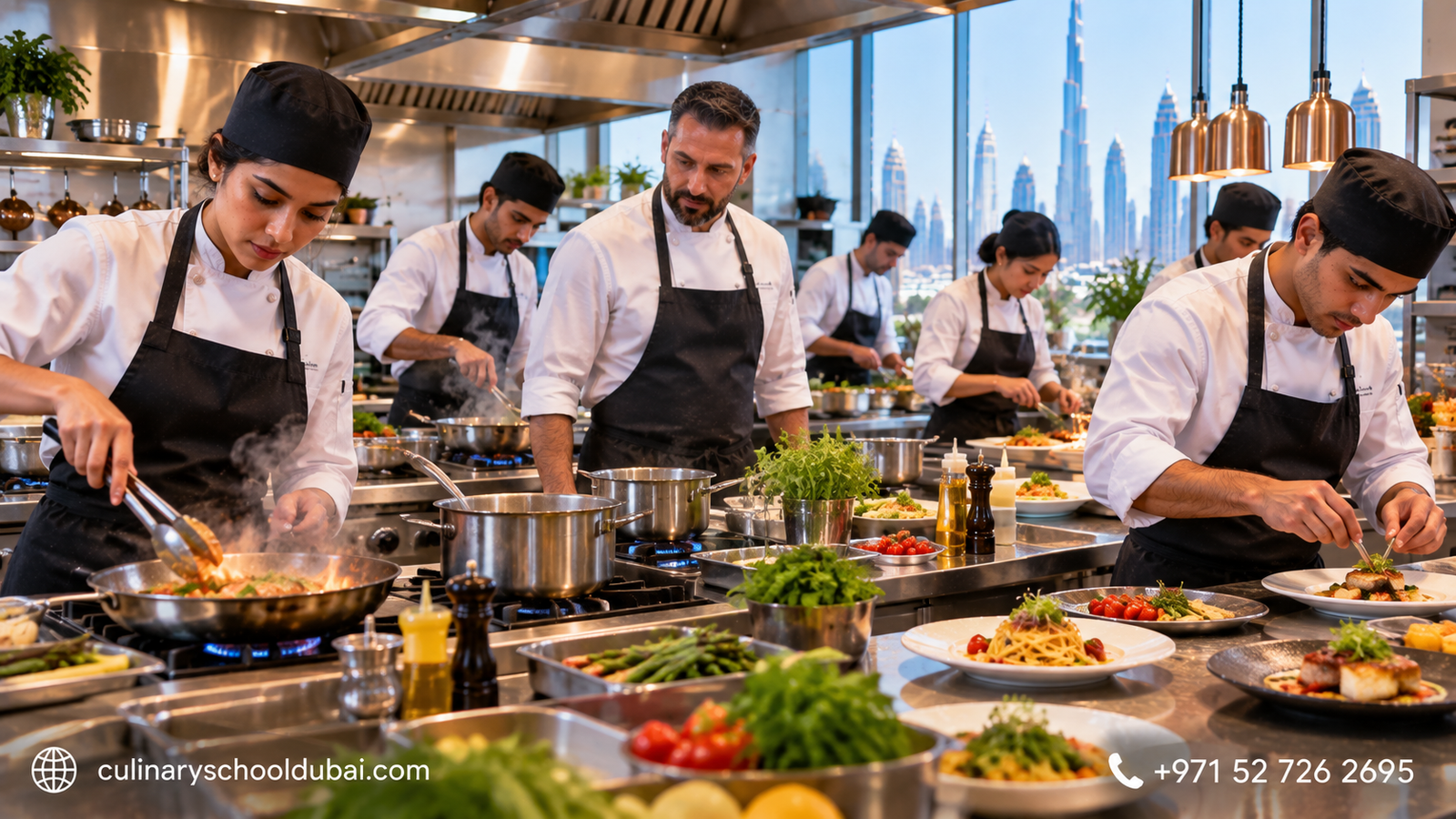
Short Culinary Courses in Dubai
Learning professional cooking skills does not always require a long-term culinary program. For beginners, working professionals, hospitality employees and people exploring a career in food and beverage, short culinary courses in Dubai can provide a focused way to develop practical skills within a limited training period.
Dubai's hospitality and food service sector includes restaurants, hotels, catering companies, cafés, bakeries and other food businesses. This creates interest in culinary education for people who want to improve their cooking abilities or prepare for professional kitchen environments.
A short culinary course can focus on essential cooking techniques, food preparation, kitchen safety, presentation and professional kitchen practices. Some programs may also offer specialized training in areas such as pastry, baking, international cuisine or specific chef skills.
For people who cannot commit to a lengthy full-time program, an intensive or fast-track course can offer a more flexible approach to culinary education.
But what should you expect from a short culinary course? Who can benefit from it, what skills can you learn and how should you choose the right program?
What Are Short Culinary Courses?
Short culinary courses in Dubai are focused training programs designed to teach specific culinary skills within a shorter period than traditional long-term culinary programs.
The length and structure can vary significantly depending on the training provider and subject.
A short course may focus on:
- Basic culinary skills
- Professional cooking techniques
- Food preparation
- Knife skills
- Kitchen organization
- Food safety
- Sauce preparation
- Baking
- Pastry
- International cuisine
- Food presentation
- Professional kitchen practices
Some courses may be designed for complete beginners, while others may target people who already have kitchen experience.
Why Choose a Short Culinary Course in Dubai?
One of the biggest advantages of short culinary training is its focused structure.
Not everyone has the time or resources to commit to a long-term culinary qualification. A shorter program can allow learners to concentrate on specific skills without making a lengthy educational commitment.
A short culinary course may be suitable for:
- Beginners
- Working professionals
- Hospitality employees
- Home cooks
- Aspiring chefs
- Career changers
- Food entrepreneurs
- Students
- Culinary enthusiasts
The right course depends on the learner's objectives and previous experience.
Intensive Culinary Courses in Dubai
Intensive culinary courses in Dubai are designed to cover a significant amount of material within a concentrated schedule.
Instead of spreading lessons over a long period, an intensive course may provide several practical sessions within a shorter timeframe.
This format can be useful for learners who:
- Have limited time
- Want focused training
- Prefer practical learning
- Need specific culinary skills
- Want to explore professional cooking
- Have a flexible short-term schedule
Because intensive courses can involve frequent practical sessions, learners should make sure they have enough time and energy to participate fully.
Fast-Track Culinary Courses
A fast-track culinary course in Dubai can provide a focused route for learners who want to develop foundational culinary skills within a relatively short training period.
Fast-track programs may cover the most important techniques first, such as:
- Knife skills
- Food preparation
- Cooking methods
- Sauces
- Seasoning
- Plating
- Kitchen organization
- Food safety
The exact content depends on the course.
Fast-track training can be useful when the learner has a clear objective and wants to concentrate on specific skills rather than completing a broad long-term curriculum.

Accelerated Culinary Training
Accelerated culinary training in Dubai can be particularly relevant for people who want to develop skills quickly while maintaining other responsibilities.
For example, someone already working in hospitality may want additional culinary knowledge without leaving their current job for an extended period.
An accelerated program can focus on practical learning and essential professional techniques.
However, learners should not assume that a shorter course provides the same depth as a longer culinary qualification. Before enrolling, compare the course duration, practical hours and curriculum.
What Do You Learn in a Short Culinary Course?
The skills depend on the course specialization, but many programs introduce students to fundamental culinary techniques.
Knife Skills
Knife handling is one of the foundations of professional cooking.
Students may learn:
- Safe knife handling
- Slicing
- Dicing
- Chopping
- Julienne
- Mincing
- Basic cutting techniques
- Ingredient preparation
Proper knife technique can improve consistency, efficiency and safety in the kitchen.
Food Preparation
Students can learn how to prepare ingredients before cooking.
This can include:
- Washing
- Peeling
- Cutting
- Portioning
- Marinating
- Measuring
- Organizing ingredients
Professional kitchens often rely on organized preparation to maintain an efficient workflow.
Cooking Techniques
A short culinary course may introduce learners to several fundamental cooking methods.
These can include:
- Sautéing
- Grilling
- Roasting
- Baking
- Frying
- Steaming
- Boiling
- Poaching
- Braising
Understanding the differences between cooking methods helps learners choose appropriate techniques for different ingredients.
Practical Culinary Training in Dubai
One of the most important factors when choosing a practical culinary training program in Dubai is the amount of hands-on learning.
Culinary skills are difficult to develop through theory alone.
During practical sessions, learners may work directly with:
- Professional kitchen equipment
- Ingredients
- Knives
- Cooktops
- Ovens
- Mixing equipment
- Preparation tools
- Presentation equipment
Practical training allows students to apply techniques under instructor supervision.
Hands-On Culinary Courses for Beginners
People with no professional kitchen experience may benefit from a structured hands-on culinary course in Dubai.
A beginner-focused program can start with basic concepts before introducing more advanced techniques.
Beginner Culinary Training May Include
- Kitchen safety
- Equipment identification
- Knife skills
- Ingredient preparation
- Basic cooking methods
- Sauce preparation
- Seasoning
- Food presentation
- Basic hygiene
- Kitchen organization
This type of progression can help learners build confidence while developing fundamental culinary skills.
Culinary Arts Short Courses
A culinary arts short course in Dubai can provide an introduction to professional cooking and culinary techniques without requiring a long-term program.
Depending on the course, topics may include:
- Culinary fundamentals
- Food preparation
- Cooking techniques
- Sauce preparation
- Menu items
- Food presentation
- Kitchen workflow
- Food safety
Some programs may also introduce students to specific cuisines or specialized culinary areas.
Short Chef Courses in Dubai
People interested in becoming chefs may consider a chef short course in Dubai as an introduction to professional kitchen skills.
A short chef course may focus on practical skills such as:
- Professional food preparation
- Cooking techniques
- Kitchen organization
- Recipe execution
- Plating
- Portion control
- Food safety
- Professional equipment
However, completing a short course alone does not necessarily provide the same level of preparation as a longer professional chef qualification or extensive industry experience.
Learners should therefore consider their long-term career objectives when selecting a program.
Professional Culinary Courses
A professional culinary course in Dubai generally focuses on skills that can be applied in professional kitchen environments.
Compared with recreational cooking classes, professional programs may place greater emphasis on:
- Consistency
- Speed
- Portion control
- Kitchen workflow
- Food safety
- Professional equipment
- Recipe standards
- Food presentation
If your goal is career development, look for a program that clearly identifies its professional learning outcomes.
Culinary Certification Courses in Dubai
Some learners want formal documentation of their culinary training.
A culinary certification course in Dubai may provide a certificate after successful completion of the course requirements.
Before enrolling, check:
- Who issues the certificate
- Course duration
- Assessment requirements
- Practical training hours
- Curriculum
- Certification conditions
A certificate can document completion of training, but practical skills and professional experience remain important for culinary careers.
Short Culinary Courses for Beginners
Beginners do not necessarily need to start with advanced culinary training.
A beginner-friendly culinary course in Dubai can provide a foundation in:
- Kitchen safety
- Food preparation
- Knife handling
- Cooking methods
- Basic sauces
- Seasoning
- Food presentation
- Kitchen organization
After developing these fundamentals, learners can decide whether they want to progress into advanced culinary education.
Weekend Short Culinary Courses
For people who work during weekdays, a weekend culinary course in Dubai can provide an alternative schedule.
Weekend training can allow learners to develop culinary skills without taking extended time away from work or other commitments.
This can be suitable for:
- Working professionals
- Hospitality employees
- Entrepreneurs
- Students
- Home cooks
- Career changers
When considering a weekend short course, check how many practical sessions are included and whether the schedule provides enough time to practice the techniques being taught.
Part-Time Culinary Courses
A part-time culinary course in Dubai can spread training across a longer period while keeping individual class sessions manageable.
This can be useful for learners who want culinary education but cannot attend an intensive full-time schedule.
Part-time programs can provide flexibility for people balancing:
- Work
- Education
- Family responsibilities
- Business
- Other commitments
Compare the weekly schedule and total practical hours before selecting a course.
What Skills Can You Develop?
A well-structured short culinary program can help learners develop several practical skills.
Food Preparation
Students can learn how to prepare ingredients efficiently and safely.
Cooking Techniques
Learners can practice different cooking methods and understand how they affect ingredients.
Seasoning and Flavor
Training can introduce basic principles of seasoning, balance and flavor development.
Plating
Students may practice arranging food attractively and consistently.
Kitchen Organization
Learners can understand preparation sequences and efficient kitchen workflow.
Food Safety
Courses may introduce hygiene, safe food handling and basic kitchen safety practices.
Equipment Handling
Students can become familiar with common professional kitchen equipment.
Short Culinary Training for Working Professionals
Working professionals often need education that fits around existing commitments.
An intensive or short course can provide an opportunity to develop culinary skills without committing to a long-term program.
For example, someone already working in hospitality may want to improve their cooking techniques or move toward a more culinary-focused role.
Similarly, someone working outside the hospitality sector may want to explore culinary work before making a career change.
A short course can provide an opportunity to gain introductory experience before deciding whether further education is appropriate.
Is a Short Culinary Course Enough to Become a Chef?
A short course can provide useful culinary knowledge, but becoming a professional chef usually involves more than completing a short program.
Professional culinary careers can require:
- Practical kitchen experience
- Culinary education
- Food safety knowledge
- Experience with different cooking techniques
- Ability to work in a professional kitchen
- Consistency
- Time management
- Teamwork
- Continued professional development
A short course can therefore be viewed as a foundation or skills-development opportunity rather than a complete substitute for professional kitchen experience.
Benefits of Short Culinary Courses
Short culinary training can offer several advantages.
Focused Learning
Students can concentrate on specific culinary skills.
Flexible Commitment
A shorter program may be easier to fit around existing responsibilities.
Practical Experience
Hands-on sessions allow learners to apply techniques.
Career Exploration
A short course can help people determine whether they are interested in professional culinary work.
Skill Development
Experienced home cooks or hospitality workers can strengthen particular areas of their culinary knowledge.
Faster Introduction to Culinary Techniques
Learners can begin practicing professional methods without committing immediately to a long-term program.
What Makes a Good Short Culinary Course?
When comparing short culinary courses in Dubai, consider more than the course duration.
Curriculum
Check which techniques and subjects are included.
Practical Hours
Find out how much time students spend actually cooking.
Kitchen Facilities
Consider the quality and availability of training equipment.
Instructor Experience
Review the professional background of the instructors.
Class Size
Smaller practical groups may provide more opportunities for instructor feedback.
Course Level
Choose a program suitable for your existing skills.
Certification
If you need a certificate, confirm exactly what is awarded.
Schedule
Make sure the course fits your availability.
Questions to Ask Before Enrolling
Before joining a short culinary course, ask the training provider:
- How long is the course?
- How many practical hours are included?
- Is the course suitable for beginners?
- What cooking techniques are covered?
- What equipment will students use?
- Are ingredients included?
- Who teaches the course?
- Is certification provided?
- What assessment is required?
- Is the course designed for professional or recreational learning?
- Are weekend or part-time options available?
These questions can help you compare programs based on actual training value rather than course length alone.
Short Culinary Courses vs Long-Term Culinary Programs
Both short and long-term culinary programs have different purposes.
A short course may be suitable when the learner wants:
- Specific skills
- Flexible training
- Career exploration
- Basic culinary knowledge
- Focused practical practice
A longer program may be more appropriate for someone seeking comprehensive culinary education and a deeper professional foundation.
The best option depends on the learner's goals, time availability, budget and desired level of training.
Why Hands-On Learning Matters
Cooking is a practical skill.
You can read about how to sauté vegetables, prepare a sauce or bake a dish, but practical execution involves heat control, timing, texture, seasoning and presentation.
Hands-on culinary training in Dubai gives learners an opportunity to practice these skills directly.
Instructor feedback can also help students identify mistakes and improve their techniques.
This makes practical training an important consideration when choosing a short culinary course.
How to Get the Most From a Short Culinary Course
Because short courses have limited training time, preparation can help you get more from each session.
Before attending, familiarize yourself with basic culinary terminology and arrive ready for practical work.
During training:
- Ask questions
- Practice techniques carefully
- Take notes
- Observe instructor demonstrations
- Repeat techniques when possible
- Focus on consistency
- Learn from mistakes
- Practice outside class when appropriate
The goal should be to understand the technique rather than simply complete a recipe.
Who Should Consider a Short Culinary Course?
Short culinary courses can be useful for many types of learners.
Beginners
A short course can provide an introduction to professional cooking.
Home Cooks
Experienced home cooks can improve their technique and learn professional methods.
Working Professionals
Short training can fit around a busy schedule.
Hospitality Workers
Existing hospitality employees can develop additional culinary skills.
Career Changers
A short program can help someone explore culinary work before committing to longer education.
Food Entrepreneurs
People planning a food-related business can gain practical knowledge of cooking and kitchen operations.
Final Thoughts on Short Culinary Courses in Dubai
Short culinary courses in Dubai can provide a focused and flexible way to develop practical cooking skills. They can be suitable for beginners, working professionals, hospitality employees, home cooks and people exploring a career in the culinary industry.
Depending on the program, learners can develop skills in food preparation, knife techniques, cooking methods, sauces, plating, kitchen organization, food safety and professional kitchen practices.
For people with limited time, intensive culinary courses, fast-track culinary courses, weekend programs and part-time options can provide different approaches to flexible culinary education.
However, course length should not be the only factor when choosing a program. Consider the curriculum, practical hours, kitchen facilities, instructor experience, class size, certification and career relevance.
If your goal is to develop professional culinary skills, look for a course that combines structured instruction with meaningful hands-on practice. A short program can provide a useful starting point, while continued practice, experience and further education can help you build on the skills you develop.
Ultimately, the right short culinary course in Dubai depends on what you want to learn, how quickly you want to learn it and whether your goal is personal development, professional skills development or preparation for a culinary career.