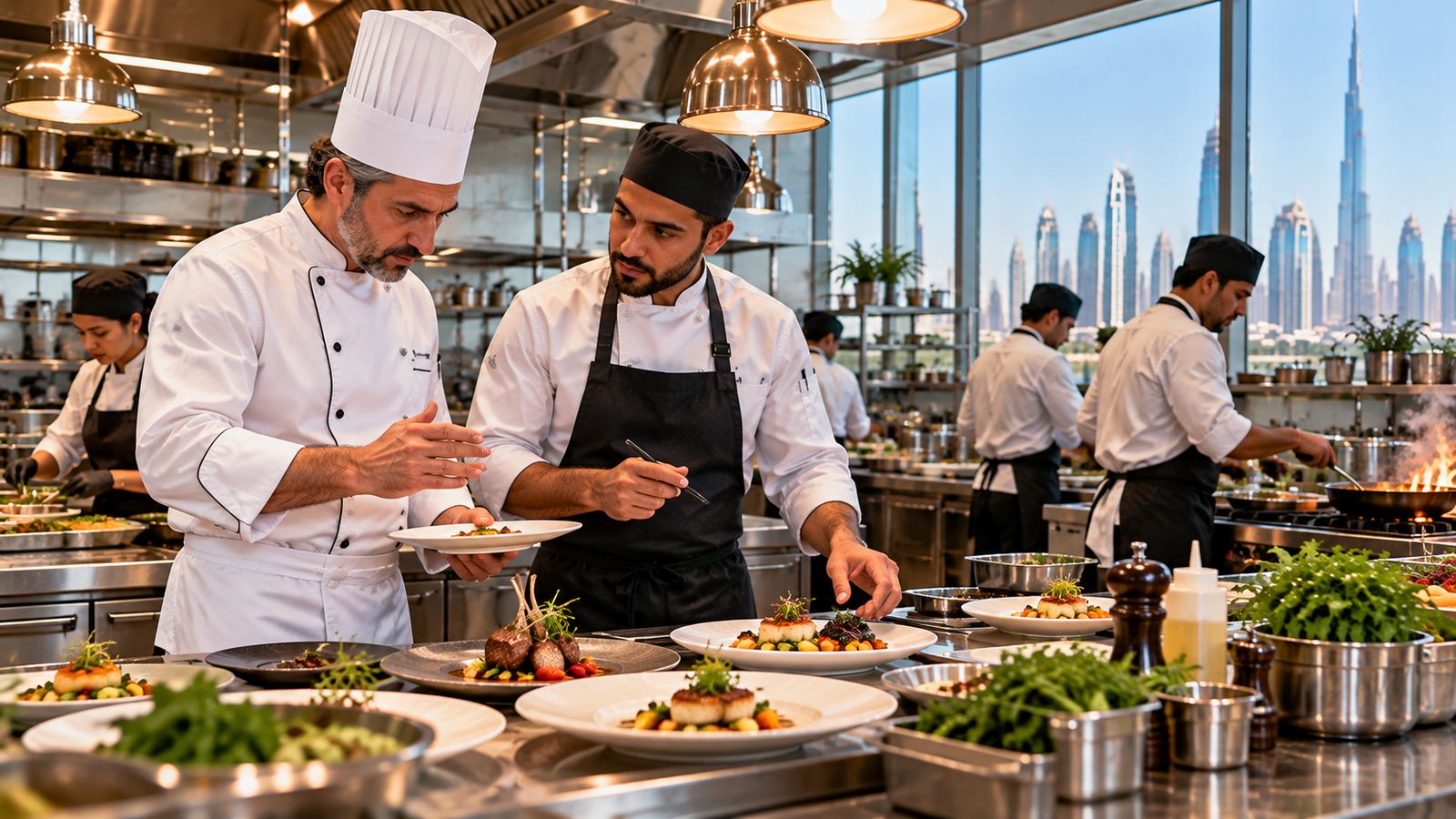
Chef de Partie vs Sous Chef: Duties, Salary, Skills, and Career Growth in Dubai
Introduction
A professional kitchen depends on teamwork, organisation, technical expertise, and effective leadership. Every member of the kitchen brigade has specific responsibilities, from preparing ingredients and cooking individual dishes to managing staff and overseeing daily operations. Two important positions in this structure are the Chef de Partie and the Sous Chef.
Although both roles require strong culinary knowledge and practical experience, their responsibilities are different. A Chef de Partie, also known as a station chef, manages a particular section of the kitchen. A Sous Chef works at a more senior level, assisting the Head Chef with kitchen management, staff supervision, food quality, and operational planning.
Understanding the difference between a Chef de Partie and a Sous Chef is particularly useful for culinary professionals planning to build a career in Dubai. The city's hotels, luxury resorts, restaurants, and catering businesses offer opportunities for chefs who can combine cooking expertise with management skills.
This guide explains their duties, qualifications, salaries, experience requirements, and career progression to help you decide which position suits your professional goals.
What Is a Chef de Partie?
A Chef de Partie is an experienced chef responsible for a specific kitchen station. The position is also commonly called a station chef or section chef.
In a large hotel or restaurant, the kitchen may be divided into several stations. Each station focuses on particular ingredients, cooking methods, or menu items. The Chef de Partie ensures that the assigned section operates efficiently and produces food according to the establishment's standards.
Depending on the kitchen, a Chef de Partie may supervise Commis Chefs, Demi Chefs de Partie, or kitchen assistants.
Chef de Partie Duties and Responsibilities
The primary responsibility of a Chef de Partie is to manage the assigned station while maintaining consistent food quality and efficient service.
Typical duties include:
- Managing the station: Organising ingredients, equipment, preparation lists, and daily cooking activities.
- Preparing and cooking food: Producing dishes according to approved recipes, portion sizes, and presentation standards.
- Supervising junior chefs: Assigning tasks, demonstrating techniques, and checking the quality of completed work.
- Maintaining mise en place: Ensuring ingredients and equipment are ready before service begins.
- Controlling food waste: Monitoring portion sizes, ingredient usage, and storage practices.
- Maintaining hygiene: Following food safety procedures and keeping work areas clean and organised.
- Monitoring stock: Checking ingredient availability, rotation, and storage conditions.
- Coordinating service: Communicating with other stations to ensure dishes are prepared and delivered on time.
- Following menu specifications: Maintaining consistency in taste, texture, temperature, and presentation.
A Chef de Partie is expected to work independently within the assigned section while following instructions and standards established by the Sous Chef and Head Chef.
Chef de Partie Job Requirements
Employers generally seek candidates with practical experience and the ability to manage a kitchen station without continuous supervision.
Common requirements include:
- A culinary arts qualification or equivalent professional experience.
- Experience in a commercial kitchen, depending on the employer.
- Strong cooking skills in a specialised station.
- Knowledge of food hygiene, storage, and temperature control.
- Understanding of portion control and stock rotation.
- Ability to organise preparation tasks and manage time.
- Good teamwork and communication skills.
- Ability to work under pressure during busy service periods.
Experience in a particular station, such as pastry, grill, sauce, or cold kitchen, can be an advantage when applying for specialised roles.
What Is a Sous Chef?
A Sous Chef is a senior kitchen professional who assists the Head Chef or Executive Chef with managing the kitchen. The term sous comes from French and means “under,” reflecting the position's place below the Head Chef in a traditional kitchen hierarchy.
Unlike a Chef de Partie, whose main responsibility is a specific station, a Sous Chef typically oversees multiple stations and helps coordinate the kitchen as a whole.
The Sous Chef acts as a link between senior management and the kitchen team. They ensure that chefs understand their responsibilities, service runs smoothly, food quality remains consistent, and operational procedures are followed.
In some establishments, the Sous Chef takes charge of the kitchen when the Head Chef is absent.
Sous Chef Duties and Responsibilities
The Sous Chef's responsibilities extend beyond cooking and include staff management, operational planning, quality control, and cost management.
Key duties usually include:
- Supervising kitchen operations: Monitoring the performance of different stations and ensuring that daily activities run smoothly.
- Managing kitchen staff: Organising shifts, allocating responsibilities, supporting training, and helping maintain discipline.
- Assisting the Head Chef: Implementing menus, recipes, kitchen policies, and operational procedures.
- Maintaining food quality: Checking taste, presentation, portion sizes, and consistency across different stations.
- Controlling food costs: Monitoring waste, ingredient usage, stock levels, and portion control to support profitability.
- Managing inventory: Helping plan purchasing requirements, reviewing stock, and coordinating with suppliers where required.
- Planning preparation: Ensuring that the kitchen is ready for expected service volumes, events, and special bookings.
- Enforcing food safety: Monitoring hygiene practices, storage procedures, cleaning routines, and safe food handling.
- Solving operational problems: Responding to staff shortages, equipment issues, delays, and other routine kitchen challenges.
- Training and mentoring: Helping junior chefs improve their skills and supporting the development of future station leaders.
- Coordinating with other departments: Communicating with restaurant managers, service teams, purchasing departments, and other relevant staff.
The exact scope varies by establishment. A Sous Chef in a small restaurant may spend much of the day cooking, while one in a large hotel may focus more heavily on supervising several teams and coordinating large-scale operations.
Sous Chef Qualifications in Dubai
Employers in Dubai often expect Sous Chef candidates to demonstrate both technical culinary expertise and proven leadership ability.
Typical requirements include:
- A culinary arts diploma, certificate, or equivalent practical experience.
- Several years of professional kitchen experience, often including previous station leadership.
- Strong knowledge of cooking techniques and menu execution.
- Experience supervising and training kitchen staff.
- Knowledge of food costing, stock management, and waste reduction.
- Understanding of food safety standards and workplace hygiene.
- Ability to manage service pressure and resolve operational issues.
- Strong communication, organisation, and decision-making skills.
Some hotels and restaurant groups prefer candidates with experience in comparable establishments or specific cuisines. Requirements depend on the size, concept, and standards of the employer.
Chef de Partie vs Sous Chef: Key Differences
The main difference is the scope of responsibility. A Chef de Partie manages one kitchen section, while a Sous Chef helps manage the overall kitchen operation.
| ComparisonChef de PartieSous Chef | ||
| Career level | Station chef | Senior kitchen management |
| Main responsibility | Manage an assigned station | Coordinate kitchen operations |
| Reporting structure | Usually reports to Sous Chef or senior chef | Usually reports to Head Chef or Executive Chef |
| Team supervision | Leads junior staff within a station | Oversees multiple stations and their teams |
| Cooking responsibilities | Direct responsibility for station dishes | Oversees food production across sections and may cook directly |
| Menu involvement | Executes approved recipes and may suggest improvements | Helps develop menus and implement culinary standards |
| Stock management | Monitors ingredients for the assigned station | Helps coordinate wider inventory and purchasing requirements |
| Cost control | Reduces waste within the station | Monitors broader food costs and operational efficiency |
| Decision-making | Makes routine station-level decisions | Makes wider operational decisions within delegated authority |
| Staff development | Trains junior station staff | Supports training, performance management, and team development |
| Experience | Requires station-specific competence | Usually requires broader experience and leadership skills |
| Career objective | Build expertise and station leadership | Progress towards Head Chef or other senior roles |
Difference in Daily Responsibilities
Consider a luxury hotel preparing dinner for several hundred guests.
The Chef de Partie responsible for the grill station ensures that ingredients are prepared, equipment is ready, orders are cooked correctly, and junior staff complete their assigned tasks. The chef monitors the quality and timing of dishes leaving that station.
The Sous Chef monitors the performance of multiple stations, coordinates preparation priorities, checks food quality, responds to staffing or service issues, and communicates with the Head Chef.
Both chefs contribute directly to the guest experience, but their responsibilities operate at different levels.
Difference in Authority and Decision-Making
A Chef de Partie usually has authority over routine tasks within their section. They may allocate preparation duties, organise their station, and resolve minor production issues.
A Sous Chef typically has broader authority over kitchen workflow and staff coordination. They may adjust staffing assignments, manage service priorities, oversee stock requirements, and implement decisions made by the Head Chef.
The Sous Chef must also understand when an issue needs to be escalated to the Head Chef or another manager.
Chef de Partie Salary in Dubai
The salary of a Chef de Partie in Dubai depends on professional experience, cuisine specialisation, employer reputation, restaurant type, and benefits.
For general career planning, an illustrative monthly salary range is AED 3,500–6,000. Certain specialised roles or positions in luxury hotels may offer higher compensation, while smaller establishments may pay less.
Factors that can influence salary include:
- Experience managing a busy kitchen station.
- Specialised knowledge of pastry, grill, seafood, or other sections.
- Experience working in hotels or high-volume restaurants.
- Ability to train junior staff and maintain quality standards.
- Knowledge of stock control and food waste reduction.
- Accommodation, meals, transport, and other employment benefits.
Candidates should evaluate the complete employment package rather than comparing basic salaries alone.
Sous Chef Salary in Dubai
Sous Chefs generally earn more than Chef de Parties because they have broader management responsibilities and are accountable for coordinating multiple kitchen sections.
For general planning, an illustrative monthly salary range is AED 6,000–12,000. Compensation may be higher in some luxury hotels, large hospitality groups, and specialised establishments, while smaller businesses may offer less.
The main factors affecting a Sous Chef's salary include:
- Previous experience in kitchen leadership.
- Size and complexity of the kitchen operation.
- Type of cuisine and level of service.
- Experience with menu planning and food cost control.
- Ability to supervise staff and maintain operational standards.
- Employer reputation and the overall benefits package.
These salary figures are indicative estimates, not verified current market averages or guaranteed job offers. Applicants should review current vacancies and confirm compensation directly with employers.
Chef de Partie vs Sous Chef Salary Comparison
| PositionIllustrative monthly salary | |
| Chef de Partie | AED 3,500–6,000 |
| Sous Chef | AED 6,000–12,000 |
The salary difference reflects the Sous Chef's wider operational responsibilities. However, experience, employer requirements, and benefits can create significant variation between individual offers.

Essential Skills: Chef de Partie vs Sous Chef
Both positions require culinary knowledge, but the balance between technical and managerial skills differs.
Technical Cooking Skills
A Chef de Partie needs strong practical skills in their assigned station, including ingredient preparation, cooking techniques, timing, and presentation.
A Sous Chef must understand these techniques across several kitchen sections. They need enough technical knowledge to assess food quality, guide station chefs, and identify problems during service.
Leadership and Team Management
Leadership is especially important for a Sous Chef. The role requires allocating tasks, communicating expectations, resolving disagreements, and helping staff perform effectively.
A Chef de Partie also needs leadership skills, particularly when supervising Commis Chefs and maintaining organisation within the station.
Time Management and Organisation
Chefs must prioritise preparation tasks, maintain readiness, and coordinate cooking times.
A Chef de Partie organises the work of one section. A Sous Chef coordinates priorities across several sections, making broader planning and communication essential.
Food Costing and Inventory Control
A Chef de Partie should monitor ingredient usage, minimise waste, and follow portion standards.
A Sous Chef often has a wider role in food cost monitoring, stock planning, purchasing coordination, and identifying opportunities to improve kitchen efficiency.
Problem-Solving and Decision-Making
Both positions require calm decision-making under pressure. However, a Sous Chef must also consider how decisions affect the entire kitchen, service timing, staffing, and food quality.
Career Progression: From Chef de Partie to Sous Chef
Moving from Chef de Partie to Sous Chef is an important step from station-level leadership to broader kitchen management.
Step 1: Master Your Kitchen Station
Develop strong technical skills and learn how to organise your section independently. Maintain consistent food quality, follow recipes accurately, and demonstrate that you can manage service without constant supervision.
Step 2: Develop Leadership Experience
Help train junior chefs, assign preparation tasks, and communicate clearly with colleagues. Show that you can support team members while maintaining professional standards.
Step 3: Learn Kitchen Management
Develop an understanding of food costing, stock rotation, inventory control, preparation planning, and waste reduction.
Observe how senior chefs manage staffing, coordinate stations, and prepare for high-volume service periods.
Step 4: Take on Additional Responsibility
Volunteer for appropriate responsibilities, such as coordinating a shift, supporting stock checks, helping prepare staff schedules, or assisting with special events.
These experiences demonstrate your ability to handle tasks beyond your own station.
Step 5: Apply for Sous Chef Positions
Update your CV to highlight station management, staff training, service coordination, food safety, and operational improvements. Prepare examples of how you have handled busy services, reduced waste, or helped improve team performance.
Some chefs progress internally through promotion, while others gain experience at different establishments before securing a Sous Chef position.
How to Become a Sous Chef in Dubai
Dubai's hospitality sector includes international hotel chains, fine-dining restaurants, resorts, and large catering operations. Building a career in these environments requires a combination of technical ability, professional experience, and leadership.
Complete Professional Culinary Training
A culinary arts qualification can provide a foundation in cooking techniques, kitchen operations, food safety, and menu preparation. Practical training is particularly valuable because kitchen employers need chefs who can apply their knowledge in real working conditions.
Gain Relevant Experience
Build experience in professional kitchens and develop expertise in one or more stations. Progression commonly involves roles such as Commis Chef, Demi Chef de Partie where available, and Chef de Partie before moving into senior kitchen management.
The exact route and timeline vary by employer and individual performance.
Learn Management and Cost Control
Sous Chefs must understand how kitchens operate as businesses. Learn about ingredient costs, inventory, portion control, waste management, scheduling, and team performance.
These skills help demonstrate that you can contribute to both food quality and operational efficiency.
Improve Communication and Leadership
Practise giving clear instructions, managing competing priorities, and resolving routine issues professionally. Strong leadership helps maintain kitchen standards and encourages teamwork during busy services.
Search for Suitable Opportunities
Explore vacancies using terms such as Sous Chef, Senior Chef de Partie, and Junior Sous Chef. Read the requirements carefully, as job titles and responsibilities vary between hotels and restaurants.
Tailor your CV to the specific position and highlight achievements that demonstrate readiness for broader responsibility.
Which Position Is Right for You?
The best choice depends on your current experience and career goals.
Choose Chef de Partie if:
- You want to specialise in a particular kitchen station.
- You enjoy hands-on cooking and direct food preparation.
- You are developing your leadership skills.
- You want to build a strong foundation before moving into management.
Aim for Sous Chef if:
- You have strong culinary experience across relevant kitchen operations.
- You can lead staff and coordinate several stations.
- You understand stock control, food costs, and kitchen organisation.
- You want to take greater responsibility for kitchen performance.
If you are already an experienced Chef de Partie, focus on developing management skills alongside your cooking expertise. If you are new to professional kitchens, build your technical foundation and progress through suitable roles before taking on broader leadership responsibilities.
Conclusion
The difference between a Chef de Partie and a Sous Chef lies in the scale of their responsibilities. A Chef de Partie manages a particular kitchen station, maintains food quality, organises preparation, and may supervise junior chefs. A Sous Chef works at a broader level, assisting the Head Chef with staff management, kitchen coordination, food cost control, and operational performance.
Both positions are essential to a successful professional kitchen. Becoming a Chef de Partie helps develop station leadership and technical expertise, while progressing to Sous Chef requires a stronger combination of culinary knowledge, management skills, and decision-making ability.
For chefs planning a long-term career in Dubai, professional training, practical experience, continuous learning, and effective leadership can create opportunities for advancement in hotels, restaurants, and the wider hospitality industry.
Frequently Asked Questions (FAQs)
1. Is a Sous Chef higher than a Chef de Partie?
Yes. In a typical kitchen hierarchy, the Sous Chef is more senior and usually oversees several kitchen stations, while the Chef de Partie manages one assigned section.
2. What is the main difference between a Chef de Partie and a Sous Chef?
A Chef de Partie focuses on station management and food production. A Sous Chef assists with managing the wider kitchen operation, including staff supervision, quality control, planning, and food costs.
3. What is the salary of a Chef de Partie in Dubai?
An illustrative planning range is AED 3,500–6,000 per month. Actual offers vary by experience, employer, specialisation, and benefits.
4. What is the salary of a Sous Chef in Dubai?
An illustrative planning range is AED 6,000–12,000 per month. Some employers offer higher or lower packages depending on the kitchen operation and candidate's experience.
5. How many years of experience are required to become a Sous Chef?
Requirements vary by employer. Many Sous Chef positions expect several years of professional kitchen experience, including experience managing a station or supervising junior chefs.
6. Do you need a culinary degree to become a Sous Chef?
Not every employer requires a degree. A culinary qualification can help, but relevant professional experience, technical knowledge, leadership ability, and kitchen management skills are also important.
7. Can a Chef de Partie become a Head Chef?
Yes. A common progression is Chef de Partie to Sous Chef, followed by Head Chef or Executive Chef. Advancement depends on experience, performance, leadership, and available opportunities.
8. What skills are most important for a Sous Chef?
Important skills include leadership, communication, menu execution, staff supervision, time management, food safety, inventory control, cost awareness, and the ability to solve problems under pressure.