Chef vs Culinary Artist: What's the Difference?
Introduction
Food is more than something people eat. It can also be a form of creativity, culture, and artistic expression. In professional kitchens, chefs combine technical knowledge, cooking methods, and organisation to prepare delicious meals. Culinary artists take this experience further by emphasising creativity, visual presentation, flavour combinations, and the overall experience of a dish.
Although the terms chef and culinary artist are sometimes used interchangeably, they do not always describe exactly the same professional focus. A chef is generally responsible for preparing food according to culinary standards, recipes, and customer expectations. A culinary artist focuses more strongly on the creative aspects of food, including plating, colour, texture, design, and innovative presentation.
There is considerable overlap between these roles. Many professional chefs are highly creative, and culinary artists often need advanced cooking skills to turn their ideas into edible dishes.
Understanding the difference between a chef and a culinary artist can help aspiring professionals choose suitable training, develop relevant skills, and explore career opportunities in Dubai's hospitality industry.
What Is a Chef?
A chef is a trained or experienced culinary professional who prepares food and may supervise kitchen operations. Depending on the position, a chef's responsibilities can include menu preparation, ingredient selection, cooking, food safety, staff management, and quality control.
Chefs work in a variety of environments, including hotels, restaurants, resorts, catering companies, cruise ships, private households, and institutional kitchens.
Their primary goal is to produce food that meets the establishment's standards for taste, quality, consistency, presentation, and safety.
Chef Responsibilities and Duties
The responsibilities of a chef depend on their position and workplace, but common duties include:
- Food preparation: Preparing ingredients, measuring quantities, cutting vegetables, portioning meat, and organising mise en place.
- Cooking: Applying suitable techniques such as grilling, roasting, sautéing, steaming, braising, and baking.
- Recipe execution: Following recipes and maintaining consistent flavour, texture, and portion sizes.
- Menu development: Helping design menus, test recipes, and select ingredients according to the establishment's requirements.
- Food presentation: Plating dishes attractively while maintaining consistency and practicality during service.
- Kitchen organisation: Managing preparation schedules, equipment, ingredients, and workstation cleanliness.
- Food safety: Following hygiene procedures, safe storage practices, and temperature-control requirements.
- Inventory management: Monitoring ingredients, reducing waste, and helping control food costs.
- Teamwork: Coordinating with kitchen colleagues and, in senior roles, supervising and training staff.
A Commis Chef may focus primarily on preparation and learning, while a Head Chef or Executive Chef may be responsible for menu direction, staff performance, budgets, and overall kitchen operations.
Essential Skills of a Professional Chef
Successful chefs need a combination of practical, organisational, and interpersonal skills.
Technical cooking skills: Knowledge of cooking methods, knife techniques, seasoning, ingredient preparation, and recipe execution.
Time management: The ability to organise tasks and prepare dishes efficiently, especially during busy service periods.
Consistency: Producing food that meets the same standards every time.
Food safety knowledge: Understanding hygiene, storage, temperature control, and cross-contamination prevention.
Communication: Working effectively with kitchen teams, restaurant managers, suppliers, and service staff.
Problem-solving: Responding calmly to ingredient shortages, equipment problems, delays, and changing customer requirements.
Creativity is also important. Chefs frequently develop new recipes, experiment with flavours, and improve traditional dishes while balancing taste, cost, preparation time, and customer expectations.
What Is a Culinary Artist?
A culinary artist is a food professional who emphasises the creative and aesthetic aspects of preparing and presenting food. The term describes a creative approach to culinary work rather than one universally standardised job title.
Culinary artists use ingredients, colours, textures, shapes, flavours, and arrangement to create memorable food experiences. Their work may involve artistic plating, innovative desserts, themed food displays, edible decorations, or visually distinctive dishes.
Some culinary artists work in restaurants and hotels, while others specialise in pastry, food styling, culinary demonstrations, private dining, or creative food projects.
A culinary artist may have a formal culinary qualification, professional kitchen experience, specialised artistic training, or a combination of these.
Culinary Artist Job Description
A culinary artist's responsibilities can vary considerably depending on their specialisation.
Typical duties may include:
- Creative dish development: Designing original dishes that combine flavour, texture, colour, and visual appeal.
- Artistic plating: Arranging ingredients and sauces to create balanced, attractive presentations.
- Food decoration: Creating edible garnishes, chocolate decorations, sugar work, and decorative elements.
- Ingredient experimentation: Exploring combinations of ingredients, cooking techniques, and textures.
- Visual storytelling: Designing dishes that reflect a theme, cultural influence, seasonal concept, or restaurant identity.
- Food styling: Preparing and arranging food for photography, advertising, cookbooks, menus, and digital campaigns.
- Presentation consistency: Reproducing a design accurately when the same dish is served to multiple customers.
- Collaboration: Working with chefs, pastry teams, photographers, event planners, or hospitality businesses to deliver a creative concept.
Not every culinary artist performs all these tasks. For example, a food stylist may concentrate on photography, while a restaurant-based culinary artist may spend most of their time cooking and plating dishes for guests.
Essential Skills of a Culinary Artist
Culinary artists need strong creative abilities supported by sound culinary knowledge.
Creativity and imagination: Developing original ideas and finding new ways to combine ingredients.
Visual composition: Understanding balance, colour, shape, negative space, and the placement of food on a plate.
Attention to detail: Creating precise decorations and maintaining consistency in presentation.
Flavour knowledge: Ensuring that creative dishes are enjoyable to eat, not simply attractive to look at.
Technical precision: Applying cooking, baking, pastry, and decoration techniques accurately.
Adaptability: Adjusting designs to accommodate seasonal ingredients, customer needs, equipment, and service requirements.
Presentation skills: Explaining culinary concepts and demonstrating techniques when working with clients, students, or creative teams.
The strongest culinary artists understand that visual appeal should support the eating experience rather than replace flavour, quality, and practicality.
Chef vs Culinary Artist: Key Differences
The main difference lies in professional emphasis. A chef's role generally centres on cooking, food quality, and kitchen responsibilities, while a culinary artist places additional emphasis on creativity and visual expression.
| ComparisonChefCulinary Artist | ||
| Primary focus | Cooking and food production | Culinary creativity and artistic expression |
| Main objective | Deliver quality food consistently | Create distinctive food experiences |
| Core skills | Cooking, timing, organisation, food safety | Creativity, plating, decoration, presentation |
| Recipe development | Follows and may develop recipes | Often experiments with original concepts |
| Food presentation | Attractive, consistent, and practical | May involve more elaborate visual design |
| Kitchen management | May supervise staff and operations | Depends on the role and workplace |
| Typical specialisations | Grill, sauce, pastry, hot kitchen, executive leadership | Artistic plating, food styling, edible decoration, creative pastry |
| Training | Culinary education and practical experience | Culinary education plus creative or specialised training |
| Work environments | Restaurants, hotels, catering, resorts | Restaurants, hotels, studios, events, creative projects |
| Success measures | Taste, quality, consistency, safety, efficiency | Creativity, visual impact, taste, originality, execution |
These differences are not absolute. An experienced chef can be a culinary artist, and a culinary artist working in a professional kitchen must still understand food safety, cooking methods, and operational standards.
Difference in Daily Work
Imagine a restaurant preparing a signature seafood dish.
The chef selects suitable ingredients, checks freshness, seasons the seafood, applies the correct cooking technique, and ensures the dish reaches the required temperature and quality. The chef also considers preparation time, portion size, and service requirements.
The culinary artist may focus on how the seafood is arranged on the plate, the colours of the accompanying vegetables, the placement of sauces, and the contrast between textures. They might experiment with edible garnishes or a distinctive presentation style.
In many restaurants, the same chef performs both sets of tasks. The distinction describes the emphasis of the work rather than two completely separate occupations.
Culinary Arts vs Professional Cooking
Culinary arts and professional cooking are closely connected, but they can emphasise different aspects of food preparation.
Professional cooking focuses on the practical production of food. It involves selecting ingredients, following recipes, using equipment safely, controlling cooking times, and delivering meals consistently.
Culinary arts includes these foundations while also exploring creativity, food culture, flavour development, presentation, and innovation.
For example, a professional cook may prepare a classic dessert according to a restaurant's established recipe. A culinary artist might reinterpret that dessert using different textures, contemporary plating, or a new flavour combination while preserving its essential character.
Neither approach is inherently better. Successful hospitality businesses need both technical reliability and creativity.
The Role of Creativity in Professional Kitchens
Creativity helps chefs respond to changing customer preferences, seasonal ingredients, and new culinary trends.
It can be expressed through:
- Developing signature dishes.
- Reinterpreting traditional recipes.
- Combining complementary flavours.
- Exploring contrasting textures.
- Improving food presentation.
- Creating menus for special events.
- Adapting dishes to dietary requirements.
However, creativity must remain practical. A dish may look impressive during a demonstration but be unsuitable for a busy restaurant if it takes too long to prepare, requires unavailable ingredients, or cannot be reproduced consistently.
Professional culinary creativity balances artistic ambition with flavour, safety, cost, and service efficiency.
Food Presentation Techniques Every Culinary Artist Should Know
Food presentation is one of the most recognisable aspects of culinary artistry. Good plating makes a dish visually appealing while supporting its flavour and structure.
Colour Balance
Use colours that complement one another. Fresh herbs, vegetables, fruit, and sauces can add contrast to a dish, but decorative elements should also contribute to flavour or serve a clear purpose.
Texture Contrast
Combining crisp, creamy, soft, crunchy, and smooth elements can make a dish more interesting. The contrast should improve the eating experience rather than complicate it unnecessarily.
Plate Composition
Arrange food with attention to proportion, balance, and spacing. Avoid overcrowding the plate, and ensure that the main ingredient remains easy to identify.
Sauce Placement
Sauces can be poured, brushed, dotted, or carefully arranged around the main components. The method should complement the dish and remain practical for service.
Edible Garnishes
Garnishes should be fresh, suitable for consumption, and relevant to the dish. Their purpose is to improve flavour, aroma, texture, or appearance.
Temperature and Timing
A beautiful plate loses its impact if hot food becomes cold or delicate ingredients deteriorate before serving. Presentation must work alongside good timing and temperature control.
These techniques are valuable for restaurant chefs, pastry professionals, culinary artists, and anyone who wants to improve professional food presentation skills.

Chef vs Culinary Artist: Qualifications and Training
There is no single qualification that applies to every chef or culinary artist. Training requirements depend on the role, employer, and level of responsibility.
Qualifications for a Chef
Aspiring chefs may pursue a culinary arts certificate, diploma, apprenticeship, or other practical training programme. Useful subjects include:
- Basic and advanced cooking methods.
- Knife skills and ingredient preparation.
- Food safety and kitchen hygiene.
- Menu planning and recipe execution.
- Kitchen organisation and time management.
- Stock control and food costing.
Professional experience is essential for developing speed, consistency, and confidence in a commercial kitchen.
Qualifications for a Culinary Artist
Culinary artists can benefit from the same culinary foundations, with additional training based on their chosen specialisation.
Relevant areas include:
- Artistic food plating.
- Pastry and dessert decoration.
- Chocolate and sugar work.
- Creative menu development.
- Food styling and photography.
- Colour, texture, and visual composition.
A person interested in food styling for advertising, for example, may benefit from photography and visual production skills. Someone specialising in artistic restaurant plating may gain more from advanced cooking and presentation workshops.
When choosing a course in Dubai, review the practical training, course content, instructor experience, and recognition relevant to your career goals.
Chef Salary in Dubai and Career Opportunities
Dubai offers opportunities for culinary professionals across hotels, fine-dining restaurants, resorts, catering companies, bakeries, and private dining services.
Chef salaries vary by job title, experience, employer, cuisine, and benefits. As an illustrative planning range, a Commis Chef might earn approximately AED 2,000–3,500 per month, while more experienced chefs can earn considerably more. Senior kitchen management roles may offer higher packages depending on the establishment.
These figures are indicative estimates rather than verified current salary averages. Actual offers should be checked against current vacancies and the full employment package.
Career Opportunities for Chefs
Common career paths include:
- Commis Chef.
- Demi Chef de Partie, where available.
- Chef de Partie.
- Sous Chef.
- Head Chef.
- Executive Chef.
- Private Chef.
- Pastry Chef.
- Catering Chef.
Progression depends on practical ability, professional experience, performance, and opportunities within the employer.
Career Opportunities for Culinary Artists
Creative culinary professionals may explore roles such as:
- Creative Chef.
- Pastry and Dessert Specialist.
- Food Stylist.
- Food Presentation Specialist.
- Private Dining Professional.
- Culinary Demonstrator or Instructor.
- Menu Development Specialist.
- Culinary Content Creator.
Some of these are specialist job titles rather than standardised positions, so responsibilities and hiring requirements can differ between employers.
Food Styling vs Culinary Arts
Food styling is a related but distinct specialisation. A food stylist arranges food to look appealing for photography, video, advertising, cookbooks, and menus.
The stylist may consider lighting, camera angles, colour, texture, and how food appears on screen. In some productions, the food used for filming may need different preparation techniques from food served to restaurant customers.
Culinary arts is broader and includes cooking, flavour development, food presentation, culinary culture, and creative experimentation.
A chef can learn food styling techniques, and a culinary artist can specialise in food styling, but the two terms do not mean exactly the same thing.
How to Build a Career as a Chef or Culinary Artist in Dubai
If you want to enter the culinary profession, start by identifying the type of work that interests you most.
Step 1: Learn the Fundamentals
Develop basic cooking techniques, knife skills, ingredient knowledge, food safety practices, and kitchen organisation. These skills are essential whether you want to become a restaurant chef or a creative culinary professional.
Step 2: Complete Relevant Training
Choose a culinary course that matches your goals. Look for practical sessions, professional kitchen exposure, and opportunities to practise the techniques used in your preferred specialisation.
Step 3: Gain Practical Experience
Apply for suitable entry-level kitchen positions, internships, or supervised practical placements. Professional experience helps you understand service expectations, teamwork, time management, and quality standards.
Step 4: Develop a Specialisation
Consider areas such as pastry, fine dining, international cuisine, artistic plating, food styling, or menu development. A clear specialisation can help you demonstrate relevant expertise to employers.
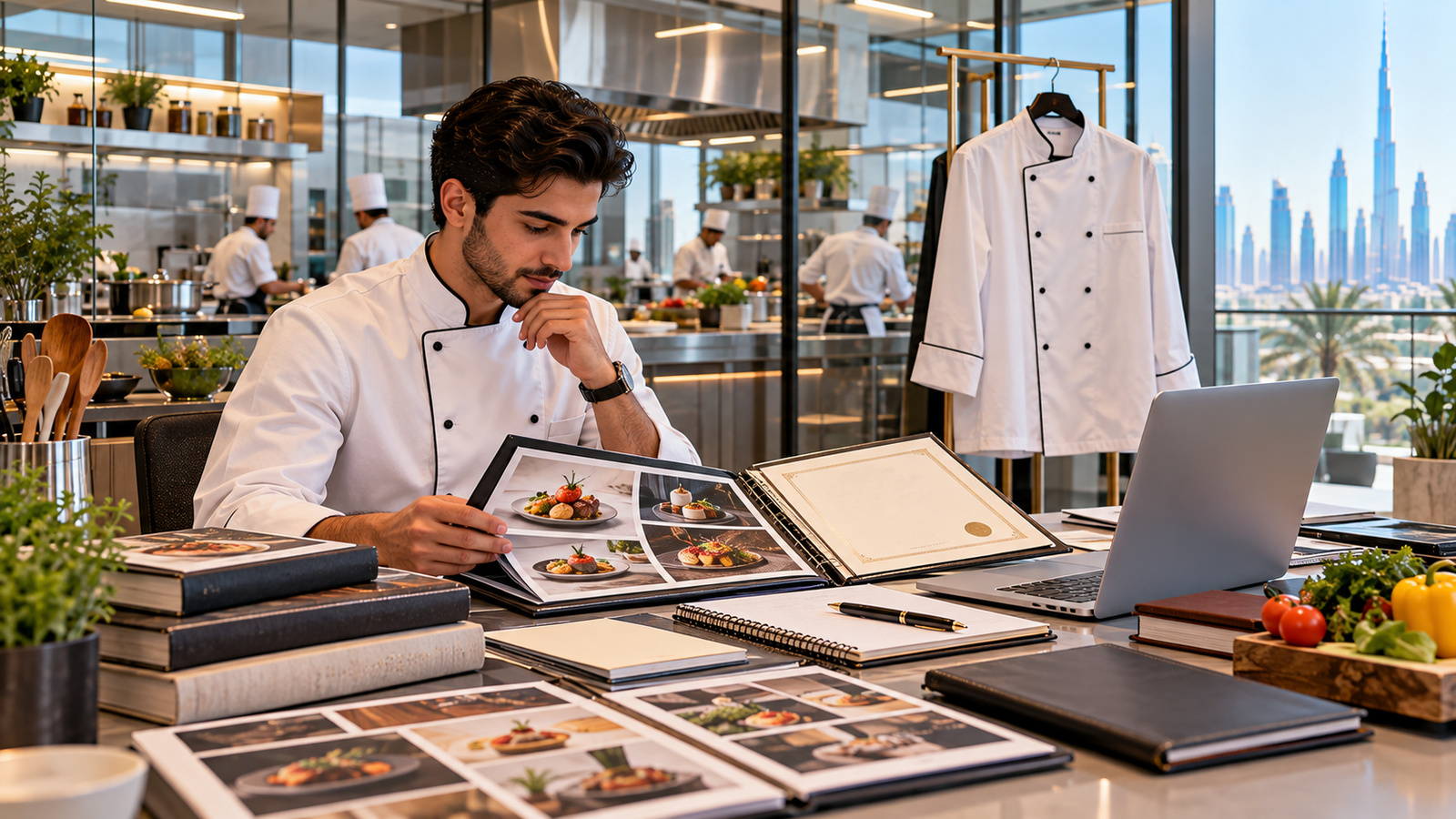
Step 5: Create a Portfolio
For creative culinary roles, photograph your best dishes and presentations. Include examples that demonstrate colour balance, technical precision, creativity, and consistency.
A portfolio is especially useful for food styling, creative plating, pastry decoration, and culinary content projects.
Step 6: Apply for Relevant Positions
Prepare a professional CV that accurately describes your experience, training, and skills. For chef roles, emphasise practical cooking ability and kitchen experience. For creative roles, include relevant presentation work and a portfolio where appropriate.
Research employers carefully and review each vacancy's experience and qualification requirements.
Conclusion
The difference between a chef and a culinary artist is primarily a difference in professional emphasis rather than a strict separation of occupations.
A chef focuses on preparing quality food, maintaining consistency, following safe working practices, and managing kitchen responsibilities. A culinary artist places additional emphasis on creativity, artistic plating, innovative combinations, and the visual experience of food.
Both roles require knowledge, practice, attention to detail, and a commitment to quality. Many successful culinary professionals combine the technical expertise of a chef with the creative thinking of an artist.
For aspiring professionals in Dubai, culinary training, practical experience, creative development, and a clear career direction can help open opportunities in restaurants, hotels, catering, pastry, food styling, and other areas of the hospitality industry.
Frequently Asked Questions (FAQs)
1. What is the main difference between a chef and a culinary artist?
A chef primarily focuses on cooking, food quality, consistency, and kitchen responsibilities. A culinary artist places greater emphasis on creativity, presentation, and artistic expression. The same professional can perform both roles.
2. Is a culinary artist a professional chef?
Not necessarily. Some culinary artists are professionally trained chefs, while others specialise in food styling, artistic decoration, or creative food presentation. The requirements depend on the specific job.
3. What skills does a culinary artist need?
Important skills include creativity, cooking knowledge, artistic plating, colour coordination, attention to detail, flavour development, and presentation techniques.
4. Can a chef become a culinary artist?
Yes. Chefs can develop their creative skills through advanced plating, pastry decoration, menu experimentation, and food presentation training.
5. What is the difference between food styling and culinary arts?
Food styling focuses on arranging food for photography, video, advertising, and other visual media. Culinary arts is broader and includes cooking, flavour development, presentation, and culinary creativity.
6. Are there culinary career opportunities in Dubai?
Yes. Dubai has restaurants, hotels, resorts, catering companies, bakeries, and other hospitality businesses that employ culinary professionals. Available positions and requirements vary by employer.
7. Do culinary artists need formal qualifications?
Requirements depend on the role. Culinary training can provide essential technical knowledge, while specialist positions may also benefit from experience in plating, pastry, food styling, or creative presentation.
8. How can I improve my food presentation skills?
Practise colour balance, plate composition, texture contrast, sauce placement, and appropriate garnishing. Photograph your work, review the results, and focus on making each presentation both visually appealing and enjoyable to eat.